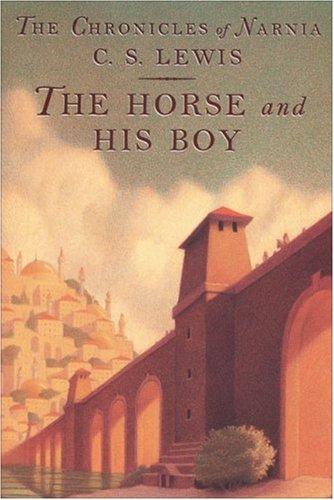

Tropes in this book
- Zero to hero
Themes
- children's fantasy
- classic
- desert escape
- talking horses
- zero to hero
- long-lost prince
- read-aloud
Read it if
- you want a road-trip adventure with disguises, a night among the tombs and a race against an army across the desert
- you like heroes who start out as nobody, or as someone insufferable, and end up as someone you respect
- there's a horse lover in your house, because a battle-scarred warhorse who frets that rolling in the grass might be undignified is a one-of-a-kind character
Skip it if
- you're hoping for another Pevensie adventure, since Edmund, Susan and Lucy only drop in briefly, as grown-up rulers
- a portrait of Calormen as a dark-skinned land of slaves and tyrants, set against a fair-haired, laughing North, will spoil the fun for you
- a secret about the hero's birth that you can guess a few chapters in takes the joy out of the finale for you
Why this rating
🧠 For connoisseurs
6/10- Heroes who change. Shasta starts out as a boy who has learned never to tell adults anything and ends up turning back, unarmed, to face a lion. Aravis shrugs that the maid she drugged probably got whipped, spends ages looking down her nose at Shasta, and then apologizes to him on her own. Bree, veteran of many battles, outruns everyone when the lion shows up and has to swallow the truth about his own vanity. Each of them gets a lesson cut to measure, and none of them turns into a plaster saint in the process.
- The secret council. The best chapter in the book. The Tisroc sends his firstborn on a raid he may not come back from with the cool of an accountant, Rabadash kicks the vizier for every proverb, and Ahoshta grovels on the carpet while feeding the prince ideas that could get him killed. Kids laugh at the kicks; adults laugh when the Tisroc admits he has eighteen other sons and that eldest sons have a way of getting dangerous.
- One lion. The conversation in the fog rearranges the whole book: the lions by the inlet, the cat at the Tombs, the roar that scares off the jackals and the beast chasing Hwin all turn out to be Aslan. And his line about telling each person only their own story shuts down the heroes' curiosity more neatly than any sermon on providence.
- Calormen in two colors. The Calormenes are dark-skinned, with grim, secretive faces; they wear turbans, worship the cruel god Tash and keep slaves, while the Northerners are fair-haired, cheerful and ready to befriend anyone. King Lune even blames Rabadash's manners on growing up in a land of slaves and tyrants. Lewis does offer a counterweight: Aravis, the bravest person in the book, and genuine admiration for the Calormene art of storytelling. Still, the split between a dark South and a fair North is stark, and a reader today will have a hard time missing it.
- Blood will tell. That a boy who looks exactly like a prince will turn out to be his brother is obvious by roughly chapter five. What grates more is the faith in noble blood: the fair-haired foundling has felt since childhood that he belongs in the North, and one of the king's huntsmen can tell from the way he sits a horse that there's noble blood in him.
- Magic instead of choices. The Rabadash problem is solved by turning him into a donkey, plus one curse that sets up his entire future reign, while Shasta spends most of the battle on the ground under the horses' hooves. It's funny, but the hero doesn't carry much weight in that finale.
💖 For comfort readers
7/10- Bree. A talking warhorse who has survived plenty of battles but worries whether it's proper to roll in the grass in Narnia, and who wants to wait for his tail to grow back before showing his face there. His cry of “Narnia and the North!” means a gallop is coming, and a few chapters in, kids are yelling it right along with him.
- An escape on the clock. A disguise at the gates of Tashbaan, a mix-up with a prince, a getaway across the rooftops, a night among the tombs, a desert race against two hundred riders and a lion on their tail. Every stage has a clear goal and a deadline, so the tension holds all the way to the battle.
- Laughs. Lasaraleen asking her friend's opinion of her new dress in the middle of an escape, Rabadash dangling from a castle wall like washing on a line, and at the end, turned into a donkey, begging to be made at least a horse. Simple jokes that land with kids without fail.
- Corin. A scrappy prince who punches anyone who insults Queen Susan, gets the city guards drunk and sneaks off to battle against orders. Next to serious Shasta, the two make a pair of twins who are easy to root for.
- A stall in the middle. Once the group splits up, the action stops for a while: Shasta spends an entire day waiting at the Tombs, and Aravis sits through her friend's chatter about dresses and parties. The battle, meanwhile, you mostly watch in the Hermit's pool, through his play-by-play, like a sports broadcast.
The book's four layers
Plot and pacing
Lewis takes a simple point-A-to-point-B escape and complicates it with real skill: he splits the heroes up in Tashbaan, runs two storylines at once and ties them together with the secret council Aravis overhears from behind a sofa. Shasta's secret is easy to predict, and the Rabadash conflict ends with magic instead of the heroes' own choices, but the desert race and the conversation in the fog are scenes that stay with a reader for years.
Characters and relationships
The strongest part of the book. Shasta, Aravis and Bree all go through clear changes, and quiet Hwin is right more often than the rest of them and is the first to walk up to the Lion. The supporting cast has real personality: giggly Lasaraleen, the ice-cold Tisroc, groveling Ahoshta, hotheaded Corin and King Lune, who hides his pride in his son behind grumbling. Rabadash is a caricature, but a deliberate one.
Writing style and atmosphere
The chatty narrator who talks straight to the reader is back, and this time he helps more often than he gets in the way, while the parody of Calormene rhetoric, with poets quoted for every occasion and “may he live forever” tacked onto every mention of the Tisroc, is one of Lewis's funniest ideas. The desert, the heat and the water in the gorge are written so vividly that you get thirsty. What spoils it is the split between a dark-skinned South and a fair, smiling North, which seeps even into the descriptions of faces.
Entertainment and value
A great read-aloud adventure for kids who already know The Lion, the Witch and the Wardrobe, with humor and heroes who are easy to identify with. It leaves plenty to talk about: freedom, pride, forced marriage and how a book more than seventy years old portrays people from another culture. Older readers may tire of the storyteller's voice and the predictable secret, but this is an adventure I'd return to sooner than plenty of newer fantasy.
The book in brief, spoiler-free
Shasta, a boy his foster father is ready to sell off like the day's catch, bolts from Calormen on the back of a talking warhorse, and on the way they pick up a noble girl who'd rather cross a desert than marry a man old enough to be her grandfather. A road-trip adventure with real laughs and heroes who grow up along the way, though the way Lewis paints Calormen grates hard today.
Want the plot step by step?SummaryThemes it explores
C.S. Lewis writes about a freedom that starts with running away but doesn't end there. Shasta, Aravis, Bree and Hwin flee a country where everything has a price, and then each of them has to learn what slavery never taught them: Bree humility, Aravis compassion, Shasta courage and trust in other people, and meek Hwin that her quiet opinions are worth something. The second axis is providence. Aslan appears as a lion, a cat and an invisible companion in the fog, and the accidents of the whole journey turn out to be a single plan. Adults will recognize the Christian allegory (the Lion, asked who he is, answers “Myself” three times, echoing the biblical name of God); kids will simply read a story about someone who has been watching over the hero since the day he was born. The third is Calormen: an empire of slaves, of young girls married off by arrangement and of the god Tash, drawn with lavish detail and plenty of irony. Lewis gives it the book's bravest heroine and writes admiringly about the Calormene art of storytelling, yet he also sets dark-skinned Calormenes with grim faces against fair-haired, smiling Northerners. That part is worth talking through with a child rather than pretending it isn't there.
The main threads: the escape (a night ride from the fisherman's hut, a disguise at the gates of Tashbaan and a race across the desert); talking horses (Bree and Hwin, stolen as foals and forced for years to pass as dumb animals); forced marriage (Aravis running from a wedding to a man old enough to be her grandfather); the Tisroc's court (palaces, litters, slaves and a secret council overheard from behind a sofa); the double (Shasta mistaken for Prince Corin, and the mystery of where he came from); providence (one lion behind all the lions of the journey and a voice in the fog); pride and humility (Bree, Aravis and Rabadash, each cut down to size in their own way); and the battle for Anvard (Narnians, giants and great cats against Rabadash's two hundred riders).
Questions and answers
What's the reading order for The Chronicles of Narnia, and where does The Horse and His Boy fit?
I recommend chronological order, following the history of Narnia itself: The Magician's Nephew, The Lion, the Witch and the Wardrobe, The Horse and His Boy, Prince Caspian, The Voyage of the Dawn Treader, The Silver Chair and The Last Battle. That's also how current US HarperCollins editions number the series, so this is book 3. Publication order is different – The Lion, the Witch and the Wardrobe came out first, in 1950, and The Horse and His Boy was the fifth to be published – which is why older sets and some readers number it differently. Either way, it sits nicely here: the story takes place while the four Pevensies rule during Narnia's Golden Age, and you'll have Mr. Tumnus, a reformed Edmund and the wardrobe fresh in your mind, all of which the book refers to directly. Next in chronological order comes Prince Caspian.
Do I need to read The Magician's Nephew first?
No. The Magician's Nephew tells how Narnia began, but nothing in this book depends on it. The one real prerequisite is The Lion, the Witch and the Wardrobe: Edmund, Susan, Lucy, Mr. Tumnus and the defeat of the White Witch all show up here as things you're expected to know. Shasta and Aravis's own story is self-contained, with brand-new heroes.
How many pages is The Horse and His Boy?
240 pages in the 1994 US HarperTrophy paperback, though it depends on the edition. It's 15 chapters, just right for reading aloud one a night.
What age is The Horse and His Boy appropriate for?
I keep it at 9+, the same as the rest of the series, but this book is a shade darker than The Lion, the Witch and the Wardrobe, and it's worth knowing that before handing it to a child. Shasta is beaten by his foster father, who wants to sell him into slavery; Aravis describes riding off into the woods and trying to take her own life with a dagger (Hwin stops her, and the scene is short, with no graphic detail); a lion claws her back; and Rabadash orders his men to kill everyone in a castle. There's a battle with casualties, and the reason Aravis runs away is that she, a young girl, is being married off to a sixty-year-old. After the dagger scene, it's a good idea to ask your kid what they think of it and to tell them plainly that if they ever feel as low as Aravis did, they can call or text 988 (USA). There's no romance, and the rough language comes down to Rabadash hurling insults at Queen Susan.
How spicy is The Horse and His Boy?
1/10 on my spice scale, which here means nothing at all. The only weddings on the table are the one Aravis is running from and Rabadash's plan to carry off Susan, and the book treats both as threats, not love stories. Shasta and Aravis mostly bicker.
Is The Horse and His Boy YA, and who is it for?
It's not YA – it's a children's classic, middle grade in today's terms, and I review it here because so many readers grow up on it and come back to it later. It's best for kids 9 to 12 who loved The Lion, the Witch and the Wardrobe and want more road, chases and humor than fairy-tale winter, and for parents looking for a classic to read aloud. Especially horse lovers, and anyone who likes stories about someone who starts out as nobody. Comfort readers get the escape, the desert and a talking horse with a complex; connoisseurs get sharp character arcs and a biting satire of the Tisroc's court, minus a predictable secret and a finale solved by magic. Adults reading along should be ready to talk about how the book portrays the Calormenes.
What about you? Have you read this book?
Reader ratings
Your rating might be totally different from mine. A lot depends on when you pick it up.
Your rating on a 1-10 scale
No login needed. One vote per browser – you can change it later.
Disagree? Rate the book above or message me on Instagram or TikTok.
What to read next
 The Voyage of the Dawn Treader
C.S. Lewis
Same series.
★ 7/10🧠 6💖 7🌶️ 19+
Read the review
 The Silver Chair
C.S. Lewis
Same series.
★ 7/10🧠 6💖 7🌶️ 19+
Read the review
 The Lion, the Witch and the Wardrobe
C.S. Lewis
Where you meet Narnia, Mr. Tumnus and the siblings who rule here as grown-up kings and queens.
★ 7/10🧠 5💖 8🌶️ 19+
Read the review