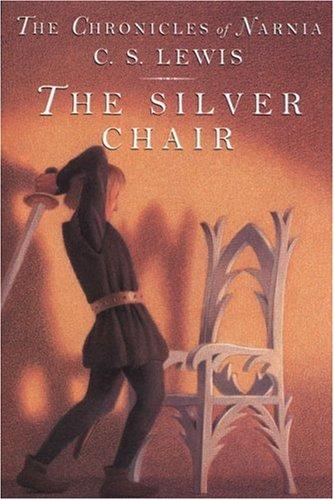

Themes
- middle grade fantasy
- children's classic
- quest to the north
- giants and an underground kingdom
- lost prince
- Christian allegory
- read-aloud
Read it if
- you like quests where the heroes mess up, bicker and pay for their mistakes, and still make it to the finish line
- you want to meet a pessimist who greets every plan with a forecast of floods and broken legs and turns out to be the bravest one in the party
- you're after a fairy tale with giants, an underground sea and a castle that never sees the sun, to read aloud on fall evenings
Skip it if
- dark tunnels and tight squeezes make you anxious, because a good third of the book happens underground
- a narrator from seventy years ago chiming in about what girls can't do and how dreadful a fat woman looks gets on your nerves
- religious allegory and a moral spelled out in plain words pull you out of the adventure
Why this rating
🧠 For connoisseurs
6/10- Puddleglum. A pessimist who adds a flood, dragons or two broken legs to every plan, and then turns out to be the only one who keeps his head. When the Witch's spell has everyone agreeing there's no sun, he stamps his bare foot into the fire and gives the best speech in the whole series. Lewis builds a complete character out of one contrary trait: funny, touching and braver than any knight.
- Signs you walk right past. Aslan gives Jill four simple instructions, and the travelers blow three of them – first through showing off at a cliff edge and a squabble, then through daydreaming about a hot bath. Very few children's books show this calmly that being tired and wanting comfort can throw you off course better than any enemy, and spotting the letters UNDER ME from a Harfang window the next morning is a killer punchline.
- A witch without a wand. The Queen of Underland doesn't turn anybody to stone. She gently explains that the sun is just a bigger lamp you made up and a lion is just a bigger cat, then watches her guests repeat after her, sentence by sentence. The fireside scene with the green powder and the droning strings is more unsettling than plenty of battles, because here evil wins by arguing.
- Harfang. A hot bath, a nanny hauling in toys bigger than Jill, a queen prescribing lollipops and a cookbook with an entry for Man, a traditional Autumn Feast dish served between the fish and the roast. Horror dressed up as hospitality is the best-played stretch of the whole quest.
- Rilian off a monument. The enchanted Black Knight, who laughs at his own invasion plans and claps Puddleglum on the shoulder, is interesting and creepy. Once he's freed, the prince talks only in lofty sentences about honor and stays a noble sketch to the very end.
- Rescue on autopilot and a school payback. After the Witch dies, everything happens by itself: her spells collapse on cue, a gnome snatched off the street explains the whole situation, and the tunnel comes out smack in the middle of a Narnian dance. At the end the school gang gets chased off by a lion, a riding crop and the flats of two swords, and the narrator packs the Head off to Parliament. The satire of a progressive school is written with an obvious grudge and a very thick brush.
💖 For comfort readers
7/10- Giants. The giants of Ettinsmoor hurl boulders at a target they never hit, then bash each other over the head with stone hammers until they sit down and bawl like enormous toddlers. In Harfang the porter pours Puddleglum a drink into a salt cellar, and the tipsy Marsh-wiggle introduces himself to the king with a garbled, very dignified version of what he is.
- Underland. A silent gnome city that works like an anthill, a barge on the Sunless Sea, Father Time asleep in his cave and, at the end, a gallop ahead of a flood while the lamps along the road go out one by one. This is the part where a younger listener scoots closer.
- Humor. Trumpkin, the deaf regent, who mishears both kids' names as something grim, owls holding their parliament at night because any sensible bird sleeps through the day, and a centaur with two stomachs who needs two breakfasts. Lewis is having more fun here than in The Lion, the Witch and the Wardrobe.
- Jill and Eustace. They argue about which way is east, about whose fault everything is and about the sword Jill didn't get, and near the end, in the Witch's castle, they call each other by their first names for the first time. It's a friendship with zero mush, and that's exactly why it's easy to believe.
- The long, cold march. The middle of the book is days of trudging across the moor and through stony valleys: soggy blankets, plucking the birds they shoot and plenty of kid grumbling. The mood is grim, and there's very little of Narnia itself here, with its fauns and talking animals.
The book's four layers
Plot and pacing
The skeleton is as simple as a fairy tale: a task, a trek north, a giants' castle, the underground and the way home. Its strength is the Signs, because the heroes miss them through their own fault and have to make up the lost ground, and the choice at the silver chair – when a plea in Aslan's name comes from someone who's supposedly a madman – has real stakes. Everything after the Witch's death is weaker, with solutions showing up on their own, and so is the school finale, which turns into a revenge scene.
Characters and relationships
Puddleglum is one of the best characters Lewis ever came up with: gloomy, funny and the bravest one in the party. Jill grows from a girl who stands at a cliff edge out of pure contrariness into the one who, under the spell, is the first to fight her way back to Aslan's name. Eustace, changed since his last trip, is a grumpy but decent friend. Rilian fades once he's freed, and the Witch, scary as she is, never gets a story of her own.
Writing style and atmosphere
The chatty narrator, with his asides and his remarks to the reader, is great at a drop below the clouds, a blizzard on a flat-topped hill and an underground city as quiet as an anthill. What grates are the comments from another era: that girls can't find north, that a fat queen with a powdered face must look awful, and the whole school satire, where co-ed schooling and the Head are to blame for everything.
Entertainment and value
It's a good read-aloud, especially in the fall, and it gives you things to talk about: why you have to hold on to what matters when you're cold and it's easier to forget, and how to answer someone who insists nothing exists outside their own world. Some kids will get worn out by the long, grim march, though, and the ending, with a crop and swords turned on the school gang, practically begs for a conversation with a grown-up.
The book in brief, spoiler-free
Jill and Eustace run from the school bullies straight onto Aslan's Mountain and get a job: find Prince Rilian, missing for ten years, by following four Signs that are frighteningly easy to forget. It's a darker, more claustrophobic trip than any earlier visit to Narnia, lit up by Puddleglum, a gloomy Marsh-wiggle who's sure the whole thing will end badly.
Want the plot step by step?SummaryThemes it explores
This time C.S. Lewis writes about remembering, and about staying true to what you promised when it's cold, dark and easier to forget. Jill gets four Signs from Aslan and stops repeating them the moment the hot baths of Harfang appear on the horizon, and the fallout from that small lapse runs through the whole quest. The second big thread is freedom: for ten years Rilian believes the silver chair protects him from madness, when it's the very thing keeping him a prisoner, and the Witch rules him the same way she rules the Earthmen – by taking away their memory of who they are. The most important conversation in the book is an argument over whether anything exists outside the dark kingdom. Adults will hear an echo of Plato's cave and a defense of faith in it, and see Christian allegory in the drop of blood from Aslan's paw that brings Caspian back to life; a kid will simply read a story about holding on to your friends and to the truth, even when someone very persuasive tells you it isn't there. Calormen shows up only as the name of a neighboring country. The frame is school bullying: Jill cries behind the gym, and the trip home ends with a showdown with the gang that the narrator presents as a well-earned lesson.
The main threads: the four Signs (Aslan's instructions, easy to forget and even easier to miss); the journey north (the Marsh-wiggles' marshes, the moor of Ettinsmoor, a stone bridge and the ruins of a giants' city); Harfang (the welcoming castle of the Gentle Giants that turns out to be a trap before the Autumn Feast); Underland (caves, the Sunless Sea and the sad Earthmen, who have forgotten where they come from); the silver chair (the night they have to decide whether to untie a man who begs in Aslan's name); the spell and how it breaks (green powder, droning music and Puddleglum's foot in the fire); friendship (two bickering kids and a Marsh-wiggle who say goodbye like the closest of friends); and death and hope (old Caspian, who dies right after coming home, and Aslan's Mountain, where death doesn't get the last word).
Questions and answers
Do I need to read The Magician's Nephew before The Silver Chair?
No. The Silver Chair borrows almost nothing from book one: Narnia's creation and Digory's story never come up, and when the owls worry about a witch from the north, they mean the White Witch from The Lion, the Witch and the Wardrobe. The book you really should read first is The Voyage of the Dawn Treader. Without it, Eustace's change, Ramandu's island and the moment he fails to recognize his old shipmate in a white-bearded king lose most of their punch. The adventure itself is self-contained and easy to follow on its own.
What's the Narnia reading order, and where does The Silver Chair fit?
I recommend the chronological order, which follows Narnia's own history: The Magician's Nephew, The Lion, the Witch and the Wardrobe, The Horse and His Boy, Prince Caspian, The Voyage of the Dawn Treader, The Silver Chair and The Last Battle. The US HarperCollins editions are numbered the same way, so The Silver Chair is book 6. In publication order it's the fourth book – The Lion, the Witch and the Wardrobe came out first, in 1950 – but in both orders The Voyage of the Dawn Treader comes right before it. Read chronologically, the only book left after this one is the series finale, The Last Battle.
Is The Silver Chair appropriate for 9 year olds?
Yes – I keep 9+ for the whole series, even though this is one of the darker books. There's no romance, and the language never gets stronger than a mild exclamation. There's plenty to be scared of, though: the giants keep a recipe for humans in their kitchen, the heroes crawl through narrow tunnels in total darkness, a knight tied to a chair howls and foams at the mouth, the Witch turns into a serpent and dies by the sword, and near the end an old king dies. A 9-year-old can read it solo, but if your kid is afraid of the dark or of tight spaces, read it aloud and stay close.
How many pages is The Silver Chair?
About 240 – the US HarperTrophy paperback runs 243 pages, though it depends on the edition. It has 16 chapters, short enough that a chapter a night gets you through it in a little over two weeks.
Is The Silver Chair YA or middle grade? Is there romance?
It's a classic children's fantasy, middle grade by today's labels: Jill and Eustace are schoolkids, and the book is written for readers around 8 to 12. Full disclosure: YA ranked reviews books for younger readers too, and I rate this one by the same yardstick as everything else. Spice is 1/10 on my scale – zero romance, just a friendship that starts with bickering.
Who is The Silver Chair for?
Kids roughly 9 to 12 who liked Narnia in the earlier books and are ready for a darker adventure, and parents looking for a classic to read aloud. Comfort readers get giants, an underground kingdom and Puddleglum's gloomy humor; connoisseurs get a quest where the heroes' mistakes have consequences, plus the fireside argument with the Witch about the sun and the lamp. You'll have to swallow a preachy school frame and a few remarks that haven't aged well. Kids who love this trip will be ready for Percy Jackson and Harry Potter next.
What about you? Have you read this book?
Reader ratings
Your rating might be totally different from mine. A lot depends on when you pick it up.
Your rating on a 1-10 scale
No login needed. One vote per browser – you can change it later.
Disagree? Rate the book above or message me on Instagram or TikTok.
What to read next
 The Voyage of the Dawn Treader
C.S. Lewis
The book right before this one, where Eustace sails to the end of the world with Caspian and stops being a little pest.
★ 7/10🧠 6💖 7🌶️ 19+
Read the review
 The Last Battle
C.S. Lewis
The next book in reading order and the series finale, where Jill and Eustace come back to Narnia one more time.
★ 7/10🧠 6💖 5🌶️ 19+
Read the review
 The Horse and His Boy
C.S. Lewis
Same series.
★ 7/10🧠 6💖 7🌶️ 19+
Read the review