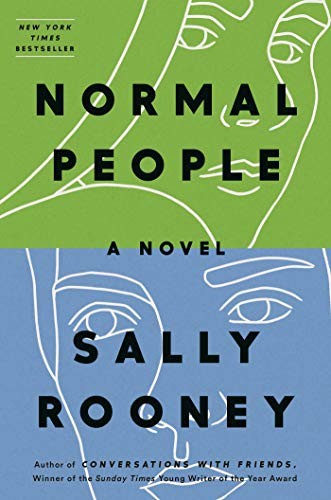

Tropes in this book
- College
- High school
Themes
- literary fiction
- on-again off-again romance
- small-town Ireland to Trinity College
- class divide
- depression and family abuse
- explicit sex scenes
Read it if
- you want a love story where a look or a pause carries more weight than any plot twist
- you like flawed, believable characters who mess up and don't get let off the hook for it
- you're after a novel about growing up, social class and mental health that never turns preachy
Skip it if
- you need a clear plot and momentum, because the big moments here happen in kitchens and over cups of tea
- it drives you up the wall when years of heartbreak could be fixed with one honest sentence
- you don't have it in you right now to read about family abuse, depression and suicidal thoughts
Why this rating
🧠 For connoisseurs
8/10- Characters who feel real. Marianne and Connell are one of the best-written couples I've come across in fiction about young adults. She's sharp, frosty on the outside and defenseless underneath; he's popular and at the same time frozen by what other people might think. Both of them do stupid, cruel things, and you still root for them the whole way.
- Class without a lecture. He's the cleaner's son, she's the daughter of the woman who employs her. Rooney never gives a speech about inequality. She shows it in rent money that suddenly isn't there, in a scholarship that cracks Connell's world wide open and in a snide little remark from Peggy about his silver chain.
- Heavy topics, handled with care. The abuse in Marianne's home, Connell's depression and his visit to the college counseling service are written concretely and without theatrics. The scene with the questionnaire in the waiting room should be read by anyone who thinks depression is just a bad mood.
- The structure. Eighteen sections, each one opening with how much time has passed, while whatever happened in between comes back through memory. It's a simple device and it works: you piece together for yourself exactly where things went wrong.
- The miscommunication loop. They get together, break up and get together again, and the reason is almost always the same: somebody didn't say something. By round three I wanted to lock them in a room and not let them out until one of them finished a sentence. There are no plot fireworks here, and there were never meant to be, but if you're waiting for surprises you'll come away empty-handed.
- Side characters who make a point. Jamie, Peggy and Marianne's brother are vivid, but at times they feel more like illustrations of bad people than characters with an inner life of their own.
💖 For comfort readers
6/10- Chemistry. You can feel the tension between Marianne and Connell in every scene, even when they're talking about the European debt crisis. The intimate scenes are short but intense, and they actually mean something for the story.
- Lorraine. Connell's mom, who had him at seventeen, laughs at his embarrassment, and when it counts she looks him in the eye and tells him he behaved terribly. She's the warmest person in the whole novel and the best argument for sometimes listening to your parents.
- No slog. A little under three hundred pages, short sections and plain language with no academic flourishes. Plus a clear couple at the center that you can't help cheering for.
- Not much happens. No schemes, no rivals, no grand gestures. Just a lot of talking, a lot of silence and a lot of working out who meant what. If you like your romance fast, this one can drag.
- Heavy mood, open ending. Family abuse, depression, the death of a friend and relationships where sex is used to humiliate. This isn't a pick-me-up, and the ending makes no promise that everything will turn out fine.
The book's four layers
Plot and pacing
The plot really runs on one question: will they or won't they. The first part, in Carricklea, with the secret relationship and the Debs, is excellent, because every choice has a real cost. After that the machinery starts repeating itself: a jump of a few months, a new partner, a misunderstanding, a late-night conversation. Rooney saves a few strong scenes for the end, and the final conversation is beautifully built, but don't come here looking for surprises.
Characters and relationships
The strongest layer. Marianne and Connell have consistent, complicated inner lives, and their relationship moves through shame, power, friendship and tenderness in a way that made me believe every stage of it. Lorraine is wonderful, and Niall and Joanna hold their own. Alan and Denise, on the other hand, are so one-note awful that at times I missed the human being in them.
Writing style and atmosphere
The prose is plain, cool and extremely precise, in the present tense, with time jumps and flashbacks. Rooney can show in a single sentence what a character feels and what they're not saying, and she never tacks on a moral. Small-town Ireland and the Dublin campus feel like places you could walk into. Now and then the restraint edges toward mannerism, but that's the price of the style rather than a flaw.
Entertainment and value
It's not a book you read to unwind, but I carried these two around in my head long after I closed it. For older teens and young adults it's genuinely valuable, because it talks about family abuse, depression and lopsided power in a relationship directly and without fearmongering. The weight of the subject matter and the characters' sometimes maddening silences take a little off the enjoyment.
The book in brief, spoiler-free
Marianne is the rich school weirdo, Connell is the popular guy whose mom cleans her house, and for four years, from high school in a small Irish town to Trinity College Dublin, they can neither be together nor let each other go. This isn't a trope-driven romance and it isn't YA: it's adult literary fiction about how two people reshape each other's lives, often through what they never manage to say.
Want the plot step by step?SummaryThemes it explores
Sally Rooney writes about how much one person can change another. Marianne and Connell only meet because his mother cleans her family's house, and that fact never stops mattering: in high school he has the status and she's the weird girl, at college the roles flip, and money and background keep resurfacing when you least expect them. Underneath it's a story about two people who can't talk about what they need and keep paying for it with breakups, and about the question in the title: what does it actually mean to be normal, and who gets to decide?
The main threads: social class (the cleaner's son and the solicitor's daughter, rent, a scholarship and the snobbery of Trinity students); secrecy and shame (a relationship hidden at school and a paralyzing fear of what people will say); family abuse (Marianne's father, her brother and her indifferent mother, and her belief that she deserves to be treated badly); power and submission (Marianne's relationships with a series of partners, and the question of how Connell is any different when he also holds enormous power over her); depression and grief (the death of a school friend, Connell's panic attacks, therapy and medication); writing (the stories Connell writes in secret and is scared to show anyone); and friendship and support (Joanna, Niall and Lorraine as people you can genuinely lean on).
Questions and answers
Is Normal People YA or adult?
Adult. It's literary fiction written for grown-ups and shelved that way, not young adult, even though it opens in the last year of high school and a lot of older teens read it. Marianne and Connell age from 18 to their early twenties over the course of the book, and the sex, the abuse and the depression are written without any softening. I'm including it here because it's one of the great novels about first love and growing up, not because it's secretly YA.
Is Normal People appropriate for 12 year olds?
No. I rate it 16+. The sex scenes are short but explicit, and on top of that there's domestic abuse, violence and humiliation inside relationships, depression, suicidal thoughts and the suicide of a school friend. All of it is handled seriously and never for shock value, but it's heavy reading. If the book brings up something painful, or thoughts of suicide feel close, you can call or text 988, the Suicide & Crisis Lifeline in the US, any time.
How spicy is Normal People?
6/10 on my spice scale. There are several sex scenes between Marianne and Connell, brief but described directly, and they always say something about where the two of them stand. Some of Marianne's other relationships involve pain and degradation, and those are written as damage, not as something sexy.
Is Normal People part of a series?
No, it's a standalone novel, and you don't need to have read anything else by Sally Rooney. In 2020 it became a limited series co-written by Rooney, starring Daisy Edgar-Jones as Marianne and Paul Mescal as Connell; it premiered on BBC Three in the UK in April 2020 and on Hulu in the US a few days later. You don't need the show to follow the book, or the other way around.
How many pages is Normal People?
288 pages in the 2019 US hardcover from Hogarth, and 272 in the 2020 Hogarth paperback, though it depends on the edition. The story is split into eighteen sections, each one stamped with a month and year, so it's easy to read in short sittings.
Who is Normal People for?
Older teens and adults who want a love story about real people instead of a checklist of tropes. If you like characters who follow you around after the last page and silence between people doesn't bore you, you'll love it. If you want pace, grand romantic gestures and an ending with every loose end tied up, it may wear you out.
What about you? Have you read this book?
Reader ratings
Your rating might be totally different from mine. A lot depends on when you pick it up.
Your rating on a 1-10 scale
No login needed. One vote per browser – you can change it later.
Disagree? Rate the book above or message me on Instagram or TikTok.
What to read next
 Conversations with Friends
Sally Rooney
Rooney's debut: Dublin students, an affair with a married man and the same razor-sharp ear for what people don't say.
★ 7/10🧠 7💖 5🌶️ 716+
Read the review
 Norwegian Wood
Haruki Murakami
Also: Japanese literary fiction, college in 1960s Tokyo.
★ 8/10🧠 8💖 5🌶️ 818+
Read the review
 The Perks of Being a Wallflower
Stephen Chbosky
Growing up with depression and trauma, told honestly and without cheap drama.
★ 9/10🧠 8💖 5🌶️ 315+
Read the review