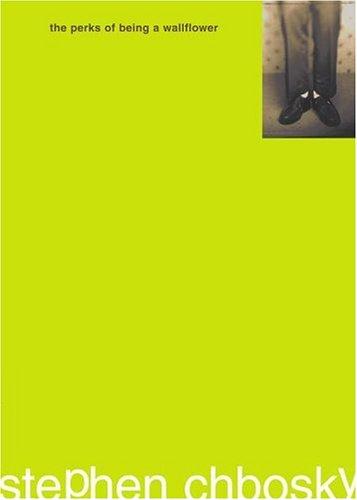

Tropes in this book
- Found family
- High school
Themes
- epistolary novel
- coming of age
- misfit found family
- mental health
- childhood trauma
- '90s mixtapes
Read it if
- you like coming-of-age novels where more happens inside the narrator's head than at the parties
- you want a book about friends who take you exactly as you are
- you love John Green and want something quieter, sadder and more personal
Skip it if
- you want a fast plot – this is a year of letters, and the action drifts from one party to the next
- a naive, almost childlike narrator could wear you out a few dozen pages in
- you're going through something hard right now and suicide and sexual abuse might hit too close
Why this rating
🧠 For connoisseurs
8/10- The voice. Charlie writes the way he thinks: plainly, with detours, falling for one song and scared of something he can't name. That naivety is a deliberate design choice, not a mannerism. We see the world through someone who notices everything and understands about half of what he should.
- An ending that rewires the book. The turn in the last letters isn't a cheap shock bolted onto the finale. Chbosky plants signals all the way through: the birthdays, the panic attacks, the psychiatrist who keeps circling back to Charlie's childhood. After the epilogue I wanted to go back to the first letters and read them again with new eyes.
- Characters with blood in them. Patrick is one of the best-written side characters I've met in YA: the class clown who falls apart when nobody's watching. Sam, Charlie's sister, Bill and even the grandfather with the racist remarks all get a history instead of a single label.
- Heavy topics without cheap effects. Suicide, rape, violence, abortion, homophobia. Chbosky names all of it outright, but without sentimentality or lectures, and Charlie's family is neither a monster nor an idyll.
- Storylines on fast-forward. The sister's pregnancy, the boyfriend who hits her, Brad's father beating him – each one lands hard and then vanishes by the next letter. The diary format explains it, but at times it felt like the author was working down a checklist of teen dramas.
- An episodic middle. Parts two and three are a string of parties, cigarettes and Friday-night Rocky Horror shows broken up by crises. If you want a plot with a clear spine, you'll be waiting a long time.
💖 For comfort readers
5/10- A friend group you want to join. Sam and Patrick's crowd, the toast to Charlie, mixtapes made for friends and the night drive through the tunnel. That mood is why generation after generation of teens has loved this book.
- Short and easy on the page. The letters are short, the language is everyday, and the whole thing runs just over two hundred pages. No wading through description, no cast of thousands to keep straight.
- Real feelings. There are tears, there are laughs (the sandwich-bag story told on the golf course), and there's a first love that looks nothing like a romance novel.
- Not much happens. If you like a plot that races and chapters that end on a hook, you won't get that here. Most letters are Charlie's observations, memories and thoughts.
- The weight. This is not a pick-me-up. Sadness sits in it from the first letter, and the ending can flatten you.
- A narrator not for everyone. Charlie cries constantly and can be as naive as a ten-year-old. For some readers that's the charm; others will be tired of him long before the end.
The book's four layers
Plot and pacing
An epistolary novel without a classic plot: one school year from August to August, parties, Rocky Horror nights, a first date, crises at home and among friends. The middle can feel episodic, and a few strong storylines disappear after a single letter. But the whole thing is carefully built, and the last letters and the epilogue change the meaning of everything that came before.
Characters and relationships
Charlie is a hero you don't forget: sensitive, sharp, completely helpless in the face of his own feelings and funny on top of it. Patrick is a jester with a cracked heart, Sam is a girl who knows exactly what she doesn't want, and Charlie's family is written with care and without villains. Even one-scene characters, like his grandfather or his great-uncle Phil, come with a backstory.
Writing style and atmosphere
The simple, childlike language is a tool here, not a lack of skill: far more shows through Charlie's naive sentences than he understands himself. The early '90s come alive through music, mixtapes made for friends, the books Bill hands him and the night drive through the tunnel. It gets sappy at times, but less often than I feared.
Entertainment and value
This isn't a book you binge to kill time – sadness and unease hang over it from the first letter. What it's worth is huge, though: it talks about depression, trauma and loneliness in a teenager's own words, with no preaching and no sugarcoating. The ending leaves room for hope, but it doesn't pretend one gesture can fix everything.
The book in brief, spoiler-free
Fifteen-year-old Charlie writes letters to a stranger about his freshman year, two older misfits who adopt him and how much harder it's getting to pretend he's fine. No romance fluff here – just a narrator whose voice stays in your head long after the last page, and an ending that makes you want to reread his letters with new eyes.
Want the plot step by step?SummaryThemes it explores
Stephen Chbosky writes about how hard it is to participate in your own life when all your energy goes into not thinking about something you can't remember. For a year, Charlie watches the world from the sidelines and reports on it in letters to a stranger: school, family, his first parties, his first love and the friends who were the first people to make him feel he mattered. His English teacher Bill sums up one of the book's big ideas in a single line – we accept the love we think we deserve – and Charlie spends the year finding out what that means for his sister, for Sam and for himself. Under the warm story about friendship and music sits a story about depression, grief and trauma that only surfaces in the final letters.
The main threads: friendship (Sam, Patrick and their crowd take Charlie in and give him a place to belong); grief (Michael's suicide and the death of Aunt Helen, which Charlie has blamed himself for since he was seven); mental health (panic attacks, dissociation, visits to a psychiatrist and a hospital, seen through the eyes of a boy who doesn't understand what's happening to him); childhood trauma (sexual abuse that Charlie's memory kept locked away for years); first love (his feelings for Sam and the lesson that loving someone also means saying what you want and acting on it); family (a quiet father, a mother who can't talk about hard things, older siblings and violence handed down from one generation to the next); and identity and rejection (Patrick and Brad's secret relationship, homophobia and the price of being yourself).
Questions and answers
Is The Perks of Being a Wallflower appropriate for 12 year olds?
I'd say 15+, and I wouldn't hand it to most 12-year-olds. The book deals with suicide, depression, childhood sexual abuse, rape, drug use and abortion. None of it is there for effect, but it's a heavy read. If something keeps bothering you after you finish, or you're going through something similar yourself, you can call or text 988, the Suicide & Crisis Lifeline in the US, any time.
How spicy is The Perks of Being a Wallflower?
3/10 on my spice scale. There's kissing, a couple of make-out scenes that go further than kissing, and Charlie writes very frankly about masturbation and his dreams about Sam, but there are no explicit sex scenes. The most disturbing sexual content is a rape Charlie saw as a kid, and that is the opposite of spice.
Is The Perks of Being a Wallflower part of a series?
No, it's a standalone novel, so there's nothing to read before or after it. It first came out in 1999, and in 2012 Stephen Chbosky directed the film adaptation himself, with Logan Lerman as Charlie, Emma Watson as Sam and Ezra Miller as Patrick.
How many pages is The Perks of Being a Wallflower?
213 pages in the original 1999 MTV Books paperback, though it depends on the edition – newer printings are listed at around 240. The letters are short, so it reads faster than the page count suggests.
Is The Perks of Being a Wallflower YA or adult?
YA. Charlie is a 15-year-old high school freshman, and the book has been a young adult classic for more than two decades. Plenty of adults reread it too, often finding things they missed as teenagers.
Who is The Perks of Being a Wallflower for?
Teens and adults who like quieter coming-of-age novels in the John Green vein, only sadder. It's more for connoisseurs than comfort readers: if you want action and romance you'll be bored, but if you care about characters and careful structure, you get one of the most important YA novels of the last few decades.
What about you? Have you read this book?
Reader ratings
Your rating might be totally different from mine. A lot depends on when you pick it up.
Your rating on a 1-10 scale
No login needed. One vote per browser – you can change it later.
Disagree? Rate the book above or message me on Instagram or TikTok.
What to read next
 Paper Towns
John Green
John Green and a group of friends in the last stretch of high school, in a lighter key.
★ 8/10🧠 8💖 8🌶️ 113+
Read the review
 Looking for Alaska
John Green
Also: coming of age, found family.
★ 9/10🧠 9💖 7🌶️ 415+
Read the review
 Thirteen Reasons Why
Jay Asher
Another school story about suicide, told as a confession addressed to someone outside it.
★ 6/10🧠 6💖 5🌶️ 215+
Read the review