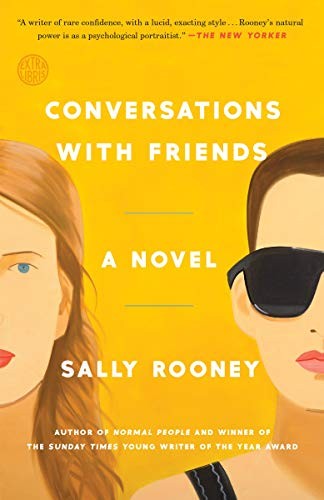

Tropes in this book
- College
Themes
- literary fiction
- new adult
- affair with a married man
- best friend who is also your ex
- Dublin and Trinity College
- self-harm and chronic illness
- explicit sex scenes
Read it if
- you like novels where most of the action happens in conversations, emails and everything nobody says out loud
- you loved Normal People and want the same prose in a sharper, more uncomfortable version
- you want a book about friendship, power and money where nobody gets to be the villain
Skip it if
- you can't stand heroines who are cold and aloof on purpose and hurt people so they never get hurt first
- you need a clear plot and an ending that actually settles something
- self-harm, chronic illness and an alcoholic father in the background are too heavy for you right now
Why this rating
🧠 For connoisseurs
7/10- Bobbi. She walks into every scene like a storm: a lesbian and an anarchist from a wealthy family who talks in lecture-ready sentences and can blow up an entire house party with one question during a parlor game. Rooney doesn't make her a saint or a mean girl, and her coldness toward Frances hurts just as much as Nick's.
- Melissa in one email. For most of the novel Melissa is Frances's enemy and a caricature. Then she sends a long email with no paragraph breaks, and within minutes she becomes a fully rounded woman: wounded, catty and surprisingly honest. One of the best moments in the whole book.
- Power and money. Who has the upper hand here: a 21-year-old with an overdrawn bank account, or a well-known, passive, older man with a house in Monkstown? Rooney shows it in small things: a cashmere coat, banknotes slipped over quietly in a hallway, who kisses first and who calls first.
- A body without melodrama. Frances's pain, her fainting spells and her self-harm are described plainly and precisely, with no attempt to milk tears. When she tells herself that suffering won't make her special, you learn more truth about chronic illness than from a lot of self-help books.
- The loop. They fight, they apologize, they sleep together, they fight again. Rooney does it on purpose and adds something new with every round, but by autumn in Dublin the circling starts to drag, and the affair with Nick is less interesting than everything happening around it.
- A heroine to admire, not to like. Frances is cold and superior, she lies to everyone and she hurts people so they can't hurt her. It's a deliberate choice and it pays off, but she's hard to root for, and next to her Nick stays blurry for a long time and only gets his own story near the end.
💖 For comfort readers
5/10- Dialogue and emails. The conversations are quick and funny, and the emails and instant-message chats read like someone else's inbox you really shouldn't be opening. Bobbi makes you laugh even when she's being awful.
- Summer in France. A villa by the sea, a lake, wine, sneaking down the stairs at night and a parlor game that makes everyone's heart stop. This part has all the tension of a good romance.
- A romance with no payoff. If you're hoping for a great love story, you get a man who won't leave his wife and a heroine who pretends she doesn't care. Nobody makes grand gestures here, and the ending fits in one sentence and promises nothing.
- A heavy mood. An alcoholic father, chronic pain, fainting, self-harm, an overdraft. It's all delivered coolly, but this is definitely not a book to cheer you up.
- Frances. Cold, arrogant and often cruel to the people who love her. If you need a heroine you can root for, you'll be wrestling with her for 300-plus pages.
The book's four layers
Plot and pacing
The plot is an affair that starts, falls apart, comes back and falls apart again, and next to it runs the friendship with Bobbi, which goes down a very similar road. The summer in Étables, with the parlor game and the late-night visits, has great tension, and the autumn adds illness, a short story and Melissa's email, which rearranges the whole story. Still, the Dublin chapters circle too long around one more fight in bed, and the final phone call, beautifully written as it is, leaves everything open.
Characters and relationships
Four main characters, and each has their own version of events that makes sense. Bobbi is wonderful, Melissa gets better with every scene, Nick finally stops being just a pretty face near the end, and Frances is a heroine written without mercy, smart and cruel at the same time. Frances's parents say a lot about growing up with a drinking father in just a few short scenes. I'm taking points off because Frances is easier to admire than to like, and some side characters, like Derek and Valerie, slide into caricature.
Writing style and atmosphere
The prose is cool, precise and ironic, with dialogue woven into the narration and broken up by emails and chat transcripts. Rooney is brilliant at what happens between the words: the silences, the looks across a dinner table, the tone of a message typed in lowercase. Now and then the characters' intellectual showing off, from Lacan to the Gospels, gets a little too clever, but that fits two twentysomethings at Trinity.
Entertainment and value
Fun isn't the point here, and if you read for pleasure, you'll grind your teeth at the heroine every so often. The value is real, though: few books about young adults talk this soberly about an affair with someone older, about money, chronic illness and the idea that friendship can matter more than the great love of your life. It's weaker than Normal People because it has less heart, but it's more interesting than the jacket copy suggests.
The book in brief, spoiler-free
Frances is 21, writes poems and performs them with Bobbi, her best friend and ex-girlfriend, until the two of them end up in the home of Melissa, an essayist, and her actor husband – and Frances starts sleeping with him. Sally Rooney's debut is adult literary fiction about college students, power, money and friendship, narrated by a heroine who would much rather pretend she doesn't feel a thing.
Want the plot step by step?SummaryThemes it explores
In her debut, Sally Rooney writes about how every conversation with another person is a little bit of a power game. Frances believes she has no real personality and doesn't feel much, so she treats every conversation like a fencing match: a sharp comeback, a dodge, a joke, anything to avoid admitting that something matters to her. With Bobbi, with Nick, with her mother, with Melissa. The novel shows what that strategy costs once you add an affair with a married man, no money, an alcoholic father and a body that keeps giving out. The friends of the title turn out to be people who share both more and less than they'd like, and the question of where friendship ends and love begins is something Frances and Bobbi eventually turn into a private joke.
The main threads: friendship and an old love (Frances and Bobbi, who broke up as a couple but can't stop being each other's most important person); an affair with a married man (Nick, his marriage to Melissa and an arrangement nobody walks away from unhurt); power and passivity (passive Nick, Frances who is merciless with words, and the question of who is using whom); money and class (an overdraft, a student grant and a fee for a short story set against a villa in France and a house in Monkstown); the body and illness (pain, fainting and self-harm that Frances hides from everyone); family (a father who drinks in Ballina and a mother who keeps saying he has to be loved anyway); and writing (poems, a first short story and the line between fiction and someone else's life).
Questions and answers
Is Conversations with Friends YA or adult?
Adult. It's literary fiction written for grown-ups, not young adult, even though the characters are college students and it gets shelved next to new adult a lot. Frances is 21 and has an affair with a 32-year-old married actor, and the book cares far more about conversations, power and money than about plot. If you're coming straight from YA romance, expect irony instead of swooning and an ending without a bow on top.
Is Conversations with Friends appropriate for 12 year olds?
No. I recommend it for 16+, and really for older teens rather than younger ones. The sex scenes are short but explicit, the heroine is sleeping with a married man, and on top of that there's self-harm, thoughts of death, an alcoholic father and a chronic illness. It's all written coolly and without wallowing, but it's heavy. If the book stirs up similar thoughts or experiences for you, you can call or text 988, the Suicide & Crisis Lifeline in the US, any time.
How spicy is Conversations with Friends?
7/10 on my spice scale. The sex scenes are brief, but they are written out plainly, not hidden behind a fade to black. It isn't steamy romance, though: sex here is about power, loneliness and what Frances won't say out loud, and some of those scenes are deliberately uncomfortable.
Is Conversations with Friends part of a series?
No. It's a standalone novel and Sally Rooney's debut, first published in 2017, a year before Normal People. The two books have different characters, so you can read them in any order. In 2022 it was adapted into a 12-episode series for BBC Three and Hulu, with Alison Oliver as Frances, Sasha Lane as Bobbi, Joe Alwyn as Nick and Jemima Kirke as Melissa, but you don't need it to follow the book.
How many pages is Conversations with Friends?
336 pages in the 2018 Hogarth paperback, though it depends on the edition. Most of it is dialogue, emails and chat transcripts, so it reads faster than the page count suggests.
Who is Conversations with Friends for?
Older teens and adults who care more about relationships than events. If you loved Normal People, you'll find the same precision here in a colder, more ironic version. If you want romance characters you can fall in love with and an ending tied up with a bow, this book will drive you up the wall. And if you're going through something hard right now, it's fine to save it for later; if you need to talk to someone, call or text 988.
What about you? Have you read this book?
Reader ratings
Your rating might be totally different from mine. A lot depends on when you pick it up.
Your rating on a 1-10 scale
No login needed. One vote per browser – you can change it later.
Disagree? Rate the book above or message me on Instagram or TikTok.
What to read next
 Normal People
Sally Rooney
Same author, same precision, but more heart and a couple who is much easier to root for.
★ 8/10🧠 8💖 6🌶️ 616+
Read the review
 South of the Border, West of the Sun
Haruki Murakami
Another affair with someone who already has a family, in adult fiction where silence says more than events.
★ 7/10🧠 7💖 4🌶️ 718+
Read the review
 Norwegian Wood
Haruki Murakami
College students, sex, depression and a friendship tangled up with love, told with a similar cool distance.
★ 8/10🧠 8💖 5🌶️ 818+
Read the review