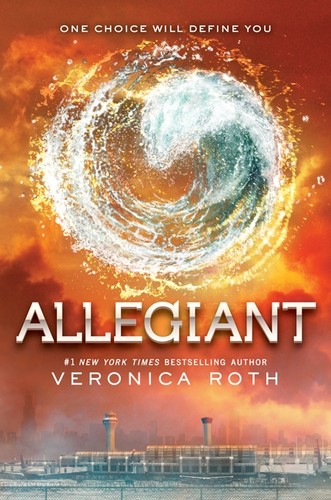

Tropes in this book
- Dystopia
- Plot twists
Themes
- YA dystopia
- trilogy finale
- beyond the fence
- genetic experiment
- dual POV
- Tris and Tobias
- sacrifice and grief
Read it if
- you've read Divergent and Insurgent and need to know what's on the other side of the fence
- you like dystopias where the secret of the world finally gets laid out on the table
- you want a series finale that has the nerve to actually hurt
Skip it if
- you're hoping for book 1's speed and fights, not lab corridors and lectures about genes
- the Tobias from Divergent is your ideal and you have no desire to watch him sulk at his own DNA
- you need an ending that lets you close the book with a sigh of relief
Why this rating
🧠 For connoisseurs
6/10- A brave ending. Roth makes a call that very few YA authors can afford, and she carries it all the way through the epilogue. You can argue with it, but nobody here is playing it safe. It's the only ending in this trilogy that surprised me instead of just tying up loose ends.
- Tris grows up. Tris stops treating every risk like a punishment she has coming. She learns to forgive Caleb, figures out the difference between sacrifice out of love and sacrifice out of guilt, and chooses Tobias on purpose instead of on momentum. Character-wise, this is the best version of her in the series.
- Evelyn and Tobias. The mother-son relationship is the best-written one in the book. The scene where Tobias makes Evelyn choose has more tension than all the shootouts put together.
- Genetics instead of answers. The big secret of the world turns out to be a lecture on repairing genes, which undercuts the whole point of the factions from book 1 and doesn't hold together on its own terms: a gene for murder, plus genes for cowardice and dishonesty, sounds like a shortcut from a school handout, not like actual science. The book never explains more – it just keeps repeating the word “damaged.”
- Two voices, one sound. Tris's and Tobias's chapters sound almost identical, and more than once I glanced at the chapter heading to check who was talking. Tobias also loses the edge he had in Divergent: he spends a big chunk of the book stewing over his test result and lets Nita lead him around by the nose.
💖 For comfort readers
4/10- Finally beyond the fence. The first chapters outside the city – a truck on the tracks, an airport full of people in uniforms and a plane ride that shows them Chicago from the sky – have exactly the curiosity you've been waiting two books for.
- A couple that feels real. Tris and Tobias fight, apologize and work things out like an actual couple, not a poster. If you love this pairing, you get a few warm and funny scenes, starting with a date on top of a giant metal stage in Millennium Park.
- The middle is a lab. For a long stretch, the action moves into the compound's corridors: gene tests, journals, council meetings and plotting over a microscope. After the energy of book 1, this part drags like the security line at an airport.
- More explaining than action. Conversation after conversation explains who created whom and why, while the revolution in Chicago mostly plays out on monitors. The shootouts come back only briefly, during the attack on the compound, and again at the very end.
- A finale that flattens you. The ending gives no one a free pass. If you only wanted a fun read, you'll close the book with a lump in your throat, not a smile.
The book's four layers
Plot and pacing
The opening in the locked-down city and the escape past the fence have a good rhythm. Then the plot bogs down in the Bureau's compound: tests, journals, conspiracies, while the most interesting things in Chicago happen off-screen. The finale makes up for some of the slog because it's brave and consistent, but the genetic explanation of the world that everything rests on is the weakest part of the trilogy.
Characters and relationships
Tris is more grown-up here than ever: she forgives, she chooses and she understands the difference between sacrifice and self-destruction. Tobias comes off weaker, because he spends a long time feeling sorry for himself over his test result, but his scenes with Evelyn are the best pages in the book. Christina, Cara, Amar and even Peter get more room and more shades than in the earlier books.
Writing style and atmosphere
Two narrators are new for this series – except Tris and Tobias speak in one voice. On top of that, there are plenty of gene lectures to swallow. The mood of the sterile compound and the ruined fringe does come through clearly, though, and a few lines about love as an everyday choice land right where they should.
Entertainment and value
I read on out of curiosity about what's beyond the fence, and with growing impatience once the compound turned into an office. I don't regret it, because the ending has a weight the earlier books lacked, but as entertainment, this is the book in the trilogy I'd come back to least.
The book in brief, spoiler-free
Tris and Tobias finally make it past the fence around Chicago and find out that the factions, Divergence and the whole war of the first two books were part of an experiment run by someone on the outside. The finale trades action for genetics and politics, and then does something most YA series would never dare to do.
Want the plot step by step?SummaryThemes it explores
Veronica Roth closes the trilogy by asking whether an identity can be imposed on someone from the outside. The factions turn out to be a scientists' invention, Divergence a genetic category and the people of Chicago test subjects watched on monitors. The characters have to decide who they are once every label they believed in loses its meaning – and the new label, genetically pure or damaged, turns out to be even crueler. Alongside the big politics runs a very private story: about siblings, about parents and about a relationship that has to survive lies and jealousy.
The main threads: the world beyond the fence (the Bureau of Genetic Welfare in the old O'Hare airport, and the truth about why the city was built); pure and damaged (a hierarchy where a person's worth is measured by their genes and the poor of the fringe don't stand a chance); memory and power (memory serum as a tool some people use to decide other people's lives and pasts); sacrifice and forgiveness (Tris and Caleb, and whether a betrayal can ever be forgiven); parents and children (Tobias torn between Evelyn and Marcus, and Tris uncovering her mother's past); love as a choice (Tris and Tobias, who stay together not on momentum but because they decide to, every single day); and grief (the cost of the revolution, which everyone pays in this book).
Questions and answers
Do I need to read Divergent and Insurgent before Allegiant?
Yes. Allegiant is the third and final book of the trilogy, it picks up soon after the end of Insurgent, and the whole plot rests on the Edith Prior video and everything that happened in the first two books. Start here and you'll be lost within a few chapters.
Is Allegiant the last Divergent book? What's the reading order?
Yes, Allegiant closes the trilogy, and Tris and Tobias's story ends here. The order is simple: Divergent, Insurgent, Allegiant. Roth also went back to this world in Four: A Divergent Collection, stories told by Tobias and set mostly before and during book 1, and in We Can Be Mended, a short story from Tobias's point of view set after the trilogy. Both are extras for after you finish Allegiant, not a place to start.
How many pages is Allegiant?
526 pages in the 2013 US hardcover from Katherine Tegen Books, though it depends on the edition (the later paperbacks run longer). Inside there are 56 chapters and an epilogue, alternating between Tris and Tobias.
Is Allegiant appropriate for 12 year olds?
I rate it 14+, the same as book 1. There's a lot of violence: shootouts, a bombing, the deaths of several important characters and memories of domestic abuse in Tobias's family, though nothing is described in graphic detail. The romance stops at kisses and one night together that's only hinted at. The heaviest part is the ending, which can hit younger readers hard, so for most 12-year-olds I'd wait a couple of years, and anyone reading it young should have someone to talk it through with.
How spicy is Allegiant?
3/10 on my spice scale – a notch above Divergent. Tris and Tobias share plenty of kisses, there's some jealousy, and one night together where the shirts come off and the scene fades out before anything explicit. It's left vague on purpose, so it stays firmly YA.
Who is Allegiant for?
Everyone who's read Divergent and Insurgent and wants to close out Tris and Tobias's story. Connoisseurs will appreciate the nerve of the ending and how much Tris grows, even if the genetic explanation of the world grinds. Comfort readers who fell for the series because of its pace and romance should brace for a slower middle and a finale that still divides fans today.
What about you? Have you read this book?
Reader ratings
Your rating might be totally different from mine. A lot depends on when you pick it up.
Your rating on a 1-10 scale
No login needed. One vote per browser – you can change it later.
Disagree? Rate the book above or message me on Instagram or TikTok.
What to read next
 Divergent
Veronica Roth
Book 1, where you have to start, and the trilogy at its fastest.
★ 6/10🧠 6💖 7🌶️ 214+
Read the review
 Insurgent
Veronica Roth
The middle book, whose last scene leads straight into the first pages of Allegiant.
★ 6/10🧠 6💖 5🌶️ 214+
Read the review
 Mockingjay
Suzanne Collins
Another dystopian trilogy finale that shows the price of revolution instead of a triumph.
★ 8/10🧠 7💖 4🌶️ 214+
Read the review