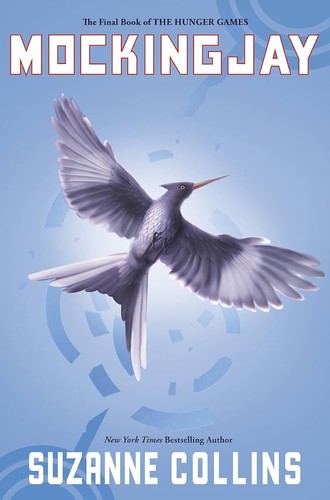

Tropes in this book
- Dystopia
- Plot twists
Themes
- dystopian YA
- trilogy finale
- war against the Capitol
- propaganda and media
- trauma and PTSD
- love triangle
- bittersweet ending
Read it if
- you've read the first two books and need to know how it ends for Katniss, Peeta and Gale
- you want YA that doesn't pretend a war ends with a parade and a happily ever after
- you like dystopias where both sides of the fight have dirty hands and propaganda is a weapon
Skip it if
- you haven't read the earlier books – this is a direct sequel and nothing here works without them
- you came for arena action, not chapters in a bunker, a hospital ward and a TV studio
- dead children, torture and a heroine sinking into depression are too much for you, even without gory detail
Why this rating
🧠 For connoisseurs
7/10- A revolution without illusions. Collins does something YA rarely dares: she makes her heroine discover that the rebels shoot propaganda too, count people like supplies and already have plans for what to do with her after the war. District 13, where your daily schedule gets printed on your forearm every morning, is just as unsettling as the Capitol – it just has a plainer wardrobe.
- Trauma with no filter. Katniss isn't a poster girl here. She's a girl with a head injury, on meds, plagued by nightmares and hiding in closets and supply rooms. PTSD isn't decoration, it's the spine of the book, and Collins never promises that everything can be healed.
- What happens to Peeta. What the Capitol does to Peeta is the cruelest and best plot idea in this book. A simple game of “Real or not real?” turns into one of the most moving relationships in the whole series.
- An ending that divides. I won't spoil it, but it isn't written for applause. Collins scatters clues early that click into place at the end, and she leaves you with questions about power and revenge instead of a victory march.
- A heroine in the waiting room. For a big chunk of the book Katniss is sidelined, sedated or injured, and the big moves happen offscreen. I get that it's deliberate, but with first-person narration we're stuck in that hospital bed with her, waiting for someone to tell us what happened.
- Deaths on the run. Characters built up over two books can vanish in two sentences, and there's no time to grieve because the next pod is already going off. The shock works, but some goodbyes deserved more than a paragraph.
- A secondhand climax. The last chapters deliver key events through other characters' accounts, a few sentences apiece. After such a carefully built war, its ending reads a bit like the minutes of a committee meeting.
💖 For comfort readers
4/10- The Capitol as an arena. The second half is a trek through a city rigged with traps, a bomb around every corner and creatures in the tunnels underneath. The pace matches the best chapters of the earlier books and holds to the last page.
- Finnick and Johanna. The best supporting cast in the series finally gets real scenes: Johanna with the sharpest tongue in Panem and Finnick with his length of rope for tying knots steal every conversation they walk into.
- Bunker, studio, hospital. The first half is mostly meetings, District 13 regulations, filming propos and yet another hospital stay for Katniss. If you came for action, you'll be waiting a long time.
- The triangle in the margins. Gale and Peeta matter, but war and trauma push the romance onto a side track, and it resolves quietly, without the big scene fans waited two books for.
- Crushing weight. Death, grief, depression and an ending that's hard to smile at. As a way to unwind after work, this one just doesn't do the job.
The book's four layers
Plot and pacing
Collins flips the series formula: instead of an arena there's a war, and instead of a fight to survive there's a fight over who gets to write the script of the revolution. The strongest parts are the twists that make you look back at earlier events in a new light, plus the whole second half in the Capitol. Points come off for a long, sluggish first half in District 13 and for final chapters where big turns are reported instead of shown.
Characters and relationships
Katniss can be passive and exhausting, but that's a believable portrait of someone living with trauma, not an authorial mistake. This book gives us the most interesting version of Peeta in the whole trilogy, Gale finally gets his own convictions and hard choices, and Johanna, Finnick, Boggs and Haymitch make a terrific supporting cast. The weak spots are Coin, cold from her first page to her last, and a few soldiers in the squad I never got the chance to know.
Writing style and atmosphere
First person and present tense work better here than ever: Katniss's memory gaps, intrusive thoughts and numbness are on every page. The exposition limps – Plutarch and Beetee often explain the world like tour guides, and the same questions loop through her head again and again. The mood is stuffy and gray like the bunker in District 13, and I mean that as a compliment.
Entertainment and value
It pulls you in, especially once the action moves to the Capitol, and it stays with you long after. There's less entertainment in the strict sense than in the earlier books, though – this is a book you need to sit with in silence for a while afterward. The value is high, because very few YA novels talk this honestly about the cost of war and the fact that trauma doesn't disappear when you hit the last page.
The book in brief, spoiler-free
Katniss agrees to become the Mockingjay, the face of the uprising against the Capitol, and quickly learns that the rebels have cameras, scripts and plans for her too. War instead of an arena, trauma instead of adventure: the bravest and the most uneven book of the trilogy.
Want the plot step by step?SummaryThemes it explores
Suzanne Collins ends the trilogy with a question that lurked in the background of the first two books: what's left of a person when both sides of a war want to turn her into a symbol? Katniss agrees to be the Mockingjay, but she soon learns that the rebels of District 13 have their own cameras, their own directors and their own plans for her, while Snow still knows exactly where to hit hardest. There's no arena, just a war; no sponsors, just propos; and no victors, only people who survived and now have to figure out how to live with it.
The main threads: propaganda (rebel propos and Snow's broadcasts, where the image matters more than the truth); total war (bombings, booby traps and decisions that blur the line between defense and atrocity, even on the side fighting for the right cause); trauma and mental health (nightmares, morphling, hiding in closets and a heroine who spends long chapters fighting her own mind more than anyone else); real or not real (Peeta, whose memories the Capitol has turned against him, and the slow work of sorting out what actually happened); power after the revolution (President Coin, Plutarch and the question of whether the new order will turn out to be a copy of the old one); grief and memory (a list of the dead that grows longer with every chapter); and Gale or Peeta (two boys and two ways to survive a war: anger or rebuilding).
Questions and answers
Do I need to read The Hunger Games and Catching Fire before Mockingjay?
Yes. Mockingjay is a direct sequel that picks up about a month after the end of Catching Fire, and the whole plot grows out of what happened in both arenas. Read The Hunger Games first, then Catching Fire, then Mockingjay – starting here, you'd be lost by chapter two.
Is there a book 4 after Mockingjay? What's the reading order?
Mockingjay closes the original trilogy, so Katniss's story ends here. The series continues with two prequels, often counted as books 4 and 5: The Ballad of Songbirds and Snakes (the 10th Hunger Games and a teenage Coriolanus Snow) and Sunrise on the Reaping (the 50th Games and a young Haymitch). I recommend publication order: the trilogy first, then Ballad, then Sunrise. They hit much harder once you know who these people become.
How many pages is Mockingjay?
390 pages in the 2010 US hardcover from Scholastic Press, though it depends on the edition. It's split into three parts – The Ashes, The Assault and The Assassin – with 27 chapters and an epilogue.
Is Mockingjay appropriate for 12 or 13 year olds?
I rate it 14+, a year higher than the first two books. There are no sex scenes and no strong swearing, but this is a war novel: civilians die, children among them, there are bombings and torture (mostly described by the characters who went through it), dependence on painkillers, drinking, suicidal thoughts and a very realistic portrait of trauma. A mature 13-year-old who loved the first two books can handle it, but younger readers should have an adult reading along and ready to talk.
How spicy is Mockingjay?
2/10 on my spice scale. Katniss shares a few kisses with Gale and with Peeta, and that's it – no sex scenes. One character's confession about how the Capitol sexually exploited its victors is told, not shown. The intensity here comes from war and grief, not romance.
Who is Mockingjay for?
Everyone who's read the first two books and needs the ending, and especially connoisseurs who value dystopias about propaganda, power and the price of war. Comfort readers get a great trek through the Capitol, but they'll have to push through a slow first half and brace for a finale that hurts more than it cheers.
What about you? Have you read this book?
Reader ratings
Your rating might be totally different from mine. A lot depends on when you pick it up.
Your rating on a 1-10 scale
No login needed. One vote per browser – you can change it later.
Disagree? Rate the book above or message me on Instagram or TikTok.
What to read next
 Catching Fire
Suzanne Collins
The previous book: the clock arena and the finale that kicks off open war with the Capitol.
★ 7/10🧠 8💖 6🌶️ 213+
Read the review
 Sunrise on the Reaping
Suzanne Collins
Same series.
★ 8/10🧠 8💖 5🌶️ 114+
Read the review
 The Hunger Games
Suzanne Collins
Same series.
★ 7/10🧠 8💖 5🌶️ 113+
Read the review