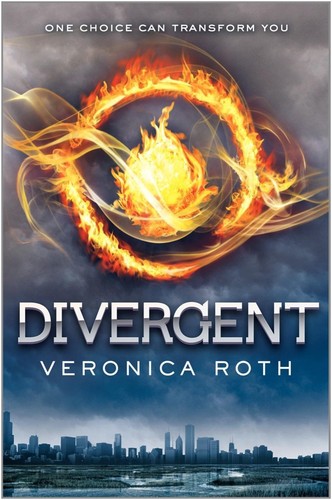

Tropes in this book
- Dystopia
- Slow burn
- Zero to hero
Themes
- YA dystopia
- factions
- initiation rankings
- fear simulations
- instructor romance
- trilogy opener
Read it if
- you like dystopias where the heroine has to survive training, a leaderboard and rivals from her own group
- you want a romance that builds slowly – on a Ferris wheel, over a chasm and inside someone else's nightmare
- you love arguing with your friends about which faction you'd end up in
Skip it if
- you want a world built as solidly as the one in The Hunger Games – here a lot has to be taken on faith
- you don't want to read about violence between teens, a suicide and an assault on the heroine
- you're tired of the ordinary girl who turns out to be special, and only the mysterious older guy can see it
Why this rating
🧠 For connoisseurs
6/10- Bravery versus selflessness. The best idea in the book: Tris runs from Abnegation because she can't manage to be selfless, and then, again and again, her bravery turns out to mean standing up for someone else. Tobias sums it up in a single line, and that line holds the whole story together.
- Fear landscapes. Simulations where you have to walk through your own nightmares are a brilliant tool for building characters. A handful of Tobias's fears tell you more about him than all his brooding looks put together.
- A heroine with a dark side. Tris kicks an opponent who's already down, can't forgive a friend and feels satisfied when the guy who hurt her lands in the infirmary. Roth doesn't whitewash any of it, and in YA that's far from a given.
- A world like a personality quiz. A city sorted by a single character trait, which a sixteen-year-old picks once and for life, looks more like a magazine quiz than a system that has lasted for decades. Who grows the food and what the fence is protecting everyone from, you just have to take on faith for now.
- Villains in three flavors. Eric is cruel, Peter is vicious, Molly is mean, and that's where their character sheets end. And when it's time for answers, somebody simply sits down and lays out the whole plan, like the bad guy in an old Bond movie.
- Romance by the manual. A mysterious older instructor with a painful past who sees someone special in an ordinary girl. The book does notice that he's the one who sets the rankings, but the romance itself runs down exactly the track I expected.
💖 For comfort readers
7/10- Initiation at full throttle. A jump from a moving train onto a roof, a jump into a dark hole in the ground, a zip line off a skyscraper, a night game of capture the flag and a climb up a Ferris wheel. The action barely sits still, and the 39 short chapters go down in one long binge.
- A leaderboard like reality TV. After every stage there's a board with the scores: who moves up, who gets cut, who trips up whom. Simple, but a very effective engine for tension.
- Four. The feelings build slowly and with claws: he throws knives around her, she hits him in the face, and the best scenes in the book are still the ones with just the two of them. Slow burn fans will get their fix.
- The dorm crew. Christina, Will and Al, and later Uriah and Marlene, bring some warmth and laughter into the gloomy Pit.
- Not a light read. Friendships fall apart, initiates hurt each other, there's a suicide and an assault on the heroine, and from the halfway point it gets very heavy. If you're looking to unwind, you may be in for a surprise.
The book's four layers
Plot and pacing
The structure is simple and effective: three stages of initiation, a ranking after each one and stakes that keep climbing. The first two-thirds are a well-fueled story about surviving inside a group, while a political bomb ticks quietly in the background in the form of the Erudite articles. Weaker points: a world you have to take on trust, and an ending that rushes so hard that events weighing a ton fly by in a few pages with no room to land.
Characters and relationships
Tris is the strongest part of the book: small, stubborn, sometimes cruel, sometimes helpless and always a little out of place. Al is the saddest and most real of the initiates, and Four has more layers than his dark stare suggests. The opponents, though, are cardboard, and Will and Christina spend a long time mostly as background for the heroine.
Writing style and atmosphere
First person and present tense make it feel like it's happening while you read, and the simulation scenes are vivid. The style is plain and sometimes repetitive: pounding heart, sweaty palms, and Tris bites her lip so often that Christina turns it into a lie detector. Hard to say she's wrong.
Entertainment and value
It grabs you from the train jump to the very last page and gives you something to chew on: bravery, belonging and what a system that rewards cruelty does to people. Afterward, it's an easy way to start a conversation with a teen about which faction they'd land in and why. I take points off for the heaviness, which won't be everyone's idea of fun, and for the predictable romance.
The book in brief, spoiler-free
A sixteen-year-old raised in the selfless faction picks the most brutal one in the city, and now she has to survive an initiation where the losers end up factionless – while hiding that her mind doesn't fit in any box. The world is built a bit like a personality quiz, but the heroine is written for real, the fear landscapes hit hard and the instructor says more with silence than with words.
Want the plot step by step?SummaryThemes it explores
Veronica Roth asks what happens when you sort people into boxes by a single virtue. On paper, the factions were supposed to keep the city from war; in practice, each one has warped its own ideal: Dauntless mistook bravery for cruelty, Erudite mistook knowledge for a hunger for power, and the motto “Faction before blood” makes sixteen-year-olds choose between their family and where they belong. Tris doesn't fit in any box, and that's exactly what makes her dangerous. The faction idea can be naive, but the question of what real bravery is gets taken very seriously.
The main threads: factions and identity (a choice at sixteen with no way back, and a life on the margins as the price of failing); bravery and selflessness (two traits that, as Tris and Tobias find out, differ less than either faction teaches); being Divergent (a mind that can't be locked into one pattern, and so can't be controlled); initiation (fights, rankings and fear simulations, where competition turns friends into rivals); group violence (initiates who hurt each other and leaders who reward it); family (parents with secrets and a brother who chose a different path); first love (the relationship with Four, where Tris learns that closeness takes courage too); and politics (Erudite articles turning the city against the Abnegation government, and a growing smell of conspiracy).
Questions and answers
Is Divergent a series? What's the reading order?
Yes, it's book 1 of Veronica Roth's trilogy: Divergent, then Insurgent, then Allegiant. There's also Four: A Divergent Collection, stories told by Tobias that are set mostly before and during book 1 – a nice extra once you've finished the trilogy, not a place to start. Begin with Divergent, because this is where you learn the factions, what being Divergent means and who everyone is, and the ending leaves the story wide open, so you'll want Insurgent right away.
How many pages is Divergent?
487 pages in the 2011 US hardcover from Katherine Tegen Books, though it depends on the edition (the later paperbacks run longer). It's split into 39 short chapters, so it reads faster than the page count suggests.
Is Divergent appropriate for 12 year olds?
I rate it 14+. There's no sex – just kisses and a conversation about being afraid of physical closeness. There is a lot of violence, though: training fights that go on until someone passes out, a knife driven into an initiate's eye, a suicide, an assault where the heroine is groped, and killing near the end. For most 12-year-olds I'd wait a couple of years; if a younger or more sensitive reader picks it up anyway, read along and talk it through afterward. If the suicide storyline hits close to home, you can call or text 988 (the Suicide & Crisis Lifeline) in the US.
How spicy is Divergent?
2/10 on my spice scale. A few kisses, some tension and an honest talk about Tris being scared of intimacy – no sex scenes at all. One of the fears she has to face in the simulation is exactly that, and it stops well short of anything explicit.
Is Divergent YA or adult?
YA through and through: Tris is 16, it came out from Katherine Tegen Books, a HarperCollins imprint for young readers, and it rode the same dystopian wave as The Hunger Games as one of its biggest hits. Adults who grew up on that wave will still have fun with it.
Who is Divergent for?
Comfort readers who love dystopias with training, competition and a slow-burn romance, and fans of The Hunger Games looking for something with a similar feel. Connoisseurs will like a heroine with a dark side and the fear landscapes, but they'll have to squint past a world that looks more like a personality quiz than a well-thought-out system.
What about you? Have you read this book?
Reader ratings
Your rating might be totally different from mine. A lot depends on when you pick it up.
Your rating on a 1-10 scale
No login needed. One vote per browser – you can change it later.
Disagree? Rate the book above or message me on Instagram or TikTok.
What to read next
 Allegiant
Veronica Roth
Same series.
★ 5/10🧠 6💖 4🌶️ 314+
Read the review
 Insurgent
Veronica Roth
Same series.
★ 6/10🧠 6💖 5🌶️ 214+
Read the review
 The Hunger Games
Suzanne Collins
The dystopia that started the wave: a heroine fighting to survive, with a far better-built world.
★ 7/10🧠 8💖 5🌶️ 113+
Read the review