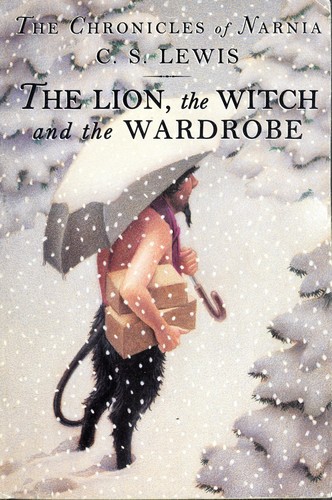

Themes
- middle grade fantasy
- children's classic
- portal fantasy
- siblings
- betrayal and forgiveness
- Christian allegory
- read-aloud
Read it if
- you want to hand a kid their first big fantasy, one you can read together over a week of bedtime chapters
- you love stories where the traitor gets a second chance and the rescue costs far more than anyone expected
- you're in the mood for a winter fairy tale with a faun, beavers serving tea and a lamppost standing in the middle of a forest
Skip it if
- you need a sprawling world and real intrigue, because the road from the wardrobe to the throne runs as straight as in any fairy tale
- a narrator who keeps leaning in to chat and tell you how to feel drives you up the wall
- religious allegory served this openly pulls you out of the story
Why this rating
🧠 For connoisseurs
5/10- Edmund. The only character who actually goes somewhere: from a spiteful little brother to a boy who sells out his siblings for a box of Turkish Delight, then dry bread in the Witch's castle and a slap across the face for begging mercy for a party of squirrels, and finally the kid who smashes the Witch's wand in battle. Lewis never turns him into a monster. He shows, step by step, how wounded pride, jealousy of an older brother and plain greed for sweets add up to something rotten.
- The night at the Stone Table. A shaved lion in a muzzle, a mob jeering at the big cat and two girls crying over his body until dawn. One of the strongest scenes in children's literature, written without a single cheap effect, and the field mice gnawing through the ropes are a detail that stays with you for years.
- The Professor's logic. His speech about Lucy either lying, being mad or telling the truth is a gem: an adult who takes a child's word seriously, plus the first hint that another world might keep its own time. The lamppost callback at the very end closes the loop beautifully.
- Problems solved straight out of the sack. Father Christmas hands out a sword, a bow and a healing cordial that fix exactly the trouble coming later, and the resurrection is explained by an older magic nobody bothered to mention before. Every rule shows up right when the plot needs it.
- Cardboard siblings. Peter is brave, Susan is careful, Lucy is good, and that's where their characterization stops. Edmund's biggest moment in the battle happens offscreen, and we only hear about it secondhand from Peter.
- Rushed and stuck in its era. The battle takes a paragraph, years of reign fit on a single page, and Father Christmas explains to Lucy that battles are ugly when women fight. For most of the book the girls cry, watch and bandage.
💖 For comfort readers
8/10- The wardrobe. The best door into another world in children's books: fur coats, mothballs, snow crunching underfoot and a lamppost glowing in the middle of a forest. I dare any kid to finish this book and not knock on the back of a wardrobe at least once.
- Warmth and food. Sardines on toast at Mr. Tumnus's, fresh trout and a sticky marmalade roll at the Beavers', tea courtesy of Father Christmas, and Mrs. Beaver packing a ham and fretting over her sewing machine while everyone begs her to hurry. A winter adventure that somehow feels like a wool blanket.
- Adventure in a small package. Betrayal, a night escape, a thaw that catches up with the Witch's sledge, a fight with a wolf, a sacrifice, statues coming back to life and a battle. Barely two hundred pages hold everything a kid wants from a fairy tale, without a single slow stretch.
- Humor for younger readers. A giant picks Lucy up because he mistook her for a handkerchief, and a freshly unfrozen lion struts around telling everyone that Aslan said “Us Lions.” Simple jokes, but they land.
- An old-fashioned voice. The narrator talks to kids like an uncle by the fireplace, everyone exclaims in very polite 1940s schoolboy slang, and the stakes often get defused by a reassurance that it will all turn out fine. A teen raised on Percy Jackson may decide this is a bedtime story for a little sibling.
The book's four layers
Plot and pacing
The skeleton is pure fairy tale: the wardrobe, the betrayal, the march to the Stone Table, the sacrifice and the battle. For a kid that's a mountain of emotion in a small space; for an adult it's a predictable path with rescues delivered on demand, from Father Christmas's armory to a law from before the dawn of time that nobody had heard of. The battle and the siblings' reign go by at summary speed, but the night on the hill and the dawn with the cracked Table carry the weight of myth.
Characters and relationships
Edmund is fully alive, and his fall is written with surprising understanding of a kid's jealousy and wounded pride. Mrs. Beaver and her sewing machine, weepy Mr. Tumnus and a Witch who hands out sweets and a moment later turns a Christmas party to stone are vivid too. Peter, Susan and Lucy, though, stay sketches: brave, careful and good.
Writing style and atmosphere
The storyteller narrator, with his asides and direct remarks to the reader, gives the whole thing the feel of a tale read aloud by the fire. Winter melting before Edmund's eyes, from dripping branches to crocuses and birdsong, is one of the loveliest nature passages in kids' books. What grates are the dated remarks and the moments when the narrator tells you outright what to feel.
Entertainment and value
Perfect for reading aloud and a great gift for a kid just getting into fantasy. It leaves plenty to talk about: betrayal, forgiveness, courage and whether Edmund ought to know what his rescue cost. An older teen may have outgrown the tone, but as a classic it's worth knowing.
The book in brief, spoiler-free
Four siblings step through a wardrobe in an old professor's house into Narnia, where the White Witch keeps the whole country in endless winter – and one of the brothers has already sold out to her for a box of Turkish Delight. A short fairy tale from 1950 that still hits hard on the night at the Stone Table, even if every page reminds you it was written for younger kids and in another era.
Want the plot step by step?SummaryThemes it explores
C.S. Lewis writes a fairy tale about how evil usually starts with small things. Edmund doesn't betray his siblings out of hatred – he's pushed by wounded pride, jealousy of his older brother and a sweet tooth, and the Witch buys him with the promise that he'll matter more than Peter. The second axis is sacrifice: Aslan gives his life in place of the traitor, and an adult reader will recognize his death and return at dawn as Christian allegory, while a kid can read it with no subtext at all as the most moving moment in the story. The third is the truth nobody wants to hear: Lucy sticks to her story while everyone calls her a liar, and the Professor teaches the older siblings that trusting a person counts as evidence too. All of it plays out in a country locked in a winter that melts away along with the Witch's power.
The main threads: the wardrobe and another world (an empty room, fur coats and a forest with a lamppost, where time runs differently than in the Professor's house); betrayal (Edmund, Turkish Delight and the promise of a crown); sacrifice and forgiveness (the night at the Stone Table and Aslan's talk with Edmund that nobody else ever hears); siblings (fights, apologies and four kids taking their thrones together at Cair Paravel); prophecy (two Sons of Adam and two Daughters of Eve, whom Narnia has waited for and the Witch fears); winter and spring (endless winter without Christmas, Father Christmas on his sledge and a thaw announcing Aslan's return); and courage (Peter against the wolf, Lucy among the wounded and Edmund breaking the wand).
Questions and answers
What order should I read The Chronicles of Narnia in? Do I need to read The Magician's Nephew first?
I recommend chronological order, which is also how HarperCollins numbers the books in the US: The Magician's Nephew, The Lion, the Witch and the Wardrobe, The Horse and His Boy, Prince Caspian, The Voyage of the Dawn Treader, The Silver Chair and The Last Battle. That way the history of Narnia runs from its creation to its end, and the lamppost in the snowy woods and the Professor with his wardrobe already have a past. Full disclosure: the publication order is different – The Lion, the Witch and the Wardrobe came out first, in 1950, and older editions call it book 1. You don't need The Magician's Nephew to follow this one, because the story here is complete; you'll just miss some backstory. Next in chronological order is The Horse and His Boy, set while the four siblings rule Narnia.
Is The Lion, the Witch and the Wardrobe appropriate for 12 year olds?
Yes, and for younger kids too – I'd put it at 9+. A nine-year-old can read it solo, and as a read-aloud with a parent you can start earlier. No romance, no swearing. There are a few scenes where it's worth sitting next to a younger child: the Witch sharpening a knife over Edmund tied to a tree, Peter killing a wolf, and the heaviest chapter, where a mob of monsters binds, shaves and beats Aslan before the Witch kills him. The narrator softens the dread and brings relief quickly. A twelve-year-old will breeze through it, though the storybook tone may feel a little young for them.
How spicy is The Lion, the Witch and the Wardrobe?
1/10 on my spice scale, which means none at all. Not a kiss, not a crush – the only thing anyone craves in this book is Turkish Delight.
How many pages is The Lion, the Witch and the Wardrobe?
189 pages in the HarperTrophy paperback, the classic US edition, though it depends on the edition. It's one of the shortest fantasy novels on my shelf: 17 chapters, just right for one a night at bedtime.
Is The Lion, the Witch and the Wardrobe YA or middle grade?
Middle grade, and above all a children's classic. The four Pevensies are schoolkids, the narrator speaks straight to young readers, and US stores shelve it for roughly ages 9 to 12. It's on YA ranked as a crossover classic: plenty of teens and adults come back to it, and it's the book that sends a lot of readers on to bigger fantasy.
Who is The Lion, the Witch and the Wardrobe for?
Kids around 9 to 12 who are just discovering fantasy, and parents looking for a classic to read aloud or give as a gift. Comfort readers get a door to another world, coziness and adventure; connoisseurs get Edmund's well-written fall and a powerful scene at the Stone Table, along with simple patterns and rescues pulled from Father Christmas's sack. If Narnia clicks, Harry Potter and Percy Jackson are natural next steps.
What about you? Have you read this book?
Reader ratings
Your rating might be totally different from mine. A lot depends on when you pick it up.
Your rating on a 1-10 scale
No login needed. One vote per browser – you can change it later.
Disagree? Rate the book above or message me on Instagram or TikTok.
What to read next
 The Horse and His Boy
C.S. Lewis
Next in chronological order: an adventure set while Peter, Susan, Edmund and Lucy rule Narnia.
★ 7/10🧠 6💖 7🌶️ 19+
Read the review
 The Voyage of the Dawn Treader
C.S. Lewis
Same series.
★ 7/10🧠 6💖 7🌶️ 19+
Read the review
 The Silver Chair
C.S. Lewis
Same series.
★ 7/10🧠 6💖 7🌶️ 19+
Read the review