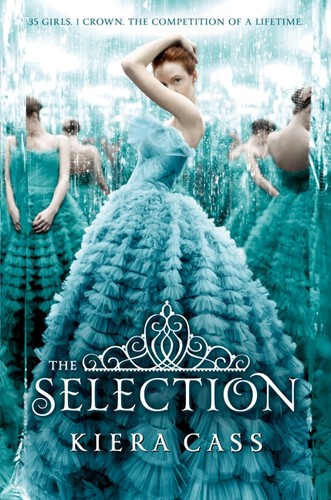

Tropes in this book
- Dystopia
- Slow burn
Themes
- dystopian romance
- love triangle
- prince and palace
- caste system
- televised competition
- clean YA romance
- for younger teens
Read it if
- you love palace romance: gowns, balls, maids and a prince who's sweeter than his press photos
- you want a light read for two or three evenings with zero sex scenes
- you watch dating shows and always felt they were missing a tiara
Skip it if
- you expect a dystopia with a thought-out world, not a cardboard backdrop
- love triangles and rivals sorted into “the mean one” and “the sweet one” give you hives
- you want a complete story, because this book stops halfway
Why this rating
🧠 For connoisseurs
1/10- A cardboard world. Illéa has eight numbered castes, jobs handed down from your ancestors and a history nobody ever seems to teach. Cass tosses all of that out and moves on, ideally to a dress fitting. How does this system work day to day, and why does almost nobody question it? No clue. The rebels are mostly noise on the other side of the wall.
- Clichés in a tiara. The “ordinary girl” swears she's average at best while everyone around her gushes over how pretty she is. She doesn't want the prince, so of course the prince wants her and only her. Throw in a love triangle. I've seen this episode, and I've seen it across several seasons.
- Celeste, mean on cue. She picks fights, wrecks other girls' gowns and beams for the cameras. She's mean because the plot needed somebody mean. No motive, no hidden layer – just a cartoon villain in an evening gown.
- Aspen. He dumps America out of wounded pride because she was the one who brought him dinner. Their love story is midnight meetups that could get them both thrown in jail, plus an endless loop of noble self-sacrifice. Not once does the book stop to ask whether this is a healthy relationship.
- Maxon saves the day. The stiff prince from TV turns out to be awkward, funny and in possession of an actual conscience. His conversations with America are the best scenes in the book, but one good character can't hold up an entire palace.
💖 For comfort readers
7/10- Pace. It reads at lightning speed. Chapters fly by, and each one brings something new: the application, the announcement, the palace, dates, gossip, rebel attacks. Boredom never makes the guest list.
- Chemistry with Maxon. A kick to the thigh, a bet over her little sister and a plate of strawberry tarts, a secret ear tug. Their relationship grows slowly, and it's sweet and funny instead of love at first sight. This is where Cass nails it.
- Fairy-tale vibes. Gowns, banquets, maids, a prince and gardens. If you ever wanted Cinderella with the cameras rolling, you get it by the bucketload. There's no sex, only kisses, so you can hand it to a younger teen without a second thought.
- Rivals off the rack. Celeste is mean, Marlee is sweet and the rest of the girls are background extras. You'll see every scheme coming a few chapters before America does.
- An open ending. The book stops halfway through the story. The big question only gets answered in the next book, so keep that one within reach.
The book's four layers
Plot and pacing
Fast, but predictable to the point of pain. For a few hundred pages I waited for something to surprise me, and apart from a handful of Maxon scenes, I waited in vain. The rebel storyline is intriguing but barely sketched, and the book cuts off midway, leaving pretty much everything open.
Characters and relationships
America is likable and has a spine, but her moaning about being plain while a whole chorus raves about her looks grates like false modesty on a runway. Maxon is the strongest thing in the book. Everyone else is a sketch: Celeste is relentlessly mean, Marlee relentlessly sweet, and the twenty-odd other girls blur into one giant gown.
Writing style and atmosphere
Simple, light prose, first-person narration and plenty of humor in the dialogue. But the world is described so loosely that it's hard to believe in. The mood is closer to a reality show than to a dystopia, and the dystopia mostly serves as set dressing.
Entertainment and value
And here's the twist: I read it fast and with a smile on my face. As a light, unwind-after-a-long-day read, especially for younger teens, it does the job perfectly. It even touches on hunger and inequality, though without much depth.
The book in brief, spoiler-free
America Singer ends up in the Selection, where Prince Maxon picks a wife from thirty-five girls while the whole country watches – even though she's secretly in love with someone else. The dystopia is just wallpaper; what's really on screen is The Bachelor with a crown.
Want the plot step by step?SummaryThemes it explores
Kiera Cass builds the story around inequality and choice. Illéa is a country where your caste number decides your job, who you can marry and whether there's dinner on the table, and for the lower castes the Selection is the only ticket up. Against that backdrop, America has to decide whether to follow her heart or her head. It sounds serious, but in practice the caste system works more as a backdrop for dress fittings than as an actual subject.
The main threads: the caste system (from Ones to Eights, with laws that decide even who you're allowed to marry); the love triangle (Aspen, the boy from the tree house, and Maxon, the prince America was supposed to dislike); life on camera (interviews with Gavril, photo shoots and rivals judging every outfit); friendship (Marlee and the maids Anne, Mary and Lucy as the only people America can lean on in the palace); family (it's for her family that America stays in the palace, even though she's homesick); and the rebels (attacks on the palace and the question of what they're really after).
Questions and answers
Is The Selection a series? What's the reading order?
Yes, it's book 1 of five. America's story runs through The Selection, The Elite and The One, and The Heir and The Crown jump ahead to the next generation. Kiera Cass also wrote short novellas from other characters' points of view, like The Prince (Maxon) and The Guard (Aspen) – optional extras, not required reading. This book ends mid-story, so have The Elite ready.
How spicy is The Selection?
2/10 on my spice scale. You get kisses and a few heated moments, and that's it. There are no sex scenes, which makes it one of the cleanest romances on my shelf.
Is The Selection appropriate for 12 year olds?
I rate it 13+. There's no sex and the language is mild, but there are rebel attacks on the palace, a mention of a child being whipped for stealing and a maid's story about being attacked, all told without graphic detail. A mature 12-year-old who loves princess stories will probably be fine, especially if a parent knows what's in it.
How many pages is The Selection?
352 in the US paperback (HarperTeen, 2013), though it depends on the edition – the 2012 hardcover is listed at 336. The prose is simple and the chapters move fast, so it's a two- or three-evening read.
Is The Selection YA or adult?
Definitely YA: a dystopian romance for teens, with no sex scenes and a heroine still living at home with her parents when the story starts.
Who is The Selection for?
Teens from about 13 who love palace romance and light dystopias, and anyone who wants a comfort read that feels like a dating show with crowns. If you're after a thought-out world and a plot that surprises you, you'll mostly get gowns, gossip and a love triangle.
What about you? Have you read this book?
Reader ratings
Your rating might be totally different from mine. A lot depends on when you pick it up.
Your rating on a 1-10 scale
No login needed. One vote per browser – you can change it later.
Disagree? Rate the book above or message me on Instagram or TikTok.
What to read next
 The Elite
Kiera Cass
The next book picks up right where this one stops, and the competition only gets tighter.
★ 5/10🧠 3💖 7🌶️ 213+
Read the review
 The One
Kiera Cass
Same series.
★ 6/10🧠 3💖 7🌶️ 313+
Read the review
 The Heir
Kiera Cass
Same series.
★ 5/10🧠 3💖 6🌶️ 213+
Read the review