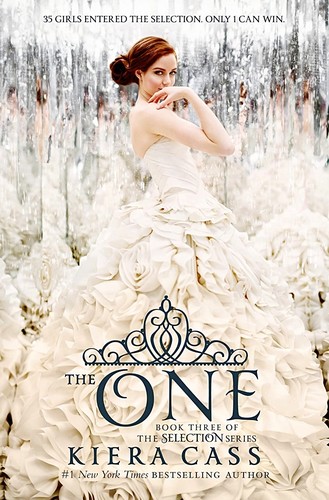

Tropes in this book
- Dystopia
- Slow burn
Themes
- YA dystopia
- royal romance
- love triangle
- the Selection competition
- rebels at the gates
- miscommunication
- series finale
Read it if
- you've read The Selection and The Elite and you just need to know who Maxon finally picks
- you love palace romance with gowns, balls and a prince who writes love letters
- you'd rather a series end on a sweet, fully closed ending than an open one
Skip it if
- a love triangle stretched across three whole books is something you outgrew a long time ago
- you want a dystopia where politics is more than a backdrop for dates
- characters who spend an entire book unable to tell each other the truth make you want to hurl it across the room
Why this rating
🧠 For connoisseurs
3/10- Romance built on things left unsaid. For three-quarters of the book America and Maxon can't get out one sentence, because each of them is waiting for the other to say it first. And when they finally manage it, Cass pulls a hallway misunderstanding out of the drawer – the kind a two-minute conversation would clear up. A genre classic, now wearing a tiara.
- A king cut from one sheet of plywood. Clarkson has exactly one setting: hiss, threaten and rub his hands together whenever America stumbles. The plot never gives him a single scene where he might have a point, so fighting him is like dueling with a piece of stage scenery.
- Knots cut, not untied. Everything the series spent three books building – the feud with the king, the rebels, the propaganda, the triangle with Aspen – ends in one violent finale that clears the obstacles out of the characters' way for them. It reads like someone sweeping the game board before the last scene, not like a resolution.
- A world still made of cardboard. The Northern rebels want reform, the Southern rebels want everyone dead, and what life looks like for the rest of Illéa we learn from one magazine and one alley. Paige, a girl from the streets, gets half a chapter, then disappears into the palace kitchen and out of the plot.
- Celeste. The best thing in this book. The mean girl of the earlier installments finally gets a motive: she cries in the library, apologizes to the other girls and turns into someone you like. Her turnaround makes more sense than the entire political plot.
- The letter from her dad. The one moment where the plot surprises you and, at the same time, changes how you see America and her family.
💖 For comfort readers
7/10- The finale, at last. After two books of wondering who Maxon will choose, you get your answer, a closed story and an ending that will have fans of the series squealing into their pillows.
- Maxon's letters. The letters the prince writes while America is far away are the sweetest pages of the whole series: clumsy, sincere and the kind you want to read out loud to your best friend.
- The Elite girls. An evening when the candidates pile onto one bed and apologize for old dirty tricks, followed by a day of taking pictures with the queen, gives you more warmth than plenty of the romantic scenes.
- Palace action. This time it isn't only gowns: there's a nighttime trip outside the walls, a gunshot wound, a secret fundraiser for weapons and a ceremony where America once again does things her own way.
- A triangle on its last legs. The Aspen thread is so worn out by now that when the time comes to close it, Cass handles it in two paragraphs. Even a loyal fan may feel somebody was in a hurry.
The book's four layers
Plot and pacing
The book finally has more action than dress fittings: a night trip to meet the rebels, a speech on the Report, money from an Italian princess, a ceremony with convicts and the king's ultimatum. The trouble is that everything Cass so carefully tied together, she then slices through with one brutal finale, and the romance hangs on misunderstandings to the very end – the kind a single honest conversation would settle.
Characters and relationships
Maxon stays the brightest spot: awkward, tender, with scars on his back and a passion for photography. Celeste gets a second layer, Elise gets a reason for being so stiff, and Queen Amberly gets a few lovely scenes. America, meanwhile, swings like a pendulum: she loves, she sulks, she runs, she comes back, and her confidence crumbles after every sentence out of the king's mouth. Clarkson and Kota each run on a single setting, and every few chapters Aspen turns up at her door with a gun and a half-finished sentence.
Writing style and atmosphere
Light and simple, first person, with tons of sighing, eye-rolling and blushing. The strongest parts are the letters from Maxon and from America's dad, because that's where Cass slows down and lets her characters speak in full sentences. Illéa still looks like the set of a TV show, and the violent scenes are written so hastily that it's hard to feel them.
Entertainment and value
As the end of America's story, it's a satisfying read: big emotions, tears and the promise of a better country. I closed it with a smile, fully aware I'd been handed a fairy tale rather than a dystopia. Bonus points for her dad's letter and for America finally fighting for what she wants instead of waiting for someone else to decide for her.
The book in brief, spoiler-free
Four girls from the Elite are left in the palace, rebels are killing people who share their castes, the king is handing out ultimatums – and America and Maxon still can't get one simple sentence out to each other. Book three closes America Singer's story with pace and heart, but its plot slices through its own knots instead of untying them.
Want the plot step by step?SummaryThemes it explores
Kiera Cass closes America's story with a book about courage and the price of power. This time the question isn't only who the prince will choose, but whether a girl from a lower caste can survive next to a king who rules through fear, public sentencings and propaganda. America learns to fight – first for ordinary people in front of the Report's cameras, then for a convicted thief, and finally for herself – while Maxon tries to step out of his father's shadow.
The main threads: love and trust (America and Maxon, who have loved each other for a while and can't bring themselves to say it); power and fear (King Clarkson, his ultimatum and announcements meant to teach people obedience); the caste system (sentences, money and respect all depend on your number, and America wants that to end); the rebels (reformers from the North and ruthless Southerners who want to stop the Selection); friendship among the girls (Celeste, Kriss, Elise and America, rivals who grow close); and family and loss (a trip home to Carolina and a letter from her dad asking his daughter to fight for what she wants).
Questions and answers
Do I need to read The Selection first?
Yes – and The Elite too. The One is book three of The Selection series and a direct sequel to The Elite: it opens in the middle of the competition with four girls left, and it keeps referring back to Marlee, the safe room, Gregory Illéa's diary and America's secret history with Aspen. Start with The Selection. I gave book one 5/10 (1 for connoisseurs, 7 for comfort readers), and book three lands at 6.
What's The Selection reading order?
The main series goes The Selection, The Elite, The One, The Heir and The Crown. The One closes America's story; The Heir and The Crown jump ahead about twenty years and follow a new heroine, Princess Eadlyn. There are also novellas told from other characters' points of view – The Prince, The Guard, The Queen and The Favorite – which are nice extras but not required reading.
How spicy is The One?
3/10 on my spice scale – the steamiest of America's three books, but still clean. There's kissing and one scene where she and Maxon start getting undressed, but they stop before it goes any further. No sex on the page.
Is The One appropriate for 12-year-olds?
I rate it 13+, like the whole series, though this is the most intense of America's three books. Besides that undressing scene, there are shootouts, a gunshot wound, the deaths of people close to the characters, an attack with many victims and a teenage girl beaten by her aunt – all without gory detail. If any of this hits close to home, you can call or text 988 in the US, any time.
How many pages is The One?
323 pages in the US hardcover from HarperTeen (2014), though it depends on the edition. For a series finale, it's a quick read.
Is The One YA or adult, and who is it for?
It's YA – a light dystopian romance for readers 13 and up. It's for everyone who read the first two books and wants to see how America's story ends, and for teens who like romance with a crown and a bit of politics in the background. If you're after a dystopia with a fully thought-out world, reach for The Hunger Games instead.
What about you? Have you read this book?
Reader ratings
Your rating might be totally different from mine. A lot depends on when you pick it up.
Your rating on a 1-10 scale
No login needed. One vote per browser – you can change it later.
Disagree? Rate the book above or message me on Instagram or TikTok.
What to read next
 The Elite
Kiera Cass
Book two, where the Selection shrinks to six girls and the triangle with Aspen moves into the palace for good.
★ 5/10🧠 3💖 7🌶️ 213+
Read the review
 The Heir
Kiera Cass
Book four jumps about twenty years ahead to a brand-new Selection, this time with a princess, Eadlyn, doing the choosing.
★ 5/10🧠 3💖 6🌶️ 213+
Read the review
 The Selection
Kiera Cass
Same series.
★ 5/10🧠 1💖 7🌶️ 213+
Read the review