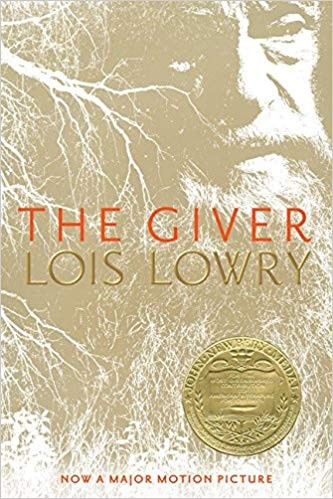

Tropes in this book
- Dystopia
- Plot twists
Themes
- dystopian classic
- colorless world without feelings
- memory and freedom of choice
- Newbery Medal winner
- gut-punch twist
- open ending
- zero romance
Read it if
- you like dystopias where the scariest things happen politely, over family dinner and with a smile
- you want a short book you'll finish in one go and then think about for a week
- you know The Hunger Games and Divergent and you're curious which book that whole shelf grew out of
Skip it if
- you expect chases, rebellions and shootouts, because here the escape only starts right before the end
- you can't stand endings the author leaves for you to settle on your own
- you need a world explained down to the last bolt, and Lowry never says how memories get passed on or where this community came from
Why this rating
🧠 For connoisseurs
8/10- The release twist. For two-thirds of the book, “release” sounds like retirement with a toast and an anthem. Lowry scatters the warning signs so calmly that they're easy to miss, and when she finally shows what the word means, she does it flatly, without one wasted sentence. After that scene, every earlier chapter replays in your head, and none of them reads the same.
- Utopia from the inside. Evil in this world wears a pressed tunic and apologizes for being late. The nightly sharing of feelings, the pills for the Stirrings, the Assignments, parents who applied for their kids – it all sounds so reasonable that for a moment I caught myself nodding along.
- Color as an ambush. Only with the apple and Fiona's hair does it hit you that this world has been gray from page one and the narration just never said so. It's a simple trick, and it lands like a bucket of ice water.
- The Giver. A worn-out old man who carries every war and famine humanity ever had, with Rosemary's story tucked away inside him. He's the character Lowry writes with the most tenderness, and also the saddest one.
- A world on the honor system. We never learn how memories travel through a touch, why only a few people have pale eyes or what's going on in the rest of the world. Lowry draws a sketch, and in a few places I wanted a map.
- An ending in the fog. The sled, the lights and the music are beautiful, but the finale can be read as a rescue or as the dream of a freezing boy. I get what she was going for; one more concrete scene still wouldn't have hurt.
💖 For comfort readers
5/10- Short and clear. Plain language, one hero, one storyline. It's hard to get lost here, and you'll get through the last stretch in a single sitting.
- Gabriel. A toddler with a stuffed hippo who points at a bird and yells his baby word for “plane” is the warmest spot in the book and the best reason to root for Jonas.
- Feelings. There's tenderness (a holiday with grandparents), there's horror (a memory of war) and there's one scene after which I had to put the book down for a few minutes. Lowry pulls on your emotions sparingly, but she never misses.
- The long runway. Before Jonas even meets the Giver, you sit through several chapters of ceremonies, rules and evening rituals. They're interesting, but they have about as much action as a committee meeting on bicycle policy.
- Zero romance. Fiona has red hair, a gentle manner and a nice smile, Jonas feels something for her, and that's the end of it. If you're waiting for a love story like the one in Divergent, you'll leave empty-handed.
- No period at the end. Comfort readers like knowing everything turned out fine. You won't get that certainty here: the last things you see are a sled, lights and music, and what they add up to is your call.
The book's four layers
Plot and pacing
One of the best-built plots I've come across in books for young readers. Every innocent-looking detail from the opening chapters (the plane, the apple, newchild number thirty-six, the word “release”) comes back later with double the force. The book is short and doesn't waste a single scene, and the truth about release flips everything I thought I knew about this world. The only thing I'm missing is a clearer resolution.
Characters and relationships
Jonas is a hero you believe: curious, honest to the point of pain and lonelier with every chapter. The Giver is excellent – exhausted and full of guilt. Jonas's parents, Asher and Fiona, though, are more functions than people: you know why they're in the story, but you learn very little about them. And the father who coos a sweet goodbye at a newborn is one of the most terrifying characters I know.
Writing style and atmosphere
The prose is plain, cool and precise, just like the world it describes. Lowry makes language one of the book's subjects: mandatory apologies, stock phrases and an obsession with precision of language all exist so nobody has to call things by their real names. When color and pain arrive, the writing suddenly runs warm, and the memories of the sled or the battlefield hit harder than plenty of scenes in much thicker dystopias.
Entertainment and value
This isn't entertainment in the Hunger Games mold – nobody fires a bow, and for a long stretch the biggest adventure is giving an old woman a bath. In exchange, you get a book that changes how you hear words like safety, comfort and order. The early chapters drag and the ending will leave some readers hungry, but what this story is worth outweighs what it lacks as entertainment.
The book in brief, spoiler-free
Jonas lives in a world without pain, color or choice, and at the Ceremony of Twelve he gets an Assignment nobody can even describe: he's to carry the memories of all of humanity. A 1993 dystopian classic that won the Newbery Medal – short, quiet and merciless.
Want the plot step by step?SummaryThemes it explores
Lois Lowry tells the story of a world that gave up pain and paid for it with everything else. In Jonas's community nobody starves, nobody goes without medicine and nobody gets divorced, but nobody sees color either, nobody chooses their job or their family, and nobody knows what the word “love” means. The entire past, with its wars, famines and joys, rests on one person, the Receiver of Memory, so everyone else can live in peace. Once Jonas takes on that role, he starts to see what that peace costs and who is really paying for it.
The main threads: Sameness (color, weather, hills and every difference between people erased, because anything different might cause trouble); memory (memories as the source of both wisdom and pain, which the community refuses to carry itself); freedom of choice (a world where a committee picks your job, your spouse and your children, because you might choose wrong); release (the polite word for killing newborns who grow too slowly, the old and those who break the rules too often); language (precision of language, mandatory apologies and stock phrases that help everyone avoid calling things by their names); lying (a training rule that tells Jonas he may lie, and his creeping suspicion that the adults got the same permission); and love and family (a family unit assigned by committee versus a remembered holiday with grandparents that Jonas is ready to risk everything for).
Questions and answers
Is The Giver a series? What's the reading order?
Yes, it's book 1 of what's known as The Giver Quartet. It's followed by Gathering Blue, Messenger and Son, in that order. I've reviewed all four, and each one has its own review here. Jonas gets a complete arc here, even though the last scene leaves the big question open.
How many pages is The Giver?
240 pages in the US paperback (2014, originally HMH Books for Young Readers, now Clarion Books), though it depends on the edition – the original 1993 hardcover is listed at 180. It's 23 short chapters, so it reads fast.
Is The Giver appropriate for 12 year olds?
I rate it 12+: Jonas is about to turn twelve himself, and there's no swearing, no romance and no sexual content. But some scenes can shake adults too: a newborn's death shown on a recording, a memory of war, hunger and a young woman who asks to be “released,” which in practice means asking to die. For younger readers, it works best paired with a conversation with a parent or teacher. If the book stirs up something heavy for you, you can call or text 988 (USA).
How spicy is The Giver?
1/10 on my spice scale, which here means basically nothing. The closest it gets is the Stirrings: a dream about Fiona that the community treats with a daily pill. Jonas has a quiet crush on her, and that's the whole love life in this book.
Is The Giver YA or adult?
Neither strictly – it's a classic that sits right on the line between middle grade and YA. The hero is eleven going on twelve, it won the Newbery Medal (an award for children's books), and it's a classroom staple in the US. The themes are heavy enough, though, that plenty of adults read it and get just as much out of it.
Who is The Giver for?
Readers who care more about a big idea and hard questions than about action in their dystopias, and fans of The Hunger Games and Divergent who want to see where that shelf began. It's a great book to read and argue about in class or at home. Comfort readers who want romance, shootouts and a clear happy ending will struggle here, even though it's short.
What about you? Have you read this book?
Reader ratings
Your rating might be totally different from mine. A lot depends on when you pick it up.
Your rating on a 1-10 scale
No login needed. One vote per browser – you can change it later.
Disagree? Rate the book above or message me on Instagram or TikTok.
What to read next
 Gathering Blue
Lois Lowry
Same series.
★ 7/10🧠 7💖 5🌶️ 112+
Read the review
 Messenger
Lois Lowry
Same series.
★ 6/10🧠 6💖 5🌶️ 112+
Read the review
 Son
Lois Lowry
Same series.
★ 7/10🧠 7💖 6🌶️ 112+
Read the review