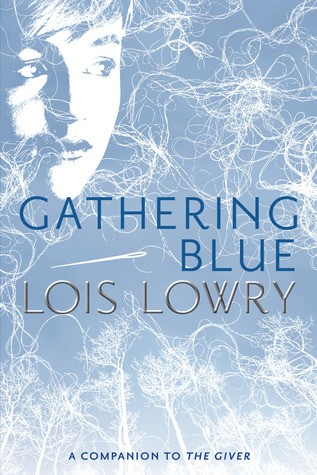

Tropes in this book
- Dystopia
- Found family
Themes
- dystopian companion novel
- post-apocalyptic village
- disabled heroine
- art and power
- mystery of the forest beasts
- orphan found family
- zero romance
Read it if
- you loved The Giver and want to see a different corner of that world, with a new heroine and new questions
- you like heroines whose strength lives in their fingers and their stubbornness, not in a bow or a sword
- you're curious what happens when the people in charge start ordering the future from artists
Skip it if
- you need action, because long stretches here belong to a trial, dyeing lessons and embroidery by the window
- you're hoping for romance and will get a friendship with a nine-year-old scamp and his dog instead
- you want an author who explains everything, while the magic in the threads and the Council's plans stay in the shadows
Why this rating
🧠 For connoisseurs
7/10- Kira. A heroine with a twisted leg whose disability never gets turned into decoration or a moral lesson. Kira gets scared, bends the truth when she has to, keeps count of every bow she owes the Council and clings to her mother's belief that pain makes you stronger than people who've never felt it. Lowry writes her without pity and without sugar, so you believe her from the very first scene on the Field of Leaving.
- Art on a leash. The best idea in the book: an embroiderer, a carver and a singer get warm rooms, good food and a ready-made plan for what they're supposed to create. Comfort turns out to be a cage here, and the question of who gets to tell the future is far more serious than the calm tone lets on.
- One scene near the end. A quick glimpse of the Singer after the Gathering says more about this world than the entire trial. Lowry hands it over in a few dry sentences, and that's exactly why it hits so hard.
- A world in scraps. Names that grow by a syllable as people age, two sticks lashed into a cross as the Object of Worship, a song full of names of lost places nobody understands anymore. From crumbs like these you piece together for yourself what the Ruin must have been.
- Discoveries you can see from a mile off. That something's wrong with the beasts, and that her courteous defender isn't telling the whole truth, you'll guess long before Kira does. The tension comes from waiting for her to see it, not from surprise.
- A shortcut ending. The last two chapters answer the question about the beasts, but the Council stays in the shadows, Vandara drops out of the story and the magic in the threads never gets any explanation. Kira's decision is beautiful – it's just made in about two pages.
💖 For comfort readers
5/10- Matt and Branch. A grubby scamp from the Fen who swipes sweets, smears swamp grass under his arms to fake a grown man's body hair and howls in the bathtub that he's being drowned. His mutt with the crooked tail gets more tenderness than half the adults in the village.
- Mysteries in the background. A child crying behind a wall, growling in the bushes and the dyer's sudden death keep nagging at you even in chapters where Kira does nothing but embroider.
- A slow start. First the vigil on the Field, then a long trial where the same charges get read out again and again, then dyeing lessons with a list of plants that would make a herbarium jealous. You need a lot of patience before anything moves.
- No romance, no chases. Thomas is a friend, not a love interest, and the only matchmaking in the book comes from a nine-year-old saying goodbye. There's not much action either: the longest journey happens offstage.
- Left hungry at the end. Kira makes a brave decision, but you never see what comes of it. If you like stories tied up neatly, you'll walk away with questions.
The book's four layers
Plot and pacing
The idea is strong and the structure is well thought out: a verdict that looks like a rescue turns out to be the start of captivity, and small signals (crying behind a wall, hunts that never bring home a beast, a defender who claims he saw too much) slowly add up. The pacing is uneven, though – long stretches go to lessons and stitching, and the finale explains her father's fate at the expense of everything else.
Characters and relationships
Kira is one of the best-written disabled heroines I know of in books for teens. Matt is disarming, little Jo with her thumb in her mouth breaks your heart, and Annabella with her stained hands has more wisdom than the entire Council. Thomas is weaker – kind but passive – and Jamison stays more of a riddle than a person right to the end.
Writing style and atmosphere
Lowry writes simply and calmly, with no fireworks, and the coolness of the prose fits a cruel, poor village. The rough Fen dialect that Matt and his neighbors speak sounds great, and the descriptions of the robe, where the history of the world fits into tiny stitches, are some of the most beautiful passages in the book. At times the sentences are a little too modest, though, and a scene that should hit harder slips by without an echo.
Entertainment and value
This isn't a book for quick thrills: there's a lot of waiting, sorting thread and talking over tea. In return you get a story about freedom, disability and the price of comfort that's easy to talk about afterward, especially once you've read The Giver. Not much entertainment, but plenty to think about.
The book in brief, spoiler-free
Kira was born with a twisted leg, and after her mother dies, the village women want her dragged out to the Field and left for the beasts – instead, the Council of Guardians hands her a warm room and the most important job in the village: restoring the robe that holds the entire history of the world. Book 2 of The Giver Quartet, with a brand-new heroine: quiet, unsettling and all about what life in a golden cage really costs.
Want the plot step by step?SummaryThemes it explores
Lois Lowry tells the story of a village that survived the end of the old world and built its life on the rubble out of fear: of sickness, of hunger and of the beasts in the forest. Anyone who can't work ends up on the Field, tykes get kicked out of the way, and women aren't allowed to read. In a place like that, an orphan with a twisted leg suddenly gets everything the others don't have: hot water, good food and an honored task. The catch is that someone else decides what she'll stitch. It's a book about who tells the story – and who has the right to tell the future.
The main threads: art and power (an embroiderer, a carver and a singer kept in the Council Edifice to create whatever the Guardians want); disability and exclusion (a village that leaves imperfect newborns on the Field, along with anyone who stops being useful); fear (beasts nobody has ever seen that keep people away from the forest); memory (the robe and the Ruin Song as the only history the villagers know); friendship (Kira, Thomas, Matt and Jo – orphans and outcasts who start looking out for each other); family (her mother's lessons, her father's pendant and the question of what really happened to Christopher); and freedom (a comfortable life that turns out to be a cage, and the decision to stay anyway and change something).
Questions and answers
Do I need to read The Giver before Gathering Blue?
No. Nobody from The Giver appears in this book: it's a new heroine, a different community and a different corner of the world after the disaster called the Ruin. What ties them together is the theme – a society that takes away people's choices in the name of order and makes use of children with a special gift. The quartet still reads best in order: The Giver, Gathering Blue, Messenger, Son, because the later books start pulling the threads together.
How many pages is Gathering Blue?
241 pages in the current US paperback from Clarion Books (2013, originally Houghton Mifflin Harcourt), though it depends on the edition. It's 23 short chapters, so it goes fast, even if the first half takes its time.
Is Gathering Blue appropriate for 12 year olds?
I rate it 12+, the same as The Giver. There's no romance, no sexual content and no swearing, but the world is cruel: children get hit, imperfect newborns are left on the Field, Kira's mother dies on the first page, there's a brutal attack in the past, one short, bloody image near the end, and a mention of a father who took his own life after his wife died. All of it is brief and not graphic, so a 12-year-old can handle it, ideally with someone to talk it over with afterward. If any of this hits close to home, you can call or text 988 (USA).
How spicy is Gathering Blue?
1/10 on my spice scale, which here means nothing at all. Kira and Thomas are friends, nobody kisses anybody, and the closest thing to a love story is a nine-year-old trying to play matchmaker.
Is Gathering Blue YA or adult?
Like The Giver, it sits on the line between middle grade and YA. Kira is a teenager, the language is simple and nothing is explicit, but the questions it asks about power, disability and freedom are heavy enough that adults get just as much out of it.
Who is Gathering Blue for?
Readers of The Giver who want to go back to that world, and anyone who values questions over chase scenes in a dystopia. It also works well as a book to discuss in class or at home, since it deals with exclusion, freedom and art. Comfort readers who want action, romance and an ending with a bow on top will get bored here, short as it is.
What about you? Have you read this book?
Reader ratings
Your rating might be totally different from mine. A lot depends on when you pick it up.
Your rating on a 1-10 scale
No login needed. One vote per browser – you can change it later.
Disagree? Rate the book above or message me on Instagram or TikTok.
What to read next
 Messenger
Lois Lowry
Book 3 of the quartet, where the threads from the first two books start to come together.
★ 6/10🧠 6💖 5🌶️ 112+
Read the review
 The Giver
Lois Lowry
Book 1 of the quartet: a different hero, the same cool world and the same question of what order without choice really costs.
★ 8/10🧠 8💖 5🌶️ 112+
Read the review
 Son
Lois Lowry
Same series.
★ 7/10🧠 7💖 6🌶️ 112+
Read the review