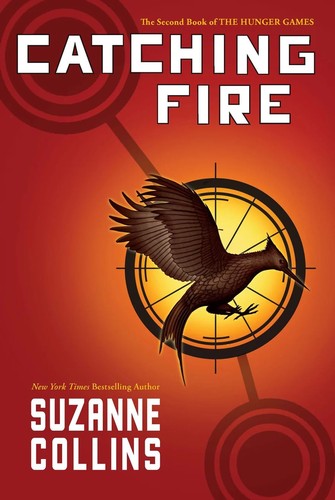

Tropes in this book
- Dystopia
- Fake dating
- Plot twists
Themes
- dystopian YA
- rebellion against the Capitol
- Quarter Quell arena
- love triangle
- propaganda and public executions
- cliffhanger ending
Read it if
- book one left you wondering what the Capitol does with the girl who pulled out the berries
- you like dystopias where politics and propaganda are as dangerous as the arena itself
- you want twists that make you put the book down and stare at the wall for a minute
Skip it if
- you haven't read The Hunger Games – without it, half of this book loses its meaning
- executions, whippings and torture are too heavy for you even without gory descriptions
- you hate endings that cut off at the worst possible moment and leave you waiting for the next book
Why this rating
🧠 For connoisseurs
8/10- An arena you have to crack. A clock split into twelve sectors, where a different nightmare wakes up every hour, is the best idea in the whole series. The characters don't just fight to stay alive, they have to work out how the arena operates, and you're guessing right along with them.
- Surprises that pay off. The Quarter Quell flips the table halfway through, and the finale makes you rethink everything that happened in the arena. Collins plays fair with her clues – the watch, the bracelet, the sponsor gifts – so the twist isn't a rabbit pulled out of a hat.
- People who stay with you. Finnick, Johanna, Beetee, Mags, even the nameless morphling – each of them gets a moment and a piece of backstory. The past victors are a gallery of people the system has broken, not cannon fodder.
- Violence that means something. An old man executed in District 11, Gale under the whip, Darius serving dinner without a tongue. Collins writes it without wallowing, but in a way that's hard to forget, and she shows how terror works instead of turning it into a show – the exact opposite of what the Capitol does.
- The first half treads water. The Victory Tour, wedding dresses and Katniss's doubts eat up a lot of pages, and the same conversations about running away and who she really loves keep circling back. The tension is there, but the plot stalls in places.
- A finale delivered as a lecture. The big answers arrive in a single conversation around a table on a hovercraft. After an arena built this carefully, getting the solution as a recap from Haymitch is a bit of a letdown.
💖 For comfort readers
6/10- Arena action. The second half is fog, monkeys, a giant wave, alliances that could crack at any second and chapters that end so your hand reaches for the next one on its own.
- A love triangle with real feelings. Gale or Peeta is less about picking a team here and more about picking between two ways of living. Peeta gets a few scenes that would soften even the toughest reader.
- Finnick. The most gorgeous victor in Panem walks into the book half-dressed, offering sugar cubes, and then turns out to be someone completely different from what that scene promised.
- Lots of politics, little air. If you came for adventure and romance, you have to get through almost half a book of uprisings, Peacekeepers and the mood in the districts before the gong sounds again.
- A heavy mood and a cliffhanger. Whippings, executions, torture you hear in the voices of people she loves and an ending that leaves the heroine in the worst place possible. This is not a pick-me-up, and there's no happy ending.
The book's four layers
Plot and pacing
The structure is carefully planned: first politics and the rising terror in the districts, then the Quarter Quell rewriting the rules, then the clock arena, the best one in the series. Clues planted early come back at exactly the right moment. It loses a point for the slow first half and for a finale that gets explained in one conversation instead of shown.
Characters and relationships
Katniss can be exhausting, because she still doesn't know what she feels or whom to trust, but that's a consistent portrait of a girl living with trauma, not the author slipping. Peeta gains real character, Haymitch gets a past, and Finnick, Johanna, Beetee and Mags are the best-written supporting cast in the trilogy. Gale is the weak spot – more often a symbol of anger than a person.
Writing style and atmosphere
First person and present tense keep the tension tight, and the horror scenes – the fog, the jabberjays, Cinna behind the glass – are written lean and land hard. It's weaker when Katniss weighs the same dilemmas yet again; her thoughts repeat themselves a lot. The atmosphere is as stifling as that jungle, and that part is a compliment.
Entertainment and value
It pulls you in, especially once the Quarter Quell is announced, and it hits harder emotionally than book one. What it doesn't give you is relief: the violence reaches the people closest to Katniss, and the ending snaps off on a cliffhanger without a trace of a happy ending. Worth it – ideally with Mockingjay within reach.
The book in brief, spoiler-free
Katniss and Peeta come home from the arena as victors, but the Capitol has no intention of letting the berries slide, and out in the districts the mockingjay on her pin starts to mean a lot more than a Games souvenir. Less pure survival than book one, more politics, more love triangle and a steep bill that other people pay for one gesture in the arena.
Want the plot step by step?SummaryThemes it explores
In book two, Suzanne Collins moves the weight from surviving the arena to the question of what happens after you win. Katniss has a house in Victor's Village and money, but she loses the one freedom people in District 12 still have: the right to choose who to build a life with. Every gesture she makes is read as politics, and other people pay the bill – the old man in District 11, Gale under the whip, Darius, Cinna. It's a book about terror, propaganda and how a symbol takes on a life of its own, whatever the girl wearing it actually wants.
The main threads: the spark of rebellion (the berries from the arena, which the Capitol saw as love and the districts saw as defiance); terror and propaganda (Snow's visit, executions, Romulus Thread and cameras following every kiss); victors' trauma (Katniss's and Peeta's nightmares, Haymitch's drinking, morphling and people who keep paying for their win for the rest of their lives); the love triangle (Gale, who wants to fight, and Peeta, who wants to protect her, while Katniss herself can't tell feeling from strategy); the victors' alliance (people who were supposed to kill each other starting to work together against the Capitol); sacrifice (Mags, the morphling, Cinna and Darius give up something that can never be taken back); and the mockingjay (a bird that survived in spite of the Capitol, and a girl who becomes its face).
Questions and answers
Do I need to read The Hunger Games before Catching Fire?
Yes, don't skip it. Catching Fire is a direct sequel: it picks up about six months after Katniss's first Games, and the whole plot grows out of what she did in the arena. Without book one, half the stakes simply won't register.
Is there a book 3 after Catching Fire? What's the reading order?
Yes – Catching Fire is book 2 of the original trilogy, and the story continues in Mockingjay, which wraps it up. There are also two prequels: The Ballad of Songbirds and Snakes and Sunrise on the Reaping. I recommend publication order: The Hunger Games, Catching Fire and Mockingjay first, then Ballad, then Sunrise, because the prequels hit much harder once you know who these people become. Catching Fire ends mid-story, so have Mockingjay ready.
How many pages is Catching Fire?
391 pages in the 2009 US hardcover from Scholastic Press, though it depends on the edition. The novel is split into three parts – The Spark, The Quell and The Enemy – and the second half reads much faster than the first.
Is Catching Fire appropriate for 12 year olds?
Like book one, I rate it 13+, and it's better suited to more mature 13-year-olds. There's more violence than in The Hunger Games, and it hits closer to Katniss: a public execution, a whipping, a beating, Avoxes whose tongues the Capitol has cut out, torture she hears in the screams of people she loves, plus drinking and morphling addiction. None of it is gory, but it's heavy. A mature 12-year-old who handled book one can manage, ideally with an adult around to talk it through.
How spicy is Catching Fire?
2/10 on my spice scale. There are no sex scenes – just kisses, an engagement staged for the cameras and Katniss and Peeta falling asleep together to keep the nightmares away. The love triangle is about feelings and choices, not heat.
Is Catching Fire YA, and who is it for?
It's YA through and through, written for teen readers like the rest of the series. It's for everyone who liked The Hunger Games, especially connoisseurs who enjoy dystopias with politics, careful construction and a plot that can genuinely surprise them. Comfort readers get a love triangle and a terrific second half in the arena, but they'll have to push through a slower start and make peace with an open ending.
What about you? Have you read this book?
Reader ratings
Your rating might be totally different from mine. A lot depends on when you pick it up.
Your rating on a 1-10 scale
No login needed. One vote per browser – you can change it later.
Disagree? Rate the book above or message me on Instagram or TikTok.
What to read next
 The Hunger Games
Suzanne Collins
Where it all starts: the reaping, the arena and the handful of berries that sets Catching Fire in motion.
★ 7/10🧠 8💖 5🌶️ 113+
Read the review
 Mockingjay
Suzanne Collins
The final book of the trilogy picks up right where this cliffhanger leaves Katniss – keep it within reach.
★ 8/10🧠 7💖 4🌶️ 214+
Read the review
 Sunrise on the Reaping
Suzanne Collins
Same series.
★ 8/10🧠 8💖 5🌶️ 114+
Read the review