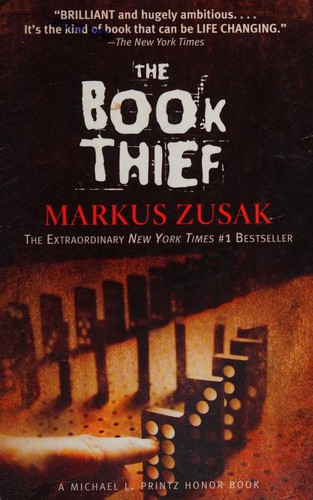

Tropes in this book
- Found family
Themes
- historical YA
- World War II
- Death as narrator
- Jewish man hidden in the basement
- childhood friendship
- the power of words
- heavy read
Read it if
- you want a serious novel about World War II told from a German girl's kitchen and basement, not from the front
- you love unusual narrators and a form that pulls something unexpected in every chapter
- you're looking for a story about how books and words can save a person when everything else is falling apart
Skip it if
- you don't have it in you right now to read about losing loved ones, the Holocaust and bombings, because this book spares no one
- you'd rather have a fast plot than a mosaic of short scenes, narrator asides and a metaphor on every page
- it bothers you when the narrator gives away the ending before you get there
Why this rating
🧠 For connoisseurs
9/10- Death as the narrator. On the very first page the narrator tells you, flat out, “You are going to die,” and you know right away this won't be a standard YA war story. Death is tired, sarcastic, buried in work from 1939 to 1945 and surprisingly tender toward the people he comes for. Zusak makes him a witness instead of a monster, and that one idea sets up the whole book.
- Spoilers as a weapon. The narrator deliberately tells you in advance who won't make it. I was sure that would kill the tension, and the opposite happened: every ordinary scene, read knowing what's coming, hurts twice as much. Very few authors writing for teens would dare to make that move.
- Hans and Rosa. A foster father who teaches a girl to read on the back of sandpaper and on the basement wall, and a foster mother who calls everyone a pig, then sits up at night with her husband's accordion pressed to her chest. For me, Rosa is the best-written character in the book, because her kindness shows only in what she does, never in what she says.
- Books inside the book. The Standover Man and The Word Shaker, painted by Max on whitewashed pages of Mein Kampf, are a brilliant idea: the words that destroyed people, covered with a coat of paint and written over. The thought that words can both kill and save isn't hung on a banner here – it's built right into the plot.
- An overloaded style. Metaphors and sky colors pour out nonstop, and Rosa's cardboard face comes back so many times that I started keeping count. Some images are beautiful, some feel forced, and over more than 550 pages the fatigue starts to show.
- The 1941 slump. The middle is mostly apple raids, banter with Rudy and one run-in after another with Viktor Chemmel's gang. It's charming, but the plot treads water until things get dangerous in the basement again.
💖 For comfort readers
5/10- Rudy Steiner. The boy with hair the color of lemons, who once smeared himself with charcoal to be Jesse Owens and asks Liesel for a kiss at every chance he gets. He's the funniest and warmest character in the story, and without him it would be unbearable.
- Adventures on Himmel Street. Stolen apples, break-ins through a library window, soccer games with trash cans for goalposts and one piece of candy two kids suck on in turns. The kid humor alternates with the dread and gives you a moment to breathe.
- The weight. War, the Holocaust, bombings, the deaths of children, and a suicide. The narrator warns you about the ending, and it still hits with full force. This is not a book to read when you need cheering up.
- Length and pace. More than 550 pages of short scenes, broken up by narrator asides, lists and entries from Death's diary. Anyone who reads for momentum will get impatient.
- The form. Bold headings dropped into the middle of chapters, dictionary definitions, German curse words, Max's drawings and a narrator who jumps back and forth in time. It rewards focus, but it's not a book to fall asleep with after a hard day.
The book's four layers
Plot and pacing
Ten parts running from January 1939 to October 1943 add up to a mosaic of scenes more than a classic plot. The strongest moments – the bonfire on Hitler's birthday, Max's arrival, the bread on Munich Street and the final part – are outstanding, and a narrator who gives the ending away turns guessing into something more interesting: waiting. It loses a point for the middle, where the plot circles around stolen apples and street fights.
Characters and relationships
Hans, Rosa, Rudy and Max are characters you remember for years, and Rosa – foul-mouthed, grumpy and completely dependable when things are at their worst – is the best of them all. The supporting cast is alive too: Ilsa Hermann, Frau Holtzapfel and her son Michael coming home from Stalingrad. What keeps it from a ten for me is Liesel, who watches more often than she acts, and a couple of villains cut from the same mold, like Franz Deutscher and Viktor Chemmel.
Writing style and atmosphere
Death as the narrator is an idea that holds up: tired, ironic, tender and obsessed with the colors of the sky. The tiny chapters, the headings dropped into the text and Max's drawings give the book a rhythm of its own. Zusak does overdo the metaphors, though: not every sentence needs to be an image, and the same comparisons keep coming back.
Entertainment and value
The final stretch took me a whole evening, because every fifteen minutes or so I had to get up and walk around the room. It's a book for teens and adults about what ordinary decency costs in bad times, and one of the best war novels you can hand a young reader. It isn't entertainment in the strict sense, though: it's long, dense and painful, so no ten.
The book in brief, spoiler-free
Nine-year-old Liesel is sent to a foster family outside Munich in 1939, learns to read on books she steals, and soon a young Jewish man is hiding in the basement of her house. Death tells the story, warns you from the first pages that he's coming for several people on this street – and still breaks your heart into tiny pieces.
Want the plot step by step?SummaryThemes it explores
Markus Zusak writes about words. With some of them, Hitler won Germany over; with others, a skinny girl from a poor street made it through the war, and a Jewish man hiding in a basement painted over the pages of Mein Kampf so he could write a fable about friendship on them. The war is seen here not from the trenches but from a kitchen, a basement and a street where people say Heil Hitler because they have to – and where, all the same, a house painter hands a piece of bread to a prisoner and the mayor's wife leaves the library window open. The whole story is told by Death, who has seen the camps, Stalingrad and the bombings, and who is trying to understand how the same people can be so ugly and so glorious.
The main threads: words and books (from The Grave Digger's Handbook, picked up out of the snow, to the notebook in which Liesel writes down her own life); a foster family (Hans and Rosa Hubermann, who take in a stranger's child and then a Jewish stranger); hiding a Jewish man (Max Vandenburg in the basement of 33 Himmel Street, and the fear that has to be turned into a smile for the neighbors every single day); friendship (Liesel and Rudy, partners in theft, and Liesel and Max, who trade nightmares); war and the Holocaust (prisoners marched through town to Dachau, the Hitler Youth, conscription as punishment and air raids on German towns); survivor's guilt (Max, who left his family behind, Michael Holtzapfel after Stalingrad, and Ilsa Hermann, who hasn't stopped mourning her son since 1918); and Death as a witness (a narrator who is haunted by humans, not the other way around).
Questions and answers
Is The Book Thief appropriate for 12 year olds?
I'd say it's for ages 13 and up. There's no sexual content and a fair amount of swearing, mostly Rosa's German insults, but the themes are heavy: war, the Holocaust, bombings, the deaths of children and loved ones, violence against prisoners and the suicide of a supporting character, described briefly. Younger readers are best off reading it with an adult they can talk it over with. If the book stirs up dark thoughts, call or text 988, the Suicide & Crisis Lifeline in the US.
Is The Book Thief part of a series?
No, it's a standalone novel, and the epilogue wraps up Liesel's story. There's nothing to read before it or after it. There is a 2013 film adaptation directed by Brian Percival, with Sophie Nélisse as Liesel and Geoffrey Rush and Emily Watson as Hans and Rosa, but read the book first.
How many pages is The Book Thief?
About 550 – the US Knopf paperback has 552 pages, though it depends on the edition. The novel has a prologue, ten parts and an epilogue, and the chapters are short, often just a few pages each, so it moves faster than the page count suggests.
Is The Book Thief YA or adult?
Both, honestly. In Australia it first came out as an adult novel, while in the US it's published and shelved as young adult and taught in plenty of middle and high schools. Liesel is a child for most of the book, but the writing and the subject matter are just as much for adults.
How spicy is The Book Thief?
1/10 on my spice scale, so basically none. The closest it gets is Rudy asking Liesel for a kiss over and over. What you should prepare for isn't romance but grief.
Who is The Book Thief for?
Connoisseurs, and anyone who wants to see World War II through the eyes of ordinary Germans on a poor street, including the ones who found the courage to help. It works really well for teens 13 and up, for parents and for teachers, because it opens up a lot of conversations. Comfort readers will make it to the end if they fall for Rudy and Hans, but they should expect a long, painful read, not a way to unwind.
What about you? Have you read this book?
Reader ratings
Your rating might be totally different from mine. A lot depends on when you pick it up.
Your rating on a 1-10 scale
No login needed. One vote per browser – you can change it later.
Disagree? Rate the book above or message me on Instagram or TikTok.
What to read next
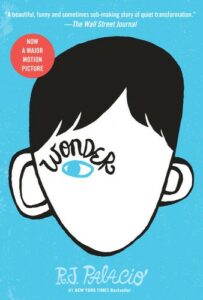 Wonder
R.J. Palacio
Another powerful story about how ordinary human decency can change someone's life.
★ 8/10🧠 8💖 7🌶️ 110+
Read the review
 The Fault in Our Stars
John Green
Another book about dying and love, and about how much one beloved novel can matter.
★ 7/10🧠 7💖 9🌶️ 113+
Read the review
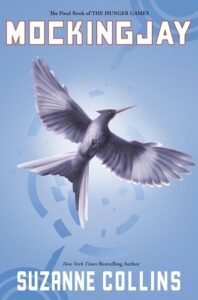 Mockingjay
Suzanne Collins
A war seen through the eyes of a teenage girl who loses the people closest to her along the way.
★ 8/10🧠 7💖 4🌶️ 214+
Read the review