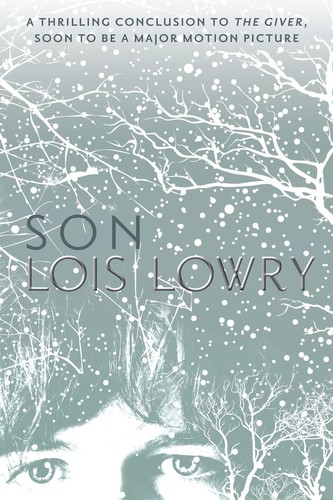

Tropes in this book
- Dystopia
- Found family
Themes
- dystopian YA
- mother searching for her son
- The Giver Quartet finale
- three parts and three worlds
- the climb and the sacrifice
- good vs. evil
Read it if
- you've read The Giver and want to watch the same events through the eyes of someone who stood completely on the sidelines
- you like stories about stubbornness, where the heroine spends years getting ready for one brutal test
- you want a moving story about a mother and a son in which the sad parts never smother the hope
Skip it if
- you need fast action, because a big chunk of the book goes to lab work at a fish hatchery, gathering herbs and years of training
- you want your dystopias to stay dystopias, not swerve into a fairy tale with magical gifts and evil in a black cloak
- you expect the big series finale to play out in a battle, not in one conversation by a river
Why this rating
🧠 For connoisseurs
7/10- The community through the back door. Part one is a masterclass: the same months as The Giver, seen from the Birthmothers' dormitory and a lab at the Fish Hatchery. If you've read book one, you know exactly who the friendly Nurturer is, where the bike with the child seat is headed and what one short word, “release,” means. Claire doesn't, and that gap between her and the reader hurts more than plenty of violent scenes.
- Claire. A heroine who learns to feel the way a toddler learns to walk: first she names loneliness, then colors, birds and music. Her stubbornness is quiet and made of iron, and Lowry doesn't turn her into a saint – Claire lies, hides, gets furious and makes a decision that can't be taken back.
- The village under the cliff. Alys, Lame Einar and Old Benedikt are some of the best-written characters in the whole quartet. The middle part has the weight of a solid family drama, and Einar's story, told by the fire in a handful of sentences, sits on your chest long after you close the book.
- The climb. The cliff chapters are pure physical writing: every handhold, every wet crevice and the gull's attack are described so precisely that I caught myself feeling around for a foothold.
- A fairy tale instead of a dystopia. At the top of the cliff, the book switches genres. The Trademaster hisses, flicks his tongue like a snake and wears a black cloak, and his trades work like spells. After the cool, precise first part, that shift grinds.
- An ending that takes a shortcut. The big showdown with evil comes down to a few conversations and one sentence repeated in a river. As a moral it's lovely; as a plot resolution it's too easy, and mother and son barely get a scene together.
- A son in his mother's shadow. The title character doesn't fully show up until the last part, and he's paler than Claire. His gift is the key to the finale, but Gabe himself is mostly stubbornness and a boat that leaks.
💖 For comfort readers
6/10- Feelings. A mother who doesn't know her own child's name and a boy who only remembers that someone once held him. Lowry never wrings out tears by force, and a few scenes still close up your throat.
- Tension on the rock face. The climb with a rope, a lightning-scorched tree and a gull defending its nest is the best adventure sequence in the whole quartet.
- Closure. After books that left readers with open questions, the threads finally meet here, and familiar faces come back in new roles.
- The long middle. Years of training with Einar mean chapter after chapter of runs with a sack of stones, balancing on logs and walking a rope. It matters for the plot, but it drags like a winter evening in Alys's cottage.
- A quiet start. Part one mostly happens in a lab, a cafeteria and the Nurturing Center. If you haven't read The Giver, you may spend a long time wondering what exactly you're waiting for.
- A showdown without a fight. After all that preparation, the duel with evil is short and has no real battle. If you were hoping for a big, flashy finale, you'll leave hungry.
The book's four layers
Plot and pacing
The three-part structure is a great idea: each part happens in a different world, with a different person at the center. The first is excellent, the second is long but builds to a strong climax on the cliff. The third gathers every thread of the quartet, only in a rush, and the clash with evil wraps up far too smoothly for a book that spent four hundred pages raising the stakes.
Characters and relationships
Claire is one of Lowry's strongest heroines, and Alys, Einar and Old Benedikt have more life in them than most characters from the earlier books. It's nice to meet Jonas and Kira as adults, though here they mostly exist to explain things. Gabe is likable but flat, and the Trademaster comes off more like a storybook sorcerer than an evil that actually scares you.
Writing style and atmosphere
Lowry changes her register along with the setting. In the community the prose is dry and bureaucratic, full of vessels, certificates and Assignments; in the fishing village it warms up and smells of herbs, smoke and the sea. The best scenes are the ones where Claire sees a rainbow, hears music or holds a bird on her finger for the first time. Part three is weaker, with talk about evil and gifts that sometimes sounds like a sermon.
Entertainment and value
This isn't a book for quick thrills, but it gives you something the earlier books didn't: a clear ending. It's also great for discussion – about whether a system can take someone's child, how much you're allowed to pay for love and what's left of a person without memory and youth. There's more action than in Gathering Blue, though the middle asks for patience.
The book in brief, spoiler-free
At fourteen, Claire gives birth in the community from The Giver to a son she's supposed to forget – she doesn't, and she follows him for years, across the sea, to a village at the end of the world and up a sheer cliff. The quartet's finale comes in three parts: the first is superb, the second keeps you on edge, the third turns into a fairy tale about fighting evil.
Want the plot step by step?SummaryThemes it explores
Lois Lowry closes The Giver Quartet with the story of a mother who, by the rules, was never allowed to be one. In the community, a baby is a product, the girl who gives birth is a vessel and a daily pill switches feelings off. Claire slips through the system because of one oversight and discovers a love she then pays for with years of work, pain and separation – and, in the end, with something even more precious. It's a book about what's left of a person once you take away their home, their memory and their youth, and about an evil that feeds on other people's misery.
The main threads: motherhood (a Birthmother who was supposed to forget her product and didn't); pills and feelings (one staff oversight makes Claire the only person around her who misses and loves anyone); memory (memories the sea washed away come back in pieces, through the smell of an herbal brew, a funny face and someone else's childbirth); sacrifice (years of training with Einar, the climb up the cliff and the price paid at the top); evil and temptation (the Trademaster, who offers people what they want and takes the best part of them); community (a fishing village that takes in a castaway, and a Village of refugees where everyone was once a stranger); and gifts (Gabe's veering, Jonas's seeing beyond and the question of how to use that kind of power to save what you love).
Questions and answers
Do I need to read The Giver first?
You can follow Son on its own, but you'll lose a lot. Part one takes place in the same community and the same year as The Giver: Claire is the Birthmother of newchild number thirty-six, the friendly Nurturer is Jonas's father, and you watch the night of the escape from her side. In part three, an adult Jonas comes back, along with Kira from Gathering Blue, and in the background are the events of seven years earlier from Messenger: the Trade Mart, the Trademaster and Matty's death. Lowry recaps enough that you won't get lost, but without the earlier books you won't feel the weight of it all. The best order is The Giver, Gathering Blue, Messenger and then Son, which closes the series.
How many pages is Son?
400 pages in the US paperback (2014, originally HMH Books for Young Readers, now Clarion Books), though it depends on the edition. It's 45 chapters split into three parts: Before, Between and Beyond.
Is Son appropriate for 12 year olds?
I keep it at 12+, the same as the rest of the quartet, even though this is its most mature book. There's no sexual content and no swearing, but there are hard topics: girls assigned to bear children for the community, a fourteen-year-old whose son is taken from her after a difficult birth, a death sentence for a baby, a father who abuses his son (with a hint that it went beyond beatings), half a foot chopped off and a bloody gull attack. Lowry handles all of it sparingly and without graphic detail, so a twelve-year-old can manage, ideally with an adult to talk it over with afterward. If the book stirs up something heavy for you, you can call or text 988 (USA).
How spicy is Son?
1/10 on my spice scale. The pregnancy comes from a lab procedure, not a romance. A young farmer courts Claire for a while and then turns cold when he hears gossip about her baby, and there's a quiet tenderness between her and Einar that never turns into anything more than a touch on the cheek and a goodbye kiss. Add a village wedding, and that's the whole love life.
Is Son YA or adult?
YA with middle-grade roots, like the rest of The Giver Quartet – it's shelved for young readers, and The Giver is a classroom staple in the US. But Claire spends much of the book as a young woman and then as someone far older, and themes like motherhood, loss and aging hit adult readers just as hard.
Who is Son for?
Anyone who has read the earlier books and wants to see how the quartet wraps up, and readers who look for emotion and questions about family in a dystopia more than chase scenes. It's a great pick for a conversation in class or at home about what makes someone a mother and how much you can give up for the people you love. If you want cool science fiction right up to the last page, you may be disappointed, because from the halfway point it reads more like a fairy tale.
What about you? Have you read this book?
Reader ratings
Your rating might be totally different from mine. A lot depends on when you pick it up.
Your rating on a 1-10 scale
No login needed. One vote per browser – you can change it later.
Disagree? Rate the book above or message me on Instagram or TikTok.
What to read next
 The Giver
Lois Lowry
Book one and the same events Claire watches from the sidelines – without it, the first part of Son loses half its punch.
★ 8/10🧠 8💖 5🌶️ 112+
Read the review
 Messenger
Lois Lowry
Book three, where the Trademaster first comes to the Village, along with the Trade Mart and Matty.
★ 6/10🧠 6💖 5🌶️ 112+
Read the review
 Gathering Blue
Lois Lowry
Same series.
★ 7/10🧠 7💖 5🌶️ 112+
Read the review