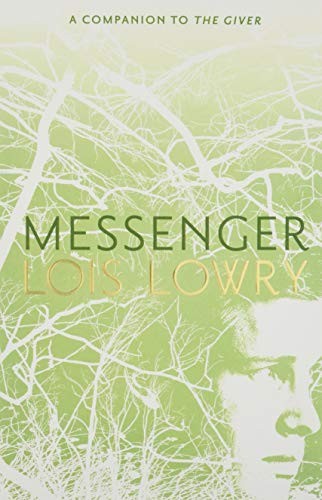

Tropes in this book
- Dystopia
- Found family
Themes
- young adult dystopia
- village closing its borders
- magical gifts
- quest through a hostile forest
- gut-wrenching ending
- zero romance
Read it if
- you've read The Giver and Gathering Blue and want to know what became of Kira, Matty and the boy on the sled
- you like dystopias where evil arrives quietly, at an evening market, in exchange for a trinket
- you want a short book about refugees, walls and fear of strangers that you'll keep arguing about long after the last page
Skip it if
- you need action from the start, because for half the book Matty cooks, fishes and whines about a candy-dispensing gaming machine
- you expect evil to get a face and a proper explanation, and the Trademaster disappears as mysteriously as he shows up
- you struggle with graphic wounds and endings that leave you sitting in silence for a while
Why this rating
🧠 For connoisseurs
6/10- The Trade Mart. The best idea in this book. People arrive empty-handed, say out loud what they want and whisper what they're giving up. Afterward, a teacher who loved poetry can only talk about a widow and a wall, and a sweet neighbor mocks the way her hunchbacked husband walks. Lowry never shows you the price tag – she makes you read it off people's behavior, and that works better than any explanation could.
- A wall that hasn't aged. A village built by refugees suddenly wants to lock out the next refugees, because now there supposedly isn't enough fish to go around. The book is more than twenty years old, and the town meeting scene could happen this week in any town hall.
- Kira and her leg. When Matty offers to fix her twisted leg, Kira says no: the leg is part of who she is. One line, and it says more about disability than plenty of well-meaning pamphlets.
- The Forest as a mirror. The Forest thickens, rots and attacks at exactly the pace the Village goes bad. The trek through its heart is the strongest part of the book: suffocating, painful and with nowhere to run.
- Evil without a face. The Trademaster gets one scene, writes something in his book and is never seen again. We never learn who he is, where his power comes from or what he wants. The mechanism the whole plot stands on stays a pencil sketch.
- A finale in one gesture. A problem Lowry spent two-thirds of the book building gets resolved in a couple of pages, everywhere at once, with nobody but the hero lifting a finger. I get the symbolism, but I wanted to watch these people dig themselves out on their own.
- A price you can see coming. The Leader warns Matty so many times not to use up his gift that an attentive reader will guess, long before the Forest, what it's being saved for and how much it will cost.
💖 For comfort readers
5/10- Matty and Frolic. A boy who used to talk like a street kid and steal is now learning to cook with his blind foster father, bickering with him about beets and training a puppy with crooked ears. Their scenes together are warm and genuinely funny.
- The trek through the Forest. Once they finally set out, things get intense: burning vines, a swamp, the reek of rot and branches that slice through clothing. I read those chapters with my teeth clenched.
- A slow warm-up. For the first stretch, Matty cooks, fishes, nags about the gaming machine and lingers by Jean's garden. The mood is cozy, but the tension builds at a crawl.
- Romance on low power. Jean promises a kiss from chapter one and delivers exactly once, as a goodbye. If you've been missing a love story in this series, you won't find one here either.
- A heavy ending. The ending is beautiful, but it's sad and doesn't sugarcoat a thing. If you want to finish a book feeling better, this one will more likely leave you feeling worse.
The book's four layers
Plot and pacing
The Trade Mart and the vote on the wall are great ideas, and the trek through the Forest has pace and real dread. The trouble is that the story takes ages to get going, and then the resolution arrives all at once and fixes everything in one move. The Trademaster and his book are never explained, so the machinery of evil is hinted at more than it's told.
Characters and relationships
Matty is a likable hero whose past still lives inside him: sometimes he lies on reflex, sometimes his fingers itch to steal something, and afterward he's ashamed. His bond with the blind man, who calls him his boy in front of the whole Village, is the warmest thing in the book. Kira has backbone, and the Leader is moving, if a little too perfect. Jean, Ramon and the rest of the Village stay sketches, and we only ever watch Mentor's transformation from the outside.
Writing style and atmosphere
Lowry writes plainly and calmly, and the Forest chapters are unpleasantly vivid: you can practically smell the rot and feel the sting and the fear. Small recurring details land nicely, like the frog's throaty croak or Macbeth recited at the bread stall. At times, though, the prose gets preachy and the message is spelled out for you, especially at the very end.
Entertainment and value
A short book about big things: selfishness, fear of outsiders and the price of small cravings. It's easy to talk about afterward, in class too. As entertainment it's uneven: a calm, sometimes sleepy opening, a trek that made my own arms ache just reading it, and an ending that leaves a lump in your throat.
The book in brief, spoiler-free
Matty has spent six years in a Village that takes in every refugee, and he's the only one who can cross the deadly Forest unharmed – but after each Trade Mart his neighbors change, and the Village votes to close its borders. Book 3 of The Giver Quartet ties the first two books together: short, darker with every chapter and uncomfortably timely.
Want the plot step by step?SummaryThemes it explores
Lois Lowry tells the story of a community built by people rescued from hunger, beatings and cruel laws, which years later starts to fear the next people who need rescuing. The Village has a museum where a sled, canes and a wheelchair remind everyone where its residents came from, and still a few evenings at the Trade Mart are enough for neighbors to start counting fish and talking about newcomers like intruders. Matty, a former thief and liar the Village took in and gave a home, watches it happen from the sidelines and discovers a gift in himself that could change everything, but that comes at a price.
The main threads: the Trade Mart (trades where people hand over something invisible and walk away with a gaming machine, a sewing machine or a younger face); closing the borders (a petition, a protest at the newcomers' welcome and a vote on a wall); the Forest (a wilderness that strangles anyone trying to go back and rots along with the villagers' hearts); gifts (the Leader sees beyond, Kira embroiders the future and Matty heals by touch); found family (the blind Seer, who calls Matty his boy, and Kira, whom Matty treats like a sister); disability (Kira, who doesn't want anyone straightening her leg, and a Village where scars and impairments earn respect); and sacrifice (the question of what each of us is willing to give up, and for what).
Questions and answers
Do I need to read The Giver and Gathering Blue first?
You can follow it without them, but you'll miss a lot. It's book 3 of The Giver Quartet, best read in order: The Giver, Gathering Blue, Messenger, Son. Matty is the grown-up version of little Matt from Gathering Blue, the Seer is Kira's father, and Kira herself returns as a young woman. The Leader is never named here, but the red sled in the museum, the pale blue eyes and an apple as the first thing he ever saw beyond leave no doubt he's the boy from The Giver. So if you start here, you'll also get the answer to the question The Giver's ending leaves open.
Is Messenger appropriate for 12 year olds?
I'm sticking with 12+, the same as the earlier books. There's almost no romance (one quick kiss) and no swearing. This book is more graphic than the first two, though: a man strangled by vines, a hero who cuts himself with a knife to show what his gift can do, burned and oozing hands, legs cut down to raw flesh. There's also death and grief. If the story stirs up something heavy, you can call or text 988 (USA).
How spicy is Messenger?
1/10 on my spice scale, which means practically nothing. Matty has a crush on Jean, the teacher's daughter, who teases him with a promised kiss for most of the book and gives him one quick peck when he leaves. That's the whole love life.
How many pages is Messenger?
192 pages in the 2018 US paperback from HMH Books for Young Readers (now Clarion Books), though it depends on the edition – the original 2004 hardcover runs 169. It's 21 short chapters, so an evening or two of reading.
Is Messenger YA or middle grade?
It sits right on the line, like the whole quartet. Matty is on the edge of adulthood, the language is simple and nothing is explicit, so plenty of middle schoolers read it in class. The themes – borders, selfishness and sacrifice – hit just as hard for older teens and adults.
Who is Messenger for?
Readers who made it through The Giver and Gathering Blue and want to see how their worlds connect, and anyone who wants a dystopia that asks questions about us: borders, fear of strangers and small selfish choices. It's a great pick for class discussion. Comfort readers who want romance, action from the first page and a cheerful ending will be bored at the start and sad at the end.
What about you? Have you read this book?
Reader ratings
Your rating might be totally different from mine. A lot depends on when you pick it up.
Your rating on a 1-10 scale
No login needed. One vote per browser – you can change it later.
Disagree? Rate the book above or message me on Instagram or TikTok.
What to read next
 Gathering Blue
Lois Lowry
Book 2, where you meet Kira, her gift and little Matt with his dog Branch.
★ 7/10🧠 7💖 5🌶️ 112+
Read the review
 The Giver
Lois Lowry
Book 1, without which you won't know who the Leader is or where his sled came from.
★ 8/10🧠 8💖 5🌶️ 112+
Read the review
 Son
Lois Lowry
The last book of the quartet, which pulls the threads of the first three together.
★ 7/10🧠 7💖 6🌶️ 112+
Read the review