
Tropes in this book
- Found family
- Grumpy x sunshine
- Slow burn
Themes
- adult romance
- fire pilot x yoga instructor
- small mountain town
- explicit spice
Read it if
- you love grumps over forty who start feeding raccoons and showing up to yoga class because of one sunny woman
- you want an adult romance with a mountain town, a tight friend group and an old man who's sure Tupac is still alive
- you know Rose Hill or Chestnut Springs and you're in the mood for one more warm, spicy happily ever after
Skip it if
- the very idea of a dad getting together with his son's ex-girlfriend is a dealbreaker for you
- you expect a plot that can get going without somebody saving a phone number with the wrong digit
- you'd rather the sex scenes didn't happen one floor above the heroine's own birthday party
Why this rating
🧠 For connoisseurs
3/10- Clyde. An old man with a bunker for the zombie apocalypse who believes in chemtrails, in Tupac and in the healing power of sunshine on the crotch, and who has also spent more than forty years grieving a wife the hospital sent home with a migraine diagnosis. Elsie Silver makes him more than a mascot: he's a matchmaker, a father by choice and the only character whose next move I couldn't call.
- Plot by coincidence. One wrong digit in a phone number, and then the very same woman on his son's arm at his son's birthday party. Even Bash asks, with a well-placed curse word, what the odds are. The answer: exactly the odds the author needed to get this thing off the runway.
- The son as a convenient obstacle. The moral problem – a dad and his son's ex – gets defused the cheapest way there is: the first time Tripp walks in, he comments on how much his girlfriend is eating. When the story needs to wrap things up, the same guy spends one morning hauling hay bales and hands the couple his blessing. The conflict that was supposed to carry the whole book is settled in a single monologue.
- Heroics on demand. In the finale the heroine drives alone, at night, into an evacuation order zone to rescue a friend's keepsakes, and the hero breaks the plan of attack on the fire because he loves her. I get what it's for: somebody has to cry at the roadblock and finally say I love you. But all that daring reads like a shortcut to the big confession.
- Bed instead of a conversation. From the cockpit chapter on, sex scenes eat one chapter after another: a walk-in closet in the middle of a party, a balcony right over the guests' heads, a yoga studio in front of the mirror. Bash keeps putting off the talk with his son because something more urgent always comes up, and that suits the plot just fine.
💖 For comfort readers
6/10- The airport and the limes. A night in the terminal, sickly sweet margaritas, a meditation that follows snowflakes and a race the wrong way down a moving walkway – it's the best opening of any Elsie Silver book I've read. The lime motif and the riff on life handing you lemons come back at the end and tie the story up nicely.
- Humor. A kidney-shaped cake that wishes the kidney bon voyage, a game of Operation before the transplant, crotch tanning on the porch and stoned questions for Clyde about the moon landing. I laughed more often than a romance has any business making me laugh.
- A grump who actually changes. Bash doesn't just melt around a sunny girl. He recognizes his own burnout, calls a therapist through the firefighters' union, apologizes for how he's been acting and shows up to yoga. For a genre whose heroes usually fix everything in bed, that's a welcome switch.
- Gestures. A snack board for the raccoon made with cat food borrowed from Rhys, a birthday breakfast big enough for a regiment, a flight where pilots she's never met wish her happy birthday over the radio. The romance here is homemade in scale, and that's exactly why it lands.
- Bedroom boilerplate. The sex scenes are long and frequent, and the dialogue in them circles the same few phrases: pet names, good girl, mine. Somewhere around the umpteenth round, instead of blushing, I had Chestnut Springs deja vu.
The book's four layers
Plot and pacing
The frame rests on two coincidences (a wrong number and the same woman next to his son) and on a secret the hero sits on so long that somebody else ends up spilling it for him. There are good episodes along the way: the kidney transplant, the first fire that sends Bash home running on fumes, a surprise party with a surprise of its own parked in the driveway. The fire in the finale finally brings real stakes, but it hinges on a decision by the heroine that's impossible to defend.
Characters and relationships
Gwen has a sharp tongue, a sense of humor about herself and a history with a father who commented on her weight, and that part is handled seriously. Bash is more interesting than your standard grump because you can see where he came from: a father who went out to the store and never came back, a wife who didn't want kids with him, a son kept from him for twenty-four years. The book serves up his jealousy – he doesn't want his son so much as looking at what's his – as proof of love, though luckily Bash also knows how to apologize. Clyde is pure gold, Tripp spends a long time as nothing but a lit fuse, and Cecilia never gets a chance to explain herself.
Writing style and atmosphere
The alternating chapters from Bash and Gwen work, and the conversations at the kitchen island have rhythm and humor. What works less well: the same gestures on repeat (hard swallows, clenched jaws, hearts cracking) and swearing so dense it coats even the tender scenes. In bed it's the same set of lines I already know from Chestnut Springs.
Entertainment and value
I had more fun than a premise about a dad and his son's ex would suggest. It's a warm, funny story about people choosing each other as family, with a happily ever after spread out over an epilogue with bowling and a purple plane. Less bedroom and more Clyde, and the score would have gone up.
The book in brief, spoiler-free
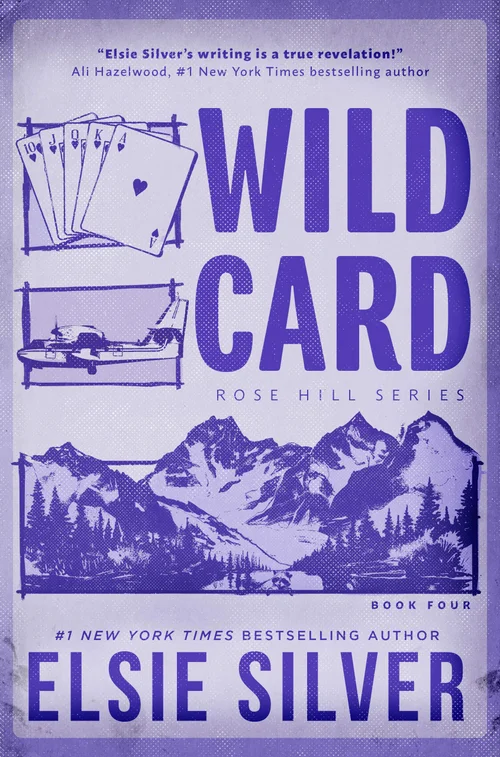
Bash, a grumpy water bomber pilot, spends a snowed-in night at the airport with a sunny yoga instructor, and eight months later she walks back into his life as the girlfriend of the son he's only just found out about. Rose Hill book four is a spicy adult romance that runs on coincidence, and the best lines belong to a cranky old man with a bunker for the end of the world.
Want the plot step by step?SummaryThemes it explores
Elsie Silver writes about the family you collect along the way. Bash spent years building a house with room for the kids he never had, and suddenly he gets a grown son raised by another man. Gwen has been moving from city to city since she was seventeen, because if she leaves first, nobody has time to get tired of her the way her father did. Between them stands Clyde, a lonely oddball who looks at both of them like they're his own kids, and a town where the friend group handles everything from a kidney-shaped cake to evacuating horses. Under the romance and the sex scenes there's also a fairly serious story about burnout and about how asking for help doesn't make anyone weaker.
The main threads: lost years (a son Bash never knew about, because the boy's mother's family decided it was better to cut him out of their lives); the dad and his son's ex (a line Bash refuses to cross for a long time, afraid of wrecking his brand-new relationship with Tripp); found family (Clyde, the bowling team, the trivia-night girlfriends and people who show up with a horse trailer during a fire, no questions asked); body and acceptance (after years of her father's comments about her weight, Gwen learns to love herself, and Bash never gives her a reason to doubt it); burnout (a pilot who has spent his life putting out other people's fires finally admits he needs help too); and Clyde's grief (a wife he lost to a medical mistake, and the keepsakes Gwen risks her life for).
Questions and answers
Do I need to read Wild Love and the other Rose Hill books first?
You can skip them without losing much. Wild Card is book four of Rose Hill, after Wild Love, Wild Eyes and Wild Side, but Bash and Gwen are a new couple and their story starts and ends here. Just know that Ford and Rosie, West and Skylar, and Rhys and Tabitha are already couples with their own history, and the book winks at it now and then (Rosie's mouse from the cabin, for one), so readers of the earlier books will catch more. In the letter at the front, Elsie Silver calls this her goodbye to Rose Hill. Chestnut Springs fans will recognize the rescuer from Alberta: it's Beau Eaton.
How spicy is Wild Card?
9/10 on my spice scale. The slow burn takes a while, but once it breaks, the sex scenes are many, long and fully on the page, with no fade to black: a cockpit, a walk-in closet during a party, a balcony above the guests and a yoga studio in front of the mirror. Expect a lot of dirty talk and swearing even in the tender moments.
Is Wild Card appropriate for 12 year olds?
No – it's 18+, no debate. Besides the numerous, long and explicit sex scenes, there's swearing in nearly every conversation, alcohol, friends sharing a joint, a father's comments about the heroine's weight and a wildfire in which the heroine gets cut off by the flames.
How many pages is Wild Card?
464 pages in the 2025 US paperback from Bloom Books, though it depends on the edition. Inside there are 43 chapters that alternate between Bash and Gwen, plus an epilogue.
Is Wild Card YA or adult?
Adult romance, full stop. This one is written for grown-ups: Bash is around forty, Gwen is in her late twenties and the spice is firmly 18+. It isn't YA, and it isn't new adult either, even if the illustrated cover looks cozy.
Who is Wild Card for?
Comfort readers who love grumpy x sunshine, an age gap, a small mountain town and a big friend group, and who don't mind explicit sex scenes. Elsie Silver fans get exactly what they come to her for, with Clyde as a bonus. About the only thing likely to surprise a connoisseur is a grumpy hero who takes himself to therapy.
What about you? Have you read this book?
Reader ratings
Your rating might be totally different from mine. A lot depends on when you pick it up.
Your rating on a 1-10 scale
No login needed. One vote per browser – you can change it later.
Disagree? Rate the book above or message me on Instagram or TikTok.
What to read next
 Heartless
Elsie Silver
Same author, same recipe – a grump in his thirties, a younger sunshine heroine and an age gap – only on a ranch.
★ 5/10🧠 3💖 6🌶️ 918+
Read the review
 Flawless
Elsie Silver
Book one of Chestnut Springs, where you meet the Eaton family, Beau included.
★ 5/10🧠 3💖 6🌶️ 918+
Read the review
 Twisted Games
Ana Huang
Also: grumpy x sunshine, explicit spice.
★ 5/10🧠 2💖 7🌶️ 918+
Read the review