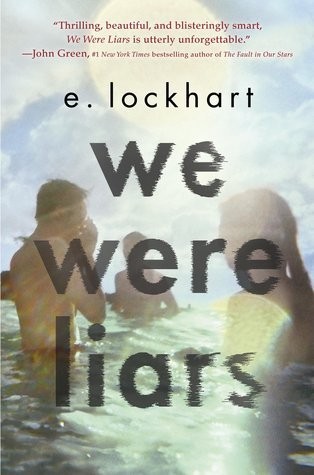

Tropes in this book
- Mystery and crime
- Plot twists
Themes
- psychological thriller
- family drama
- private island
- old money secrets
- amnesia
- first love
- fairy tale retellings
Read it if
- you love books that click together like a jigsaw and only show the whole picture at the very end
- you want YA about family, money and everything nobody says out loud, not just about dating
- chopped-up, poetic narration with fairy tales woven into the plot doesn't scare you off
Skip it if
- you want a breezy beach romance you can read with your brain switched off
- metaphors like a heart rolling out of a gunshot wound into the flower bed make your eyes roll
- you need action from page one, not a slow collection of memories
Why this rating
🧠 For connoisseurs
7/10- The construction. Short chapters, broken memories, notes on graph paper taped above her bed and one version after another of the fairy tale about a king with three beautiful daughters. Every piece has its place, and I only fully appreciated that in the final chapters.
- Family wars. The Sinclairs fight over black pearls and the house in Boston, while Grandpa keeps his daughters on the leash of his will and a fresh threat every week. Lockhart skewers them with zero mercy, and his favorite motto about nothing being impossible sounds more like a warning than a pep talk.
- Gat and his questions. A love interest who asks about privilege, God and racism instead of flexing. Thanks to him, the romance has stakes bigger than whether he likes her back.
- The ending. No spoilers: the finale turns this into much more than a summer mystery, and it isn't a cheap trick pulled just for the shock value.
- Style on the edge of a pose. Blood pouring from her wrists, melting into a puddle on the floor, refrains repeated like a mantra. It works until it starts to sound like the poetry notebook of a high school sophomore.
- Flat supporting cast. Johnny and Mirren are more a set of nouns than people, and the aunts blur into one trio holding wineglasses. Next to Cadence and Gat, they're basically extras.
💖 For comfort readers
6/10- The mystery. What happened the summer Cadence can't remember? That question pulls you through the whole book like a good whodunit.
- Short and fast. Most chapters are a few pages long, and you can tear through the whole thing in an afternoon or two.
- Island summer. Motorboats, homemade ice cream, bonfires and trips to Edgartown for fudge. Minus the migraines and the aunts, it reads like a catalog of dream vacations.
- First love. Cadence and Gat have real chemistry, and their scenes on the roof and on the beach are lovely.
- The middle drags. The Liars lie on the roof, drink lemonade and make up nonsense about doughnuts while the plot stands still. This is where a comfort reader might start skimming.
- Not a light romance. If you showed up for a sweet beach-chair love story, you'll get fragmented narration and very serious themes instead.
The book's four layers
Plot and pacing
The skeleton is simple: a girl goes back to an island and tries to remember one summer. Lockhart serves it in fragments, though – flashbacks, notes taped above the bed, fairy tales about a king and his three daughters – and every fragment fits somewhere. The middle treads water: the roof, the lemonade, one more round of starting over. The last part, however, turns the story into something far bigger than a summer mystery, and it was worth the wait.
Characters and relationships
Cadence is a narrator who's easy to like and just as easy to get tired of: sharp, snarky, self-absorbed and real because of it. Gat has the most personality, a boy with opinions who spoils the Sinclairs' cocktail hour with questions about who actually owns the island. Johnny and Mirren, on the other hand, each get a label of three nouns and not much more. Among the adults, Grandpa is the most interesting: patriarch, racist and lost old man all at once.
Writing style and atmosphere
Lockhart writes in short sentences, breaks lines like poetry and has her narrator bleed from the wrists or melt into a puddle whenever something hurts. At first it works beautifully, because it shows how pain leaks out sideways in a family where crying isn't allowed. It gets old by the tenth time Gat is summed up in the same four nouns and the tenth time she calls him her Gat. The irony aimed at the Sinclairs, though, lands from the first welcome to the family to the last line.
Entertainment and value
It takes a short while to read and a long while to stop thinking about. Despite the vacation scenery, this isn't a turn-your-brain-off read: it's slower and heavier than the motorboats and the ice cream promise. Bonus points because under the mystery there's a real conversation about money, privilege and a family that would rather stay silent than talk it out.
The book in brief, spoiler-free
After two years away, Cadence returns to her grandfather's private island, where her cousins and her first love are waiting, and tries to piece together the summer of her accident. The Sinclairs smile for the photos, fight over the inheritance and keep quiet so stubbornly that her amnesia starts to look like a family tradition.
Want the plot step by step?SummaryThemes it explores
E. Lockhart writes about a family where silence is a currency just as important as money. The Sinclairs are tall, tan and rich, they serve aggressively on the tennis court and they're even better at not talking about anything uncomfortable, and when something hurts, Cadence's mom tells her to breathe deeply and act normal. Under the postcard of a private island sits a story about an inheritance, about who this family is willing to count as one of its own and about a girl trying to get one summer of her own life back.
The main threads: a family on display (smiles over cocktails, tennis and a rule that divorce, death and illness are never discussed); money and inheritance (three grown daughters dependent on a father who hands out and takes back houses as rewards for obedience); memory and amnesia (Cadence writes the memories she recovers on pages above her bed and tries to fit them together); first love (Cadence and Gat, a feeling that never fit into Grandpa's plans); privilege and prejudice (Gat as an outsider on an island of rich white people, never more than “young man” to Grandpa); grief (for Grandma Tipper and for a father who walked out, grief this family won't let anyone show); fairy tales and variations (stories about a king and his three daughters in which Cadence retells her own family); and friendship (the Liars, four cousins and almost-cousins who have stuck together against the world since they were kids).
Questions and answers
Is We Were Liars part of a series?
It's book 1, and it works as a complete story with a closed ending. Lockhart later returned to the Sinclairs in the prequel Family of Liars, set when the Liars' mothers were teenagers, and in We Fell Apart, a newer novel set in the same universe. Neither is needed to follow this one, and I'd absolutely start here. There's also a Prime Video series based on the book, but read first if you want the ending to hit.
How many pages is We Were Liars?
256 pages in the 2014 US hardcover from Delacorte Press, though it depends on the edition. It's a short novel: 87 mostly tiny chapters in five parts, easy to finish in a weekend.
Is We Were Liars appropriate for 12 year olds?
I'd say 14+. There are no sex scenes, but the themes are heavy: grief and loss, teens drinking, strong prescription painkillers, a narrator who says the pain makes her want to die, and racism inside the family. If any of that hits close to home, you can call or text 988 (US) any time.
How spicy is We Were Liars?
2/10 on my spice scale. Some kissing and making out, a cousin bragging about her love life and that's it. Nothing on the page goes past a kiss.
Is We Were Liars YA or adult?
YA. Cadence is 17 and looking back on the summer she was 15, and it's shelved as young adult. That said, plenty of adults read it as a psychological thriller and a family drama, and it holds up.
Who is We Were Liars for?
Connoisseurs who like a puzzle, an unusual structure and novels about families with a secret. Comfort readers will get through it fast too, because it's short and addictive, just don't expect a light summer romance.
What about you? Have you read this book?
Reader ratings
Your rating might be totally different from mine. A lot depends on when you pick it up.
Your rating on a 1-10 scale
No login needed. One vote per browser – you can change it later.
Disagree? Rate the book above or message me on Instagram or TikTok.
What to read next
 One of Us Is Lying
Karen M. McManus
Another YA mystery built on secrets everyone is keeping, with a reveal you'll want to talk about.
★ 7/10🧠 6💖 7🌶️ 215+
Read the review
 The Fault in Our Stars
John Green
First love and very serious themes taken seriously, with no sugar coating.
★ 7/10🧠 7💖 9🌶️ 113+
Read the review
 City of Glass
Cassandra Clare
Also: family secrets, end of the first arc.
★ 7/10🧠 6💖 7🌶️ 214+
Read the review