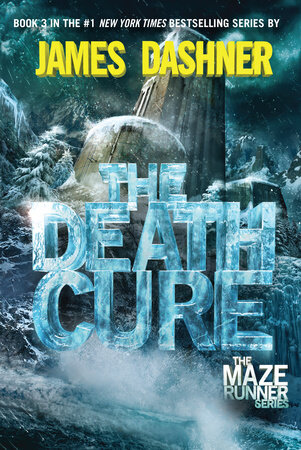

Tropes in this book
- Dystopia
Themes
- dystopian YA
- post-apocalyptic
- trilogy finale
- the Flare and the Cranks
- rebellion against WICKED
- character deaths
- lots of violence
Read it if
- you've run the Maze and crossed the Scorch with Thomas and need to see how it ends for him, Minho and Newt
- you like post-apocalyptic stories where a plague eats cities from the inside while the healthy hide behind walls and masks
- you want a finale that doesn't go easy on its heroes and makes them pay dearly for their freedom
Skip it if
- you're hoping the finale will solve WICKED's mysteries in actual scenes instead of summing them up in a letter and an office memo
- the earlier books already wore you out with heroes getting kidnapped, rescued and kidnapped again
- the death of friends, close-range killing and suicide are too heavy for you right now
Why this rating
🧠 For connoisseurs
4/10- Newt. Newt's storyline is the best thing Dashner wrote in the entire trilogy. A sealed envelope carried in a pocket for a dozen chapters, a wrecked bowling alley in Crank Palace and one scene on a highway carry more weight than all of WICKED's puzzles put together. The author doesn't turn it into a spectacle, and he's right not to, because he doesn't need to.
- Denver. A walled city where the healthy wear masks, the sick hide their symptoms with a drug called Bliss and immunes get sold like merchandise is the most interesting slice of this world in the whole series. The coffee shop scene, where a man begs that he only took Bliss because he likes how it feels before a crew in hazmat suits seals him in hardening gel, hits harder than any Griever.
- A hero who doesn't want to know. For two books the series promised to tell us who Thomas really was. In book three Thomas refuses to get his memories back, and when Brenda tries to tell him something about Chancellor Paige, he cuts her off because he's done with knowing things. Very convenient. For the author.
- Exposition at the dinner table. Rat Man, Brenda, Gally and Vince each get a chapter to explain the world. Gally lays out the Right Arm's plan – a device that shuts down weapons, then a fight with fists – like he's reading a recipe, and Vince tacks on a speech about false hope. Meanwhile the plot sits there and politely waits.
- An ending pulled out of a pocket. The big problems get solved by a letter, a map and a secret door, delivered while Thomas is out cold. A woman we knew for three books mostly as a face on posters fixes everything with one signature and then explains the meaning of the whole trilogy in a memo. I wanted the characters to figure something out on their own.
- Janson. Rat Man spends the whole book as a polite bureaucrat with weasel eyes, and then near the end he's handed a knife and fits of rage so the showdown can happen without anyone feeling bad about it. A cartoon villain in a finale that otherwise plays it straight.
💖 For comfort readers
6/10- Pace. The action rarely stops: the hangar breakout, Denver, Crank Palace, an ambush in a dark alley and finally an escape from a collapsing Maze. Chapters end on a hook so reliably you could set your watch by them.
- Back to the Maze. Running through corridors from book one, Grievers waking up in their pods and walls coming down on people – it's a slick nod to the fans. Dashner knows what readers loved most about this series and serves it up one more time.
- Closure. After two books of questions, this one finally ends things: you learn who makes it, where the survivors land and what WICKED really was. A few characters finally get what's been coming to them since the Glade.
- The weight. For an adventure there's a lot of death here and very little room to breathe. If you came for monsters and chases, you may close this book feeling more crushed than entertained.
- The slang. Shuck, klunk and slinthead come back as often as ever, and Jorge can't finish a line without “muchacho.” Three books in, that's not flavor anymore, it's a tic.
The book's four layers
Plot and pacing
It opens with an escape from a WICKED compound that feels like a rerun of the earlier books. Denver has great atmosphere, but the plot boils down to a chain of kidnappings: a bounty hunter grabs Thomas, the Right Arm snatches the whole group, and at the climax he's saved by a letter left by his bed. The strongest part is Newt's storyline, which runs alongside the main plot and is what actually holds this book together.
Characters and relationships
Newt, torn between fury and apologies, and Minho, who loses all his humor without him, save this book. Gally comes back surprisingly human, and Teresa finally gets a gesture that means something. Thomas mostly reacts to whatever happens to him, and the new adults – Vince, Hans, Charlotte and the WICKED doctors – each get one line of description and one job in the plan.
Writing style and atmosphere
Dashner writes plain, cinematic prose, and the action scenes read smoothly. The problem is the conversations: exposition served at the table, “What are you talking about?” bounced back and forth like a ping-pong ball, and Thomas's thoughts circling who he can still trust. After three books the Glader slang sounds like a habit, and the Newt scene proves the author can write much better when he stops rushing.
Entertainment and value
As a trilogy ending it does its job: there's a chase, a return to the Maze and a real price the heroes pay for their freedom. What spoils the satisfaction is that the key answers arrive from outside, in a letter and a memo, instead of coming out of the characters' own choices. Still, after the Newt scene it's hard to pretend this series doesn't mean anything.
The book in brief, spoiler-free
Thomas breaks out of WICKED determined never to get his memories back and never to be tested again – a bold stance for the hero of a finale that was supposed to explain everything. We get a Denver rotting from the inside, the Cranks and the strongest scene of the whole series, while the answers to three books of questions fit in a single memo on the last page.
Want the plot step by step?SummaryThemes it explores
James Dashner closes the trilogy with the question that's been hanging over it since book one: how far are people allowed to go to save humanity? WICKED says anything goes. The Right Arm says anything goes, as long as it's aimed at WICKED. And Thomas, who learns he helped design the Trials himself, looks for a third way. In the background the Flare turns people into Cranks, and the healthy cities rot from the inside because nobody wants to admit the disease is already past the walls.
The main threads: ends and means (WICKED is ready to sacrifice Thomas's brain for a cure nobody can promise will work); friendship and loss (Newt, whose mind the Flare is taking, and the request he makes of Thomas alone); guilt and memory (dreams about the purge of the first Creators and Thomas's choice not to get his memories back); trust (Teresa, Brenda, Gally and Chancellor Paige, each of whom has to be judged all over again); fanaticism (a Right Arm that answers WICKED's cruelty with explosives); and immunity as a curse (immunes are hated, kidnapped and sold, and yet they're the ones the world is leaving its future to).
Questions and answers
Do I need to read The Maze Runner and The Scorch Trials before The Death Cure?
Yes, there's no point starting here. The Death Cure is book 3 and the finale of the main Maze Runner trilogy, and it picks up right where The Scorch Trials left off. The order is simple: The Maze Runner, The Scorch Trials, The Death Cure. The prequels, The Kill Order and The Fever Code, came out separately and you don't need them to follow the trilogy – read them afterward if you want WICKED's backstory.
Is The Death Cure appropriate for 12 year olds?
I rate it 14+, like the first two books, but this is the heaviest one in the trilogy. There's almost no romance, but close friends of the hero die, Thomas kills at close range, and one character begs a friend to end his life and mentions a past suicide attempt. For a 12-year-old I'd wait, or read it together. If any of this hits close to home, you can call or text 988 (Suicide & Crisis Lifeline, USA) any time.
How spicy is The Death Cure?
1/10 on my spice scale. A few kisses, a little tension between Thomas and Brenda, and that's it – no sex scenes. The intensity here comes from violence, disease and grief, not romance.
How many pages is The Death Cure?
352 pages in the 2011 US hardcover from Delacorte Press, though it depends on the edition. It's split into more than seventy short chapters plus an epilogue, so it reads faster than the page count suggests.
Is The Death Cure YA or adult?
It's YA dystopian science fiction. The Gladers are teenagers, the slang stands in for most of the swearing and there's no explicit content – but the violence and the deaths are darker than in the first two books, which is why I don't recommend it below 14.
Who is The Death Cure for?
For everyone who ran the Maze and crossed the Scorch with Thomas and wants to close the story. Comfort readers will enjoy the action, the return to the Maze and an ending that actually ends. Connoisseurs will mostly be left with Newt and Denver, because WICKED's plot gets wrapped up in a letter and a memo.
What about you? Have you read this book?
Reader ratings
Your rating might be totally different from mine. A lot depends on when you pick it up.
Your rating on a 1-10 scale
No login needed. One vote per browser – you can change it later.
Disagree? Rate the book above or message me on Instagram or TikTok.
What to read next
 The Scorch Trials
James Dashner
The previous book: the Scorch, Brenda and Jorge, and the cliffhanger this finale picks up from.
★ 4/10🧠 4💖 6🌶️ 214+
Read the review
 The Kill Order
James Dashner
Same series.
★ 4/10🧠 4💖 5🌶️ 216+
Read the review
 The Maze Runner
James Dashner
Same series.
★ 6/10🧠 6💖 6🌶️ 114+
Read the review