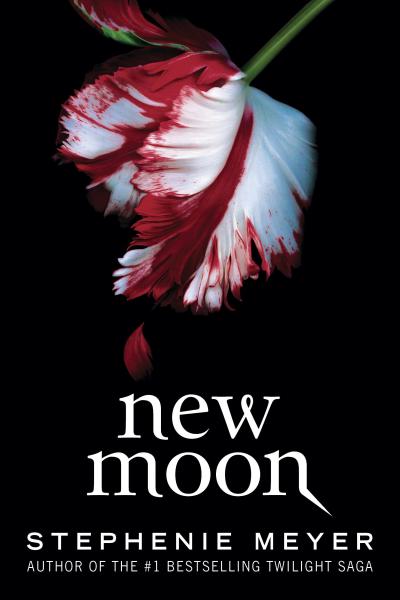

Tropes in this book
- Romantasy
Themes
- paranormal romance
- breakup and depression
- vampire vs werewolf
- love triangle
- the La Push pack
- motorcycles and cliff diving
- race against the clock
Read it if
- you want a breakup book where the best friend runs hot like a furnace, rebuilds motorcycles in his garage and makes you laugh again
- you're in the mood for a love triangle with an ice-cold vampire on one side and a La Push boy with a secret on the other
- you love a finale where someone has to get there before the tower clock finishes striking noon
Skip it if
- a heroine who risks her life just to hear her ex-boyfriend's voice in her head sounds like a dangerous lesson, not a love story
- you're here for Edward, because he leaves in chapter 3 and doesn't come back until the race to the finale
- a plot that runs on a misunderstanding one question over the phone would have cleared up in a second makes you want to scream
Why this rating
🧠 For connoisseurs
3/10- Empty months and the pack. Two ideas in this book genuinely land. A handful of pages that hold nothing but the names of the months, October through January, say more about Bella's depression than most full chapters could. And Jacob, who wants to tell Bella his secret but chokes on it mid-sentence because the pack leader has ordered him not to, so he makes her guess instead, is a clever device. The pack also comes at a price: Sam went through his first change completely alone, and his fiancée carries scars across her face from a single moment of his anger.
- A wolf riddle the reader solves first. If you remember the Quileute legends from book one, you've cracked it the second someone mentions a giant black bear and Jacob burning up like he has a fever. Bella spends chapter after chapter suspecting drugs or a cult, thinks back to a TV special about brainwashed kids and goes to her police-chief dad about Sam's gang, and only gets the answer when Jacob turns it into a guessing game.
- Romeo and Juliet by phone. Meyer doesn't hide her template: Bella's English class is watching Romeo and Juliet, in the very first chapter Edward admits he envies how easily Romeo could kill himself, and in chapter 16 Bella wonders whether Juliet could have just married Paris. In Shakespeare the lovers are doomed by a letter that never arrives. Here the whole finale rests on Rosalie passing along a rumor, Jacob telling a caller that Charlie is at a funeral, and Edward never asking the one obvious question: whose? The book waves it off as fate being against lovers, as if that could stand in for actual plotting.
- Death as proof of love. Bella puts herself in danger on purpose: she walks up to strange men outside a bar, climbs onto a wrecked motorcycle and jumps off the highest cliff in a storm, all because danger brings back Edward's angry voice. The novel reads this as proof of devotion instead of a warning sign. In the finale Bella's big realization is that he loves her, and Edward tells her that if she dies, he'll follow. Before that he decided on the breakup for her and lied to her for her own good, and now he makes her becoming a vampire conditional on a wedding. That's control and emotional blackmail, and a teenage reader walks away with the message that life without a boyfriend isn't worth living.
💖 For comfort readers
6/10- Jacob, the human sunshine. The warmest pages in this book happen in a garage in La Push: motorcycles taken apart down to the last bolt, a soda toast to being irresponsible, and a running argument about who's really older that ends with both of them claiming ages they won't hit for decades. Jacob has so much humor and warmth that it's easy to see why so many readers picked his side.
- Horror in the woods. Laurent in the meadow, politely explaining to Bella that nobody will ever find her body, and then five horse-sized wolves stepping out from between the trees, is the best scare in the book. Close behind: Paul exploding into a wolf in the middle of the road out of sheer rage, and Jacob climbing into Bella's bedroom at night from the top of a tree.
- Racing the clock. The Volterra finale flies: a stolen yellow Porsche, a wad of cash for the guard at the gate, the red of the festival everywhere and Bella sprinting through a fountain as the tower clock strikes twelve. The preface, which at first reads like a nightmare, comes back here as a real scene, and Alice as getaway driver and car thief is pure fun.
- Waiting by the phone. Jacob doesn't call back, Billy keeps changing his excuses, Bella calls every half hour until eleven at night, drives out to the empty Black house and calls again. Those weeks drag like a line at the DMV, and it's hard not to check how many pages are left in the chapter.
- Where is Edward?. If you came for Bella and Edward, bring snacks: Edward disappears in chapter 3, exists for the next sixteen chapters only as a voice in Bella's head and only comes back in chapter 20. Instead of a romance you get a long mourning for one, and then a single late-night talk where everything gets explained and undone.
The book's four layers
Plot and pacing
The opening is strong: the birthday, one drop of blood and the breakup in the woods all fit into three chapters. After that the book splits into a long wait, first for the numbness to end and then for Jacob to pick up the phone, and a wolf mystery the reader solves way before the heroine does. Laurent in the meadow and Volterra have real pace, but the entire finale hangs on a chain of misunderstandings that one question on the phone would have snapped, and the Volturi's verdict gets settled by one of Alice's visions.
Characters and relationships
Jacob is the best-written character here: cheerful, stubborn, proud of the Rabbit he built out of spare parts, and after his change bitter and scared of what he's become. Charlie works too, helpless next to a daughter who lives in his house like a ghost. Bella in mourning for her relationship is convincing, and she even admits she keeps Jacob close out of selfishness, because without him she falls apart. Edward spends most of the book as a voice in her head, and once he's back he delivers so many apologies and declarations that it's hard to tell him apart from that voice. Aro has more personality than he does, delighted by every moment like a grandpa at a grandkid's birthday party.
Writing style and atmosphere
Meyer has a few stunning images: the blank pages with month names, the hole in Bella's chest that hurts most around the edges, Bella as a moon still circling a planet that's no longer there. The repetition is weaker: every time Edward appears, out comes the same kit of velvet baritone, marble skin and angel face, and Bella's inner monologue can stretch one glance across a whole page. The dialogue with Jacob, on the other hand, is light and funny, and Volterra has a thick, unsettling atmosphere.
Entertainment and value
There's plenty to enjoy: a friendship that keeps you warm, wolves in the woods, vampires in a tower and a race against time. Bella's depression and her father's helplessness are written seriously, without being smoothed over. What drags the value down is what the book teaches along the way: it rewards risking your life with the voice of the boy you love, presents dying after your loved one as the ultimate proof of love, and explains a boyfriend's decisions made for his girlfriend as care.
The book in brief, spoiler-free
Edward leaves Forks, and Bella is left with a hole that slowly fills up with an ever taller, ever warmer Jacob Black and increasingly reckless ideas. The best part of book two is her friendship with the boy from La Push; the worst is that the book rewards her for risking her life with her ex's voice in her head.
Want the plot step by step?SummaryThemes it explores
This time Stephenie Meyer writes about loss. Edward leaves, promising Bella it will be as if he'd never existed, and for four months she lives on autopilot, most afraid of forgetting what his voice sounded like. What pulls her out of the numbness is Jacob Black, a friend who wants to be more than a friend, and the world of La Push, where boys inherit the change into wolves from their great-grandfathers whether they want it or not. The second axis is Romeo and Juliet: the breakup, the false news of a death and a suicidal trip to Italy play out as if Meyer wanted to test what would happen if Juliet got there in time. The book also leaves a question without a good answer: can an eighteen-year-old give up her life and her soul for a boy, and who gets to decide?
The main threads: loss (the breakup in the woods and months that take up nothing but their names on otherwise empty pages); a voice in her head (hallucinations Bella triggers by risking her life on a motorcycle and on a cliff); friendship (Jacob, who makes Bella laugh again, and her guilt that she can't love him back the way he wants); the pack (the werewolves of La Push, who hear each other's thoughts, have to obey their leader and pay for the change with lost control); Romeo and Juliet (a misunderstanding that convinces Edward Bella is dead and sends him to Volterra to die); the Volturi (a vampire court that enforces a single rule: humans must never learn the truth); and choice (the Cullens' vote on turning Bella and Edward's condition that she marry him first).
Questions and answers
Do I need to read Twilight before New Moon?
Yes. New Moon picks up about six months after the end of Twilight, and Bella keeps circling back to James, the hospital in Phoenix and the legends Jacob told her on the beach in book one. The reading order is Twilight, New Moon, Eclipse and Breaking Dawn. On the side there's the novella The Short Second Life of Bree Tanner (best after Eclipse), Midnight Sun, which retells Twilight from Edward's point of view, and Life and Death, a gender-swapped take on book one. The Volturi problem only gets settled for now, and Victoria, the treaty with the wolves and the fight over Bella's change are all still open, so Eclipse is the natural next step.
Is New Moon appropriate for 12 year olds?
I'm sticking with the same threshold as book one: 14+. The romance is mild, but the themes are heavier: depression after a breakup, reckless behavior, a motorcycle crash, a cliff jump after which Bella stops fighting the current, and suicide as a plot point, since Edward wants to end his life when he believes Bella is dead. If that's something you're dealing with, call or text 988 (in the US). The violence is limited and not graphic: a vampire threatens Bella, the wolves fight each other, and in the Volturi's tower tourists are killed, which you only know from the screams behind the door. It's worth telling younger readers that risking your life to hear someone's voice and promising to die after them are warning signs, not romance.
How spicy is New Moon?
2/10 on my spice scale. There's no sex, just kisses, an almost-kiss with Jacob and the nights Edward spends next to Bella. Nothing explicit happens, and for most of the book Edward isn't even around.
How many pages is New Moon?
The current US trade paperback from Little, Brown Books for Young Readers (2022) has 464 pages, though it depends on the edition; the original 2006 hardcover runs 563. The novel is a preface, 24 chapters and an epilogue, and Bella narrates all of it.
Is New Moon YA or adult?
YA. Bella has just turned eighteen and is still in high school in Forks, and the book was published for teens by Little, Brown Books for Young Readers. Adults read it too, but the content stays at a teen level.
Who is New Moon for?
Mostly comfort readers 14 and up who finished Twilight and want to know what happens to Bella next, especially anyone on Team Jacob, because this is the book where he gets the most room. It'll also work for fans of werewolf romance and finales with a ticking clock. Connoisseurs will like the La Push pack and a few bold images of depression, but a plot that rests on one misunderstanding and the message of the ending will spoil the mood.
What about you? Have you read this book?
Reader ratings
Your rating might be totally different from mine. A lot depends on when you pick it up.
Your rating on a 1-10 scale
No login needed. One vote per browser – you can change it later.
Disagree? Rate the book above or message me on Instagram or TikTok.
What to read next
 Eclipse
Stephenie Meyer
Book three picks up right after this one: Victoria is still out there, Jacob hasn't given up and Bella's deadline keeps getting closer.
★ 5/10🧠 4💖 6🌶️ 314+
Read the review
 Twilight
Stephenie Meyer
Same series.
★ 5/10🧠 3💖 6🌶️ 214+
Read the review
 Breaking Dawn
Stephenie Meyer
Same series.
★ 5/10🧠 3💖 6🌶️ 416+
Read the review