

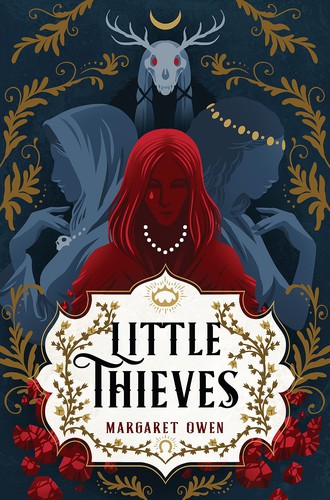

Tropes in this book
- Enemies to lovers
- Found family
- Plot twists
- Slow burn
Themes
- ya fantasy
- the goose girl retelling
- thief in a stolen face
- cons and schemes
Read it if
- you like heroines who lie, steal and talk back, and you still want them to win
- you want fantasy plotted like a vault heist, where the cards flip one by one in the finale
- you're after a slow-burn romance built on bickering and trust, with no sex scenes
Skip it if
- a narrator who keeps chatting with the reader and snarking at everything gets on your nerves
- you get lost in a world full of German-sounding titles, coins and dishes that send you to the glossary
- you want a light fairy tale, and a child's whipping and the memory of an assault are too heavy for you
Why this rating
🧠 For connoisseurs
8/10- A heroine nobody whitewashes. Vanja is greedy and vindictive, and she's perfectly capable of leaving her former mistress in the mud with a single penny in her fist. Owen never turns her into a wounded saint. She shows you where the armor came from, then makes Vanja earn every inch of change.
- A plot built like a shell game. The Find the Lady hustle from chapter one turns out to be the rule of the whole book. The finale at the gallows and before the court of the gods works exactly the way Vanja teaches people to cheat: you watch the hands, and the card is somewhere else. The coin swap and the last witness left my jaw on the floor.
- Harm without shock value. The whipping, the margrave's assault and a family living off a child's labor come back in memories and in Vanja's body, written seriously and without graphic detail. The strongest scene is a simple one: someone believes her without hesitating.
- A fairy tale flipped over. The Goose Girl told from the false bride's side is a great idea, and the nods to the original, from the horse Falada to the gallows over a barrel of nails, are woven into the scheme instead of glued on as decoration.
- A villain cut from one piece. Adalbrecht is menacing but flat: he wants power because he thinks he's owed it, and that's where his psychology ends. Irmgard is the same note in a nicer dress. Next to such well-written girls, it really sticks out.
- Legal fine print in the big scene. Unraveling the conspiracy hinges on inheritance law and the adoption of an heir. It pays off, but it asks for patience with a lecture on electors and royal houses.
💖 For comfort readers
8/10- A narrator with a knife for a tongue. Vanja snarks at everything and it's genuinely funny: she calls the prefect a walking civics textbook and turns a sausage breakfast into torture for a shy boy. I laughed more often than you're supposed to in a book about a curse.
- Ragne. A shapeshifting daughter of a goddess who doesn't get clothes, metaphors or human complications is pure joy. Her questions about kissing and her offer to turn into a bear take the edge off the heaviest scenes.
- A romance worth the wait. The thief and the prefect start by handcuffing each other and ending up in a river, and the first kiss takes a few hundred pages. The wait makes sense, because along the way there's a card game where the winner is whoever is really watching the other person.
- Action and the finale. Nightmares, chases, an orphanage on fire, a ball with a body swap, a hunt and a wedding with a gallows in the background. The last stretch is one long, flashy con, and I turned pages faster and faster.
- Heavy on vocabulary. Prinzessin, Wolfhünden, sjilling, glohwein, nachtmären – the world has its own dictionary, and you have to chew through it at first. After a few chapters it stops getting in the way.
The book's four layers
Plot and pacing
It opens with a slick heist at a party and a curse in the woods, then the scheme grows floor by floor: the hunt for a jewel thief turns out to be a cover story, a plot for the imperial throne lurks in the background, and the fairy tales between chapters reveal the past piece by piece. The middle, where Vanja tests ways to break the curse more or less blindly, is weaker than the rest, but the finale with the swapped cards is clever and airtight.
Characters and relationships
Vanja is one of the best-written narrators I've met in YA fantasy: greedy, scared, spiteful and deeply human. Her bond with Gisele, with guilt on both sides, is more interesting than plenty of romances, and Emeric, Ragne, Joniza and Barthl get their own wounds and their own humor. Only Adalbrecht and Irmgard stay evil with no shading.
Writing style and atmosphere
First-person present tense, full of asides and direct jabs at the reader, has real personality and rhythm, while the fairy-tale interludes switch to a cold, bitter tone. The world, inspired by German folklore and Bavaria, is concrete, from sausages to coins. Sometimes there's one joke too many, and the modern comebacks can knock you out of the fairy-tale mood.
Entertainment and value
I had a blast from the Eisendorf heist to the last card, and the book also says something important about how harm teaches you not to trust anyone and what it costs to ask for help. Entertainment with substance, and it leaves you reaching for book two.
The book in brief, spoiler-free
For a year Vanja has worn someone else's face, robbed the nobility and saved up to run, until a forest goddess plants a ruby under her eye and gives her two weeks to make amends. A fairy tale about a thief who lies easier than she breathes, written with so much bite that you won't like her right away – and then you can't stop rooting for her.
Want the plot step by step?SummaryA quote that stuck with me
“I will never escape her, because I am haunted by myself.”Little Thieves, Margaret Owen
Themes it explores
Margaret Owen takes the Grimm fairy tale The Goose Girl and hands the mic to the false bride – the one who, in the Grimms' version, ends up in a barrel studded with nails. Vanja steals and lies, and she has her reasons: a childhood as free labor, a whipping for someone else's scheme, a margrave who cornered her in a hallway, and godmothers who wanted a servant more than a daughter. The goddess's curse forces her to do the one thing that scares her more than the gallows: trust people.
What the story is really about: greed, with rubies and pearls spreading every time she acts selfishly and fading when she does something for someone else; class and harm, in the white penny and the red penny, little thieves on the gallows and great ones on thrones; mothers – the one who left a child at a crossroads, the ones who set conditions, and the one who bought her daughter someone else's beauty; friendship, in the painful reconciliation between Vanja and Gisele, who both hurt each other; found family, with Ragne, Joniza, Barthl, Umayya and the orphanage kids; romance, between a thief and a prefect who learn you can know someone inside out and not use it against them; and court intrigue, with the margrave's plot for the imperial throne and the nightmares doing his dirty work.
Questions and answers
Is Little Thieves a series, and what's the reading order?
Yes. Little Thieves is book one of Margaret Owen's series about Vanja, followed by Painted Devils and Holy Terrors. Start here: the case against the margrave wraps up in this book, but the last scene leaves the door wide open for Vanja and Emeric.
Is Little Thieves appropriate for 12 year olds?
I'd say no and keep it at 16+. There are no sex scenes, just kissing and plenty of innuendo, but there's also a child being whipped, the memory of an attempted assault, several murders, gruesome nightmare creatures and some very colorful swearing.
How spicy is Little Thieves?
Barely – I rate it 2 out of 10. It's a slow-burn romance with kisses and flirty banter, and nothing goes past a closed door.
How many pages is Little Thieves?
The 2021 US hardcover from Henry Holt has 512 pages, though it depends on the edition.
Is Little Thieves YA or adult?
It's YA fantasy: the heroine is about to turn seventeen and the romance stays clean. The heavier themes – abuse, an assault in the past, murder – push it toward older teens rather than younger ones.
Who is Little Thieves for?
Readers 16 and up who like heroines with a dark side, cons, court intrigue and a romance that builds slowly. Fans of Six of Crows and The Cruel Prince should feel right at home, and so should anyone who loves fairy tales told from the villain's side.
What about you? Have you read this book?
Reader ratings
Your rating might be totally different from mine. A lot depends on when you pick it up.
Your rating on a 1-10 scale
No login needed. One vote per browser – you can change it later.
Disagree? Rate the book above or message me on Instagram or TikTok.
What to read next
 Painted Devils
Margaret Owen
Book two: Vanja and Emeric are back, with a new case and a new curse.
★ 7/10🧠 7💖 7🌶️ 516+
Read the review
 Six of Crows
Leigh Bardugo
More thieves, a big con and characters with scars, just with a whole crew instead of one girl.
★ 9/10🧠 9💖 8🌶️ 215+
Read the review
 The Merciful Crow
Margaret Owen
Also by Margaret Owen.
★ 7/10🧠 7💖 7🌶️ 416+
Read the review