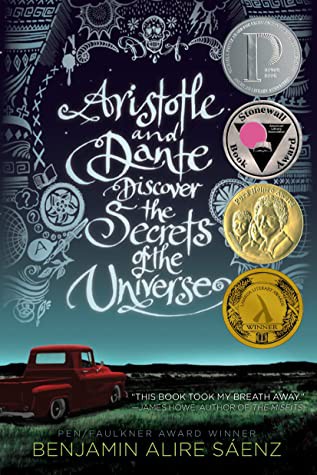

Tropes in this book
- Friends to lovers
- Slow burn
Themes
- young adult
- coming of age
- queer romance
- family secrets
- 1980s El Paso
Read it if
- you love coming-of-age novels where the big things happen in conversations and in silence
- you want a love story that takes its sweet time and starts with swimming lessons
- you like books where the parents have their own wounds and secrets, and get some of the best scenes
Skip it if
- you need a fast plot, because this one drifts along like a lazy El Paso summer
- a narrator who dissects every single one of his sad moods wears you out
- you want romance with steamy scenes, because the boldest thing here is a kiss
Why this rating
🧠 For connoisseurs
8/10- Fathers and sons. The strongest relationship in this book isn't the romantic one. Jaime Mendoza, a mailman who brought nightmares and silence home from Vietnam, hardly ever speaks, and every sentence he does say weighs more than anyone else's monologues. The scene where he finally tells his son about the war is writing of the very highest order.
- Ari as narrator. A boy who can't name what he feels tells the story in a way that lets you see more than he does. His anger, shame and irony ring true, and Sáenz never winks at the reader to show he knows better.
- Heavy themes, no shortcuts. A brother in prison, war trauma, homophobia and Mexican American identity. Instead of ticking them off a list, Sáenz braids them into one story about everything a family refuses to say out loud.
- Spare, rhythmic prose. Short sentences, repetition, and rain, birds and the desert coming back like a chorus. The boys' dialogue is pure ping-pong, and I caught myself smiling at it far more often than I planned to.
- Grown-ups with all the answers. Both sets of parents are so wise, tender and understanding that in the end it's Ari's father who names Ari's feelings for him. It's lovely to read, but the hero gets the answer handed to him on a plate instead of working his way there. And Ari's revenge on one of Dante's attackers costs him surprisingly little.
💖 For comfort readers
6/10- A friendship you root for. Ari and Dante tease each other, fight, make up and invent a ridiculous sneaker-throwing contest. Their chemistry works without grand gestures or a love confession every other chapter.
- Warmth and humor. For all the heavy themes, this book is full of tenderness: a mom running her fingers through her son's hair, a dad whistling through driving lessons, a stray dog named Legs asleep on the bed. It's a good place to spend a few evenings.
- An ending worth the wait. The ending is short, moving and satisfying. After all of Ari's hesitating, you breathe out right along with him.
- Slow pace. The romance unfolds over two summers and very, very quietly. If you're expecting flirting, dates and tension, the middle – letters, flipping burgers and the Ileana subplot – may bore you.
- Lots of introspection. Ari thinks, analyzes and spins theories about the secrets of the universe. For some readers that's the whole charm; for others it's a lot of talky pages.
The book's four layers
Plot and pacing
The plot is simple and spread over two summers: a summer of friendship, the accident, a year apart, Dante's return and a reckoning with family secrets. There are some strong turns, but they're never the point. The middle, with Ileana and the burger job, clearly sags, and characters like Daniel or Julian exist mostly to push Ari forward.
Characters and relationships
Ari is one of the best-written narrators I've met in YA: angry, ashamed, funny and real. Dante is his opposite and never turns into a poster-perfect boyfriend. The Mendoza and Quintana parents are a treasure of their own, and the family talk where Ari's father opens up about Vietnam is, for me, the heart of the book. Ileana, Gina and Susie look pale next to them.
Writing style and atmosphere
The style is plain but never flat: short sentences, a rhythm built on repetition, and rain, desert and birds as a refrain. Tiny chapters, often a single page, make it read like a diary. Every now and then there's one line too many about the secrets of the universe, and it edges toward coffee-mug wisdom.
Entertainment and value
This is a book you live through rather than devour. It leaves you with warmth, a handful of scenes you won't forget and characters you miss once it's over. A great read for teens trying to figure out who they are – and for their parents.
The book in brief, spoiler-free
Fifteen-year-old loner Ari Mendoza meets Dante at an El Paso swimming pool – a boy who offers to teach him to swim, reads poetry and says his feelings out loud – and out of that friendship grows something Ari can't admit even to himself for a very long time. A quiet, tender coming-of-age novel where more happens in the silence between a father and a son than in plenty of thrillers.
Want the plot step by step?SummaryThemes it explores
Benjamin Alire Sáenz writes about a boy who lives by other people's rules and can't say out loud who he is. Ari carries his whole family's silence: a father who won't talk about the war, a mother who won't talk about her son in prison, and his own most deeply buried feeling. Dante is his counterweight – he says everything, cries over a dead sparrow and doesn't run, even when he should. It's a story about discovering the truth about yourself slowly, and about shame that only starts to fade once the people you love stop keeping quiet.
The main threads: friendship (swimming lessons, poetry, stars and sneakers that grow into the most important relationship of Ari's life); identity and shame (two boys who each find their own way to realizing they love boys, and the fear of disappointing their parents); fathers and sons (a quiet Vietnam vet and a son who spends years collecting clues about him like a detective); family secrets (a brother in prison whose name nobody says, and Aunt Ophelia, whose life Ari only understands after her death); violence and homophobia (the attack on Dante and Ari's rage, which makes his parents fear history repeating itself); roots (Mexican American identity, the Spanish Dante never learned to speak well and the question of where you actually belong); and growing up (a pickup truck, a first job, a first beer, a first kiss and the first grown-up conversations with your parents).
Questions and answers
Is Aristotle and Dante Discover the Secrets of the Universe part of a series?
It's book 1 of Ari and Dante's story, but it's also a complete novel with a full ending. The sequel, Aristotle and Dante Dive into the Waters of the World, follows the boys after this book, but the first one stands perfectly well on its own, so start here.
How many pages is Aristotle and Dante Discover the Secrets of the Universe?
368 pages in the 2014 US paperback from Simon & Schuster Books for Young Readers, though it depends on the edition. It's split into six parts with very short chapters, many of them a page or two long, so it goes faster than the page count suggests.
Is Aristotle and Dante appropriate for 12 year olds?
I'd say 15+. There's no sex on the page, but the teenage characters drink beer and smoke weed, there's swearing and homophobic slurs, and in the background there's a hate-motivated beating, war trauma and a killing committed by the narrator's brother, described without details. Ari also struggles with shame and self-hatred for a long time. If you're going through something like that, you can call or text 988 (US) any time.
How spicy is Aristotle and Dante?
2/10 on my spice scale. There's kissing, plenty of talk about kissing, one very frank letter from Dante and a stormy night when the boys run around naked in the rain, which is goofy rather than sexy. Nothing on the page goes past a kiss.
Is Aristotle and Dante YA or adult?
YA. Ari is 15 when the story starts and about to turn 17 when it ends, and it's shelved as young adult. It has become a modern classic of queer YA, and plenty of adults read it too, often for the parents as much as for the boys.
Who is Aristotle and Dante for?
Connoisseurs who love coming-of-age novels with well-written characters and family relationships, in the spirit of The Perks of Being a Wallflower or Looking for Alaska. Comfort readers will enjoy a warm, slow-burning love story with an ending that rewards the wait, as long as a quiet pace doesn't bother them.
What about you? Have you read this book?
Reader ratings
Your rating might be totally different from mine. A lot depends on when you pick it up.
Your rating on a 1-10 scale
No login needed. One vote per browser – you can change it later.
Disagree? Rate the book above or message me on Instagram or TikTok.
What to read next
 Heartstopper: Volume 1
Alice Oseman
Another friendship between two boys that slowly turns into love, only lighter and in comic form.
★ 7/10🧠 6💖 8🌶️ 213+
Read the review
 Carry On
Rainbow Rowell
Another boy who takes a very long time to understand what he feels for the boy he can't stop thinking about, with magic instead of the desert.
★ 7/10🧠 7💖 7🌶️ 214+
Read the review
 The Fault in Our Stars
John Green
A YA first love that takes heavy themes seriously and doesn't sugarcoat them.
★ 7/10🧠 7💖 9🌶️ 113+
Read the review