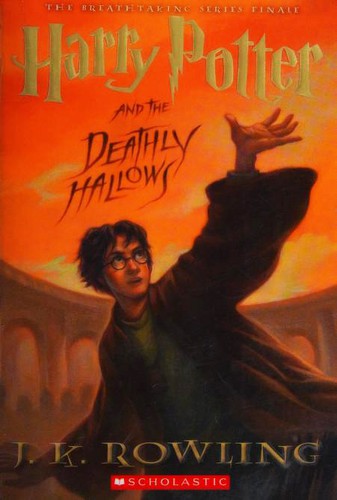

Tropes in this book
- Found family
- Mystery and crime
- Plot twists
Themes
- fantasy series finale
- Horcrux hunt
- chosen one
- Battle of Hogwarts
- grief and sacrifice
Read it if
- you've read six books and want to know why Rowling spent years building this puzzle
- you want to watch a school adventure turn into a story about war, loss and hard choices
- you love twists that send you straight back to the earlier books to reread them with new eyes
Skip it if
- you haven't read books one through six yet, because without them this finale can't land
- what you love about Harry Potter is classes, Quidditch and feasts in the Great Hall, and this book has none of them
- you're shopping for a 10-year-old who just finished Sorcerer's Stone
Why this rating
🧠 For connoisseurs
9/10- The Prince's Tale. One chapter rewrites the meaning of the six books before it. Snape, the man it's been so easy to hate since that very first Potions class, finally gets to tell his side, and I won't say a word more except this: a single word spoken in Dumbledore's office hits harder than most epilogues.
- Dumbledore without the halo. The wise headmaster of the earlier books gets a past: a teenage friendship with Gellert Grindelwald, plans for wizards to rule over Muggles “for the greater good” and a sister whose death he never forgave himself for. Rowling lets Harry get furious with him, and it's one of the most grown-up decisions in the whole series.
- Horcruxes vs. Hallows. Two ways to beat death: one by tearing your own soul to pieces, the other through a legend from a children's fairy tale. The moment Harry, standing over a fresh grave, chooses the Horcruxes and leaves the Hallows alone, he stops being the boy things just happen to.
- War gets your hands dirty. Harry uses the Imperius Curse during the Gringotts break-in and the Cruciatus Curse on Amycus Carrow, and he promises Griphook the sword with a loophole any lawyer would be proud of. Rowling doesn't turn it into a big drama, but she shows that in wartime even the hero stops being a well-behaved student, and she doesn't ask you to pretend you didn't notice.
- Characters who grew up. Neville leads the student resistance at Hogwarts, Kreacher goes from a muttering, insult-hurling elf to someone you actually root for, Ron walks out and comes back, and even a Malfoy gets a moment that stops you cold. Everyone gets their scene, and everyone earned it in the books before.
- The tent. The middle of the book is weeks of camping, bickering and waiting for somebody to have an idea. I get why it's there – it shows three teenagers with no adults behind them and no clue where to go next. I just wish that helplessness took up fewer chapters.
- Wand rules. The climax hinges on who disarmed whom and when, and the Elder Wand changes hands by rules Ollivander only sketches midway through and that get fully spelled out in the final showdown. The duel is a showstopper, but you might want to map out its logic on a napkin.
💖 For comfort readers
8/10- Big set pieces. The escape of the seven Potters, a Ministry break-in in borrowed bodies, a Gringotts heist that ends with a getaway on a dragon, and the Battle of Hogwarts. Any one of them could carry its own movie, and each one has different stakes.
- The trio on the road. Harry, Ron and Hermione have nobody but each other. They fight, split up and make up, and Ron's return at a frozen pond is the scene fans had waited years for.
- Old friends come back. Dobby, Kreacher, Aberforth, Dumbledore's Army, the centaurs, the house-elves from the kitchens and Grawp – by the finale, almost everyone the series ever introduced turns up to stand against Voldemort. Seven books of loyalty, and Rowling pays out the dividends.
- All the feelings. Fair warning: there are losses here that hit like a truck, one long walk you'll read with your heart in your throat and a hall full of the fallen after the battle. After all that, the epilogue hands you a moment of warmth.
- No school. No classes, no Quidditch, no feasts, and in the tent the action stalls for weeks. Fans of the cozy Hogwarts vibe only get back inside the castle for the finale.
The book's four layers
Plot and pacing
The Horcrux hunt has a clear goal and great turning points: the Ministry, Godric's Hollow, Malfoy Manor, Gringotts. In between, though, stretches a long tent limbo where the trio mostly waits, freezes and goes for each other's throats. The Battle of Hogwarts more than makes up for it, even if the rule for how the Elder Wand switches allegiance takes careful reading.
Characters and relationships
Snape, Dumbledore and Neville get the best chapters in the whole series, and even Kreacher, for years the grumpy elf who traded only in insults, changes right in front of you. The trio's fights hurt because they come from hunger, fear and the weight of the locket. The one thing missing is Ginny, who spends the entire journey far away from the trio.
Writing style and atmosphere
Rowling writes darker here than ever: the graveyard in Godric's Hollow on Christmas Eve, the cellar at Malfoy Manor, the Great Hall after the battle. The humor doesn't vanish – Ron and the twins still cut the tension – but the jokes get shorter and rarer. A late chapter set in a bright, strangely empty place is the weirdest and one of the most beautiful in the series.
Entertainment and value
Over 750 pages that tie up every thread and answer questions the series has been asking since book one. It's a book about death – about being able to face it without fear – and about the price of war. The epilogue is as sweet as Christmas pudding, but after a journey like that, these characters have earned it.
The book in brief, spoiler-free
There's no seventh year at Hogwarts: Harry, Ron and Hermione hit the road with a mission from Dumbledore, no plan and no grown-ups, just as Voldemort takes over the Ministry of Magic. A finale that ties all seven books together – and makes everyone pay dearly for it.
Want the plot step by step?SummaryThemes it explores
In the final book, J.K. Rowling says out loud what has been running under the whole series: what death is and how to face it. Voldemort splits his soul so he never has to die, young Dumbledore dreamed of the Hallows that would make him master of death, and Harry has to figure out what he's willing to give up. The second big theme is power and how it gets abused. With Voldemort pulling the strings, the Ministry registers Muggle-borns, takes away their wands and puts up a statue in the Atrium inscribed “Magic Is Might,” while ordinary officials sign off on all of it because keeping quiet feels safer. The third is the truth about the people we admire or hate: Dumbledore turns out to have made terrible mistakes, and Snape finally gets to tell his own story.
The main threads: the Horcrux hunt (the locket, the cup, the diadem and the snake – each one has to be found first and then destroyed); the Deathly Hallows (the tale of the three brothers, the Elder Wand, the Resurrection Stone and an Invisibility Cloak that's been in Harry's hands since book one); war and persecution (Snatchers, the Muggle-born Registration Commission, the Carrows running Hogwarts and the resistance of Dumbledore's Army); friendship under pressure (three people stuck in one tent, a fight, Ron walking out and coming back); Dumbledore's secret (Grindelwald, Ariana, Aberforth and Rita Skeeter's biography); sacrifice and loss (friends who give their lives for others, and a choice Harry has to make alone); and redemption (characters you may have written off, Dumbledore himself among them, each with a debt to settle).
Questions and answers
Do I need to read Harry Potter and the Sorcerer's Stone first?
Yes – and the five books after it. This is the finale, and it answers questions raised as far back as Sorcerer's Stone and Goblet of Fire, and most of all in Half-Blood Prince, where Dumbledore explains to Harry what Horcruxes are and how many there might be. Read the series in publication order: Sorcerer's Stone, Chamber of Secrets, Prisoner of Azkaban, Goblet of Fire, Order of the Phoenix, Half-Blood Prince, Deathly Hallows. Harry Potter and the Cursed Child, which sometimes gets called the eighth story, is the script of a stage play, so Harry's story in novel form ends right here.
How many pages is Harry Potter and the Deathly Hallows?
759 pages in the US paperback from Scholastic (Arthur A. Levine Books), the same as the 2007 US hardcover, though it depends on the edition. That's 36 chapters plus an epilogue, and only Order of the Phoenix is longer.
Is Harry Potter and the Deathly Hallows appropriate for 12 year olds?
I rate it 13+. A 13-year-old who has read the earlier books can handle it; younger readers are better off with an adult reading along. It's the darkest book in the series: in the first chapter Voldemort murders a Hogwarts teacher in front of his Death Eaters, Bellatrix tortures a prisoner, several characters readers grew up with die, and after the battle the fallen are laid out in rows in the Great Hall. Harry himself uses Unforgivable Curses, which is worth talking through with a younger reader. Rowling doesn't linger on gore, but the losses are many and they hurt. Romance stays at a few kisses, and there's barely any swearing.
How spicy is Harry Potter and the Deathly Hallows?
2/10 on my spice scale. There are a few kisses, including one that fans waited six books for, and that's it – no sex scenes and nothing beyond a kiss on the page. The intensity here comes from war and grief, not romance.
Is Harry Potter and the Deathly Hallows YA or middle grade?
Both, in a way. The series starts out as middle grade – Sorcerer's Stone works for ages 10 or 11 – and ages right along with its readers. By book seven Harry is 17, there's no school year at all, and this is a YA war novel in everything but the shelf label. Plenty of adults read it too, and a lot of scenes land differently on a reread years later.
Who is Harry Potter and the Deathly Hallows for?
Everyone who spent six years at Hogwarts with Harry and needs to know how it ends, plus adults coming back to the series. Comfort readers get a dragon, a battle and big goodbyes; connoisseurs get the biggest reveal in the whole series and a Dumbledore you can finally ask hard questions. If you want another war story told through teenage eyes afterward, pick up Mockingjay.
What about you? Have you read this book?
Reader ratings
Your rating might be totally different from mine. A lot depends on when you pick it up.
Your rating on a 1-10 scale
No login needed. One vote per browser – you can change it later.
Disagree? Rate the book above or message me on Instagram or TikTok.
What to read next
 Harry Potter and the Half-Blood Prince
J.K. Rowling
The previous book: Dumbledore's private lessons and the setup for the whole Horcrux hunt.
★ 8/10🧠 8💖 8🌶️ 212+
Read the review
 Harry Potter and the Sorcerer's Stone
J.K. Rowling
Same series.
★ 8/10🧠 6💖 9🌶️ 110+
Read the review
 Harry Potter and the Goblet of Fire
J.K. Rowling
Same series.
★ 9/10🧠 8💖 9🌶️ 212+
Read the review