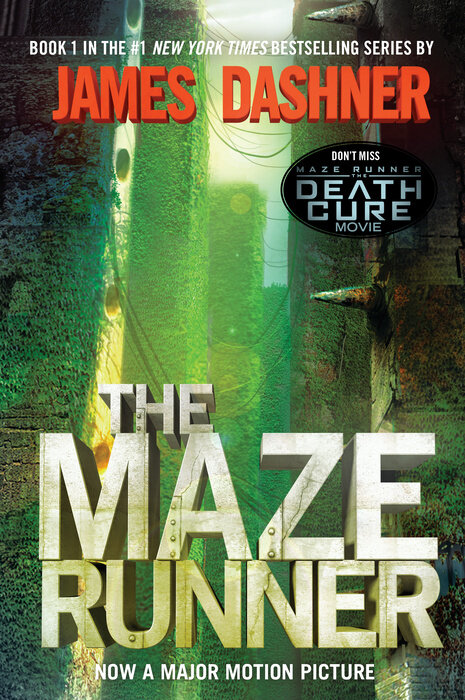

Tropes in this book
- Dystopia
- Plot twists
- Zero to hero
Themes
- dystopian YA
- deadly maze and monsters
- amnesia
- all-boys survival community
- puzzle to crack
- character deaths
Read it if
- you like dystopias where the mystery of the world matters more than any romance
- you want action from the first paragraph and chapters that end at the worst possible moment
- you loved The Hunger Games and want another story about kids thrown into a cruel experiment
Skip it if
- it drives you up the wall when characters dodge every question and promise it'll all make sense later
- you want layered characters, not a set of roles: the leader, the hothead, the loyal friend
- deaths of kids hit you hard and you don't want them described up close
Why this rating
🧠 For connoisseurs
6/10- A premise that holds up. A stone Maze that rearranges itself every night, boys with no memories and a community with its own laws – that's a killer starting point. Dashner keeps stacking layers on top: a gray sky, Doors that stop closing, a code hidden in the way the walls move. As a puzzle, it works without a hitch.
- Twists. A Griever that isn't as dead as it looks, a brutal way to get your memories back, the truth about what Thomas and Teresa have to do with all of this and a closing memo that turns the “rescue” inside out. The last page changes the meaning of the whole book, and it fully earns that.
- The price of survival. Dashner doesn't protect his characters. Ben's Banishment, a sacrifice in the final battle and one death in the last chapters really hurt, and the book never pretends the escape was a win without losses.
- Cardboard heroes. Thomas is the fastest, bravest and smartest guy in the Glade from day one, and Teresa – even though she's the first to say the Maze is a code – spends most of the book as a voice in his head and words written on her arm. Gally is anger on two legs. Minho and Newt have the most life in them, but they also get one or two traits each.
- Mystery by stonewalling. For chapter after chapter, the tension comes mostly from nobody telling anybody anything. I get the idea, but after the umpteenth “you'll find out tomorrow,” I was ready to lock Thomas in the Slammer myself, just so someone would finally answer his question.
- The exit button. After a giant code puzzle, the solution boils down to a big red button that was sitting under the screen the whole time. Two years of mapping, and the finale comes down to one kid happening to look down.
💖 For comfort readers
6/10- Pace. From the elevator in the first paragraph to the battle at the Cliff, something is always going on. Short scenes, cliffhangers and a constant sense of danger make it really hard to take a break.
- The Grievers and the Maze. The monsters are gross and genuinely scary, and Thomas's night in the Maze – hauling Alby up the wall on the ivy, then running from Grievers all the way to the Cliff – is one of the best action sequences I've read in YA.
- Chuck. A chatty kid who just wants to get back to his parents gives this book its heart. His friendship with Thomas does more than the entire Teresa storyline.
- Glader slang. “Shuck,” “klunk,” “shank” and “slim it” in every other line. At first it builds atmosphere; a few dozen pages in, it sounds like a notebook of nicknames from summer camp.
- Darkness with no breather. No romance, no warmth, no room to breathe, and kids die often. If you want an adventure to unwind with, you may end up more crushed than entertained.
The book's four layers
Plot and pacing
The concept is first-rate, and the Maze puzzle is handled with real skill: the gray sky, the open Doors, letters hidden in the stacked Maps of the eight Sections and the Griever Hole by the Cliff. What hurts it is information held back artificially for far too long and a finale settled by a button that practically begs to be mocked. The last page – a memo from WICKED – saves a lot and sets up the rest of the trilogy.
Characters and relationships
Thomas is the kind of hero who's right before anyone else has had time to think. Teresa doesn't get enough room to become more than a key to the plot, and Gally is dangerous because the script says so. Minho with his dry humor, Newt as the voice of reason and Chuck, who you genuinely ache for, hold up. Still, for a cast this big, too many of them are just names.
Writing style and atmosphere
The sentences are short and cinematic, the action flows and the Maze scenes have real atmosphere. The rest limps: Thomas “felt” something on every other page, the same unanswered questions keep circling and the slang starts parodying the world instead of building it. This is a book that plays better as a movie in your head than it reads line by line.
Entertainment and value
As an adventure, it works: it hooks you, scares you and holds on until the end, and one loss in the final chapters stings long after you close the book. Very few first books sell the second one this well. The downside is darkness without a single moment to catch your breath, which won't be for everyone.
The book in brief, spoiler-free
Sixteen-year-old Thomas wakes up with no memories in the Glade, a patch of grass walled in by a Maze nobody has found a way out of in two years – and at night, monsters crawl out of it. The premise is brilliant and drags you all the way to the last page; the characters and the prose just stay a few corridors behind the puzzle.
Want the plot step by step?SummaryThemes it explores
James Dashner writes about kids who've had everything taken from them except their first names, and about what's left of them when they have to build a world from scratch. The Glade has its own laws, its own punishments and its own language, and for two years its residents believe that if they just draw a good enough map, they'll find the way home. Bit by bit, it turns out the Maze is less a prison than a lab, and every death, every Changing and every decision is being recorded by someone on the other side of the glass. It's a survival story, but also a story about how easily saving humanity becomes an excuse for cruelty.
The main threads: memory loss (Thomas and the others don't know who they used to be, and the memories that come back turn out to be as dangerous as the Grievers); the Glade as a community (Keepers, Runners, Gatherings and Banishment – an order that keeps everyone alive but can also be merciless); the puzzle of the Maze (shifting walls, Maps of the eight Sections and a code that only shows up when you stack the drawings from the same day); WICKED's experiment (the Creators, the beetle blades and the signs on the walls – adults who watch and don't help); friendship and sacrifice (Chuck, Minho and Newt, and choices where someone gives something up for the others, sometimes their life); and guilt and responsibility (Thomas, who wants to save everyone, and the truth that he helped build their prison himself).
Questions and answers
Is The Maze Runner a series? What's the reading order?
Yes, it's book 1 of James Dashner's trilogy: The Maze Runner, then The Scorch Trials, then The Death Cure. There are also two prequels, The Kill Order and The Fever Code, which go back to how the world fell apart and how the Maze came to be. Read the trilogy first and the prequels afterward – they land much harder once you know the Glade and its secrets. Book 1 wraps up the escape from the Maze, but the last page points straight at what comes next, so you'll want The Scorch Trials close by.
How many pages is The Maze Runner?
416 pages in the US trade paperback from Delacorte Press, according to the publisher, though it depends on the edition (the 2009 hardcover lists 400). The chapters are short and the pace barely lets up, so it goes faster than the page count suggests.
Is The Maze Runner appropriate for 12 year olds?
I rate it 14+, the same as the whole trilogy, even though the publisher says 12 and up. There's no sex, and most of the swearing is swapped out for invented slang, but there's a lot of violence: kids die, one of them in a very graphic scene, there's a battle with monsters and an adult gets shot. A mature 12-year-old can handle it, but a more sensitive reader should know what's coming before starting.
How spicy is The Maze Runner?
1/10 on my spice scale. There are no sex scenes and basically no romance – the closest thing is a strange telepathic bond between Thomas and Teresa, and the book itself doesn't spell out what they were to each other. The intensity here comes from the Grievers and the deaths, not from anyone's love life.
Is The Maze Runner YA or adult?
It's YA: Thomas is 16, it came out from Delacorte Press, a Random House imprint for young readers, and it rode the same dystopian wave as The Hunger Games and Divergent. Adults who like puzzle-box stories will have fun too, as long as they don't expect deep characters.
Who is The Maze Runner for?
Readers 14 and up who love dystopias with a mystery at the center, nonstop action and a dark mood, and who don't need a romance to be happy. Connoisseurs will buy into the premise and the final twist, but they'll have to forgive some paper-thin characters. Comfort readers will be carried along by the pace and the monsters – just don't expect warmth or a chance to breathe.
What about you? Have you read this book?
Reader ratings
Your rating might be totally different from mine. A lot depends on when you pick it up.
Your rating on a 1-10 scale
No login needed. One vote per browser – you can change it later.
Disagree? Rate the book above or message me on Instagram or TikTok.
What to read next
 The Scorch Trials
James Dashner
Book 2, for when the last page sends you straight out of the Glade and into what WICKED has planned next.
★ 4/10🧠 4💖 6🌶️ 214+
Read the review
 The Death Cure
James Dashner
Same series.
★ 5/10🧠 4💖 6🌶️ 114+
Read the review
 The Fever Code
James Dashner
Same series.
★ 5/10🧠 4💖 6🌶️ 114+
Read the review