

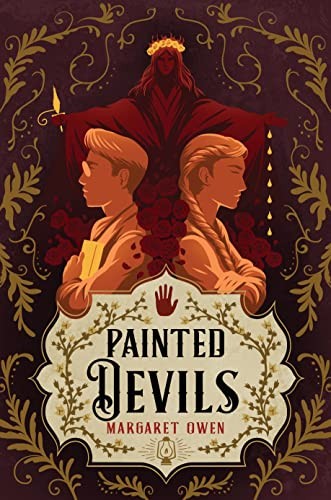

Tropes in this book
- Mystery and crime
- Plot twists
- Romantasy
Themes
- ya fantasy
- thief x prefect
- fake goddess cult
- found family
- folklore come to life
- dark humor
Read it if
- you finished Little Thieves and want more Vanja lying, stealing and narrating everything with a raised eyebrow
- you like fantasy steeped in folklore, where gods grow out of what people believe and the jokes keep coming even in a crypt
- you want a romance where the couple actually talks about consent, boundaries and fear, and intimacy matters to the plot
Skip it if
- you can't stand books where the best jokes sit right next to a whipped child and a mother who walked her daughter into a winter forest
- you'd rather have a tight plot with no detours into a library and a brothel
- you need the last page to give you peace instead of making you wait for book three
Why this rating
🧠 For connoisseurs
7/10- Seven lies. Between chapters, Owen slips in fairy-tale flashbacks counting down from the seventh lie to the first. Each one adds a piece of Vanja's childhood, and at the end they click like a lock turning – the last one says out loud what Vanja never wanted to know about herself.
- An ending that was always there. The solution to the Scarlet Maiden mystery is a real surprise, and it plays fair: the key object shows up in the opening chapters, and Owen makes sure you forget about it. When I finished, I wanted to flip back to page one and count how many times she'd conned me.
- Folklore as an engine. In this world gods grow out of people's belief, and Owen turns that rule into the motor of the plot: a lie a whole village keeps repeating starts growing teeth. Brunne the Huntress, the Briar Hag and the river goddess are figures out of legend with their own scores to settle.
- Scars without a miracle cure. All book long, Vanja fights the belief that she doesn't deserve to be loved. Emeric doesn't fix her – she has to take the last step herself – and Owen writes about childhood abuse seriously and with care.
- Side quests. Stealing a goblet in Dänwik and taking down a brothel in Rammelbeck are slick little heists, but plot-wise they're rest stops. At 500-plus pages, you can feel the main storyline taking a hundred-page nap now and then.
- Kirkling and the virginity clause. Emeric's examiner spends a long time as nothing more than a wall for the heroes to bang their heads against. And the terms of the sacrifice – whether Emeric has slept with anyone – come up in so many conversations that it wears thin before Owen finally defuses it.
💖 For comfort readers
7/10- Goats, a cult and sharp comebacks. The humor lands from the barn scene where a lovers' quarrel gets interrupted by screaming goats. Vanja narrates the world like a stand-up comic with a criminal record, and Emeric answers her in legal subsections.
- Heists and hustles. Swapping a goblet in a corrupt prince's gallery, weaponizing pubic lice and buying a brothel for one small silver coin are pure fun. Vanja wins with brains, not a sword, and she clearly enjoys every minute of it.
- A couple worth cheering for. Vanja and Emeric tease, fight and make up, and their scenes are tender and bold without getting explicit. The way he asks for her consent by tracing a little circle on her skin is adorable.
- The crew. Ragne with her wings, Joniza, the inventor Vikram, the haunted dress form Lady Ambroszia commenting on everyone's love life and Brunne proposing to anyone who can catch her. Even most of the thirteen Ros siblings get their own moment.
- Heavy stuff and an open ending. Between the jokes there are very dark flashbacks: a child being whipped and a mother who led her little girl out into the frost. And the last chapter takes away the thing you waited the whole book for, then tells you to wait for book three.
The book's four layers
Plot and pacing
An investigation into a goddess who doesn't exist – until she does – with a deadline that keeps getting shorter every few chapters is a solid engine. The ending ties back to threads from the very beginning and still surprises, even though the clues were in plain sight all along. The middle pays the price: the library in Dänwik and the brothel in Rammelbeck are standalone adventures that keep shelving the main mystery.
Characters and relationships
Vanja is a heroine I believe in: sharp, snarky, hurt and stubborn. Emeric is a lovable stickler, and their relationship grows up right in front of you. The Ros family is a great idea, though out of thirteen siblings some are sketches with a single trait. Brunne, Lady Ambroszia and the Briar Hag shine, while Kirkling stays one-note for a long time.
Writing style and atmosphere
The narrator talks straight to the reader, throws in asides and punch lines, and the fairy-tale interludes about each lie are written beautifully and sadly. Owen blends horror and comedy really well, except when a joke barges into a scene that's asking for silence. The faux-German names, currencies and titles you just have to take on faith – I got used to them eventually.
Entertainment and value
It's funny, it's moving and it keeps you on edge, and the last hundred pages fly by. I'm docking points for the length and for how much pain there is here, younger readers included. For fans of book one, it's required reading.
The book in brief, spoiler-free
Vanja starts a cult by accident, and then the goddess she made up actually shows up – and picks Emeric as a sacrifice for a hellhound. Getting him back costs seven drops of blood from seven brothers and a few truths Vanja would much rather never have learned.
Want the plot step by step?SummaryA quote that stuck with me
“Let me state one thing up front: I wasn’t trying to start a cult.”Painted Devils, Margaret Owen
Themes it explores
Margaret Owen writes about lies you believe for so long that they start running your life: a made-up goddess the village keeps handing more and more to, and a sentence drilled into a little girl that she ruins everything she touches. Vanja is running from a family she doesn't remember and from a boy she's afraid she'll never be enough for, and every new adventure forces her to look at herself differently. Under the humor, the heists and the romance, it's a story about how blood and family aren't always the same thing – and how love isn't something you have to earn.
What the story is really about: a lie that comes alive, as the Red Blessed grow so fast that the invented goddess starts speaking in her own voice; a hunt for brothers, with seven drops of blood collected from Hagendorn to Kerzenthal, each paid for with a different favor; the Ros family, thirteen siblings who lit a candle for their lost sister year after year; consent and intimacy, with a couple talking through boundaries even while a goddess tries to climb into their bed; law versus justice, between a prefect who wants to hold the powerful to account and a thief who'd rather patch the holes in the law with a needle; the cult itself, power over people that turns into punishment the moment Leni gets her hands on it; and the folklore of the Haarzlands, with Brunne the Huntress, the Wild Hunt, the Briar Hag and the legend of the Red Maid of the River.
Questions and answers
Do I need to read Little Thieves first?
Yes. Painted Devils is book two of the Little Thieves trilogy – after Little Thieves, Owen's retelling of The Goose Girl, and before Holy Terrors. It assumes you already know Vanja, Emeric, Ragne, Joniza and what went down in Minkja, though it recaps the big stuff along the way. Also, this one ends wide open and leads straight into book three.
Is Painted Devils appropriate for 12 year olds?
I'd say no – I recommend it for 16+, like the whole series. The intimate scenes are implied rather than described, but the plot openly revolves around virginity and sex, and Vanja has a frank talk about birth control with a midwife-in-training. The flashbacks include a child being whipped and abused, and the present-day story has a cult that punishes people, slaughtered animals, the death of someone the characters care about, possession and a red-light district.
How spicy is Painted Devils?
I rate it 5 out of 10. That's mostly heat and talk rather than on-page sex: Vanja and Emeric get close, discuss consent and take things at their own pace, and the scenes cut away before anything gets explicit. It's spicier than Little Thieves, but still a long way from new adult romantasy.
How many pages is Painted Devils?
The 2023 US hardcover from Henry Holt has 512 pages, though it depends on the edition.
Is Painted Devils YA or adult?
It's YA fantasy with a romantasy streak: Vanja is seventeen and Emeric eighteen. The themes – childhood abuse, a cult, sex and consent – make it a better fit for older teens than for middle schoolers.
Who is Painted Devils for?
Fans of Little Thieves, and anyone who likes fantasy with humor, a clever heroine and folklore, in the vein of Six of Crows or The Cruel Prince. Connoisseurs get a carefully built plot and an ending that surprises; comfort readers get heists, romance and a crew that clicks. It's less of a treat if you don't like chunky books or open endings.
What about you? Have you read this book?
Reader ratings
Your rating might be totally different from mine. A lot depends on when you pick it up.
Your rating on a 1-10 scale
No login needed. One vote per browser – you can change it later.
Disagree? Rate the book above or message me on Instagram or TikTok.
What to read next
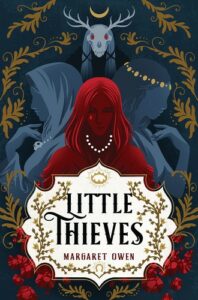 Little Thieves
Margaret Owen
Book one: where Vanja's con, her curse and her story with Emeric begin.
★ 8/10🧠 8💖 8🌶️ 216+
Read the review
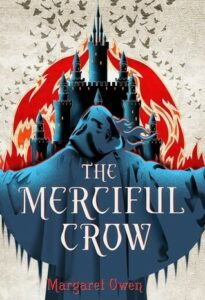 The Merciful Crow
Margaret Owen
Also by Margaret Owen.
★ 7/10🧠 7💖 7🌶️ 416+
Read the review
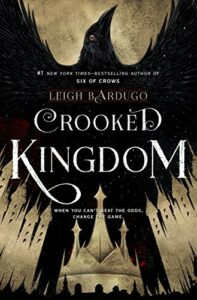 Crooked Kingdom
Leigh Bardugo
The second book of another thieves' saga, where the cons come with a reckoning over family wounds.
★ 8/10🧠 8💖 8🌶️ 215+
Read the review