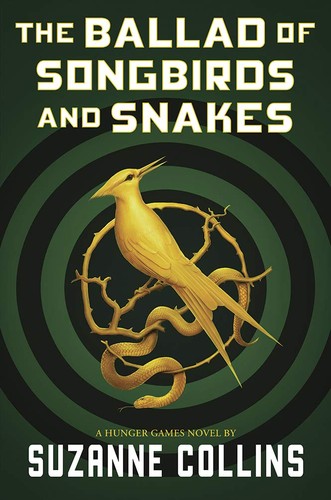

Tropes in this book
- Dystopia
- Plot twists
Themes
- dystopian YA
- Hunger Games prequel
- villain origin story
- morally gray antihero
- mentor and tribute
- birth of the Games
- power and control
Read it if
- you know the trilogy and want to see how a boy eating cabbage soup off fine china turned into President Snow
- you like books where the narrator gets less likable with every chapter and you keep reading anyway
- you want to know where the sponsors, the betting, the mockingjays and “The Hanging Tree” came from
Skip it if
- you're hoping for a second Katniss – this lead gets harder to shake hands with every chapter
- you expect the Games to fill the whole book rather than its middle section
- long conversations about human nature and the social contract bore you, even when the plot illustrates them
Why this rating
🧠 For connoisseurs
8/10- An antihero with no free pass. Coriolanus lies, schemes and throws other people under the bus, and because we ride along inside his head, we hear every excuse straight from the source. The worst part is how easy he is to understand at first: a hungry childhood, a grandmother who belted out the anthem from the penthouse window while bombs fell, a cousin remaking his father's old shirt so he has something decent to wear. When he crosses one more line at the end, you know exactly how he got there.
- Philosophy that pulls its weight. The epigraphs from Hobbes, Locke and Rousseau aren't decoration. Dr. Gaul keeps asking what people really are and what kind of power they need over them, Lucy Gray answers by asking what you have to give up in exchange for that safety, and nearly every scene scores a point for one side or the other. It's the most political book in the series.
- Props that come back to bite. A handkerchief, a napkin from a funeral reception, his mother's silver compact – Collins sets small objects on the board like chess pieces, and each one returns at the worst possible moment. The end of part two is one of the best turns in all of Panem.
- Sejanus. The boy from District 2 who refuses to turn into a proper Capitol kid is the conscience of this book and one of the most tragic characters in the series. From the first chapters you can sense that good boys don't get an easy ride in this world, and that hunch pays off.
- Lucy Gray as a legend. She has charisma to spare, but we only ever see her through Coriolanus's eyes, so she's more often a stage, a song and a symbol than a person. As a result, the romance is something you watch rather than feel.
- Easter eggs on overload. Katniss as a marsh potato, mockingjays, a Flickerman, a Heavensbee, “The Hanging Tree” and the lullaby we heard in Katniss's own arena. Some of the callbacks earn their spot, but part three crams in so many that it turns into fan-service bingo.
💖 For comfort readers
5/10- The Games, behind the curtain. Tributes behind bars at the zoo, the very first sponsors, food delivered by drone and a weatherman who does magic tricks between the killings. The middle section moves fast and has a few scenes that gave me actual chills.
- Lucy Gray on stage. A snake dropped down the mayor's daughter's dress, songs with claws and a girl who beats the Capitol with its own weapon: the camera. These are the brightest moments in the book.
- A world you can feel. The Capitol in rubble, cabbage soup served on fine china, roses on the roof and Grandma'am with her anthem. It's easy to sink right into it.
- A lead you can't cheer for. Coriolanus is vain, jealous and calculating, and he gets worse with every chapter. If you like to stand firmly behind your main character, there's nobody to stand behind here.
- The length and part three. Over 500 pages, and after the Games the story moves to District 12, where long chapters go to drills, bird catching, concerts and debates about human nature. The tension doesn't come back until close to the end.
The book's four layers
Plot and pacing
The three parts are practically three different books: a race for a prize at the Academy, the Games watched from a mentor's seat and a political thriller in District 12. Collins steers each one with confidence, and each ends on a turn that changes the stakes. Points come off for a third part that takes too long to get going, and for the simple fact that the trilogy has already told us where Coriolanus ends up before we open page one.
Characters and relationships
Coriolanus is the most interesting lead in the series precisely because he isn't good, and we still understand every step he takes. Sejanus, Tigris, Dr. Gaul and Highbottom make a terrific supporting cast, and Grandma'am with her anthem and her roses is funny and frightening at the same time. Lucy Gray has charisma, but she stays more legend than person, because we never get her point of view.
Writing style and atmosphere
After Katniss's first-person voice, third person and past tense are the right call for a cold, calculating lead. The Covey's songs make a lovely counterpoint, though they come back so often that they sometimes put the brakes on the plot. The lectures on human nature and the social contract grate too, because now and then they're delivered with a sledgehammer.
Entertainment and value
It grips and it unsettles, but there isn't much pleasure here in the usual sense: you spend more than 500 pages with someone who turns into a monster along the way. For Panem fans it's required reading; for everyone else, it's a strong dystopia with a lead who's hard to like and an ending that leaves more questions than answers.
The book in brief, spoiler-free
Eighteen-year-old Coriolanus Snow, the broke heir of a once-great Capitol family, is assigned to mentor the girl tribute from District 12 at the 10th Hunger Games and fights for a prize that could save his future. Collins keeps you inside a future tyrant's head for more than 500 pages and, worse, gets you rooting for him now and then.
Want the plot step by step?SummaryThemes it explores
Suzanne Collins opens the book with epigraphs from Hobbes, Locke, Rousseau, Wordsworth and Mary Shelley, and from that moment it's clear this prequel is more a story about human nature than another helping of the Games. The question Dr. Gaul puts to Coriolanus at his hospital bedside – what are people, and what kind of government do they need – hangs over everything, from the zoo where tributes are put on display like animals to the woods by the lake, where Lucy Gray argues that it's the world that changes people. Collins never answers outright, but she shows a boy with a hungry childhood and an obsession with control picking the answer that suits him best, while a rose, poison and the family motto take on the meaning trilogy readers know all too well.
The main threads: power and control (the clash between Dr. Gaul and Lucy Gray over whether people turn into beasts without a strong hand over them); the making of a monster (Coriolanus, who has a ready excuse for every choice and needs a little less of one each time); the Games as a show (the first mentors, sponsors, betting and a host – everything the trilogy already treats as ritual); love and possession (his feelings for Lucy Gray, which from the start are more about owning than trusting); friendship and loyalty (Sejanus Plinth, the District 2 boy who saves Coriolanus more than once and believes in him more than he should); and nature and music (the mockingjays and the Covey's songs as everything the Capitol can't bring under control).
Questions and answers
Do I need to read The Hunger Games before The Ballad of Songbirds and Snakes?
You can start here, since it's a self-contained story, but I recommend publication order: the trilogy first (The Hunger Games, Catching Fire, Mockingjay), then the prequels – The Ballad of Songbirds and Snakes, followed by Sunrise on the Reaping. Chronologically Ballad comes first: it covers the 10th Hunger Games, Sunrise the 50th and the trilogy the 74th and 75th. Without the trilogy, though, half the payoff goes missing – the mockingjays, “The Hanging Tree” and the name Snow itself carry far more weight when you know what's coming.
How many pages is The Ballad of Songbirds and Snakes?
528 pages in the 2020 US hardcover from Scholastic Press, though it depends on the edition. It's split into three parts – The Mentor, The Prize and The Peacekeeper – with 30 chapters and an epilogue, which makes it the longest book in the series.
Is The Ballad of Songbirds and Snakes appropriate for 12 year olds?
I rate it 14+, the same as Mockingjay and Sunrise on the Reaping. The romance stops at kissing and a few hints. The violence is another story: a slit throat, children dying in the arena, executions by hanging, shootings, memories of starving through the war, plus morphling and alcohol, and two characters have suicidal thoughts. The descriptions are brief, but the weight is heavy, so it's worth talking this one through with younger readers. If any of it hits close to home, in the US you can call or text 988 any time.
How spicy is The Ballad of Songbirds and Snakes?
2/10 on my spice scale. A few kisses and a couple of hints, and no sex scenes at all. The romance between Coriolanus and Lucy Gray runs on jealousy and possessiveness, not heat.
Is The Ballad of Songbirds and Snakes YA or adult?
It's YA: Coriolanus is 18, and Scholastic Press publishes it for teen readers like the rest of the series. It's also the darkest and most philosophical book set in Panem, so adults who grew up with the trilogy will find it has plenty to say to them, too.
Who is The Ballad of Songbirds and Snakes for?
Panem fans who want to know where President Snow came from, and connoisseurs who enjoy novels with an antihero and politics in the background. Comfort readers will love the zoo and arena scenes and the magnetic Lucy Gray, but they'll have to make it through a long third part and a narrator you can't root for without a guilty conscience.
What about you? Have you read this book?
Reader ratings
Your rating might be totally different from mine. A lot depends on when you pick it up.
Your rating on a 1-10 scale
No login needed. One vote per browser – you can change it later.
Disagree? Rate the book above or message me on Instagram or TikTok.
What to read next
 Sunrise on the Reaping
Suzanne Collins
The second prequel: the 50th Hunger Games and a young Haymitch, seen from a tribute's side this time instead of a mentor's.
★ 8/10🧠 8💖 5🌶️ 114+
Read the review
 Mockingjay
Suzanne Collins
The trilogy finale, where the mockingjays and “The Hanging Tree” return as symbols of the rebellion.
★ 8/10🧠 7💖 4🌶️ 214+
Read the review
 The Hunger Games
Suzanne Collins
The place to start: Katniss's Games, after which the President Snow of this prequel reads completely differently.
★ 7/10🧠 8💖 5🌶️ 113+
Read the review