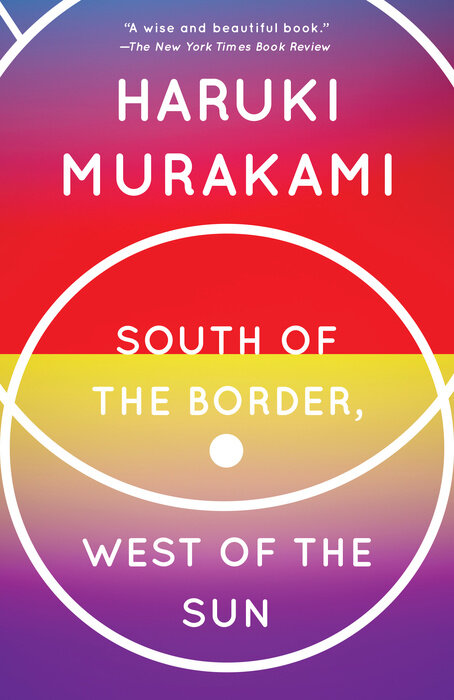

Themes
- literary fiction
- adult fiction (not YA)
- first love after decades
- marriage and infidelity
- 1980s Tokyo
- jazz and Nat King Cole
- 18+ scenes
Read it if
- you like novels where the biggest things happen inside the narrator's head and the mood matters more than the plot
- you want to try Murakami at his shortest and most realistic
- you like ambiguous endings and heroines who stay a mystery right up to the last page
Skip it if
- you need a lead you can like, and a narrator who cheats on his wife while brooding over his own emptiness gets on your nerves
- you expect answers by the end: who the man with the envelope was, what Shimamoto lives on and what became of her
- you're looking for YA – the teenage years fill only the first chapters, and the rest is a grown man's life
Why this rating
🧠 For connoisseurs
7/10- A heroine as a riddle. Murakami never explains who Shimamoto is, what she lives on, who the man with the envelope was or where she keeps vanishing to. Instead of answers you get an unease that grows every time she walks back in, and it works better than plenty of mysteries that get neatly solved.
- A narrator who gets no discount. Hajime says it himself: he's the kind of person who can wound someone for good. The book doesn't soften that at all. What he did to Izumi comes back twenty years later as a blank face behind a taxi window, and it's the strongest scene in the novel.
- A wife with her own voice. For a long time Yukiko is background: kind, caring, busy with her diet and the kids. Then, in the last big conversation, it turns out she knew everything, went through her own hell and has more to say than her husband. That one scene resets the whole book.
- The era. Bubble-era Tokyo in the late '80s, a father-in-law whose gift for making money runs on bribes, and stocks that supposedly can't lose. The former student protester settles comfortably into the system he used to despise, and he knows exactly what he's doing.
- A woman made of fog. Shimamoto is so mysterious that at times she reads less like a person and more like a projection of the narrator's longing. Both women from his past pay a far higher price for this story than he does.
- Too many signs. Women with a limp on every corner, an envelope that vanishes from a locked drawer, Izumi stopped at a red light right next to him. Some of these signals build the mood, and some look like shortcuts.
💖 For comfort readers
4/10- Atmosphere. Rainy evenings at the bar, jazz, cocktails and old records. The mood is easy to soak up, and at just over 200 pages the book doesn't ask for much of your time.
- Tension between two people. The trip to the river in Ishikawa and the night in Hakone carry so much tension that I read both holding my breath.
- Slow motion. Long stretches are a man swimming laps, staring at the cemetery outside his window and wondering whether he's happy. If you're waiting for something to happen, keep waiting.
- No one to root for. Hajime cheats on his wife with his eyes wide open, Shimamoto explains nothing, and Yukiko steps out of the shadows only at the very end. It's hard to get invested in a romance you can't wish a happy ending.
- No resolution. Not one of the mysteries gets solved. If you like everything to click into place on the last page, you'll close this book annoyed.
The book's four layers
Plot and pacing
The structure is simple: childhood, high school, the empty years, then Shimamoto's return and three big scenes – the river in Ishikawa, the night in Hakone and the late-night talk with Yukiko. In between, the plot stands still while the mysteries pile up with no answers. That builds unease, but at times it looks like the author is stalling.
Characters and relationships
Hajime is written with merciless accuracy: a selfish man who knows he's selfish and can't stop. Izumi and Yukiko get very little space, but each of them gets a scene you won't forget. Shimamoto is more dream than person, which is clearly a deliberate choice, but it leaves the most important character in the book hollow at the center.
Writing style and atmosphere
The language is calm and clear, with long paragraphs about rain, music and emptiness, and motifs that come back like a chorus: Shimamoto hedging every answer, the desert, the vultures. The narrator looks back from a cool distance even at the most emotional moments. The final image of rain falling on a sea nobody sees is Murakami at his best.
Entertainment and value
I read it with interest and growing unease, but not with pleasure in the usual sense. This is a book to think over, not to unwind with. It leaves you with real questions about harm and responsibility, but between the sex scenes and infidelity in the starring role, it's not something I'd hand to a teenager.
The book in brief, spoiler-free
Hajime is thirty-six, with two jazz bars in Tokyo, a wife and two daughters, when Shimamoto sits down at his bar – the girl he listened to Nat King Cole records with when they were twelve. A short, quiet novel about what happens when your first love comes back to a man who, on paper, doesn't need anything anymore.
Want the plot step by step?SummaryThemes it explores
Haruki Murakami writes about a missing piece: a man who has felt since childhood that something in him is lacking and spends his whole adult life looking for it in women. Hajime has money, a family and two bars he himself compares to castles from a fairy tale, and yet a single evening with Shimamoto is enough to make him ready to throw all of it away. The title ties a Nat King Cole song to a story about Siberian farmers: south of the border waits the promise of something wonderful, while west of the sun there is only a road you don't come back from.
The main threads: first love (a childhood friendship between two only children that grows into a myth over the years); harm (a girl hurt in high school whose fate catches up with the narrator twenty years later); marriage and infidelity (Yukiko, who knows more than her husband suspects and asks him a question he can't answer); money and compromise (bars built with his father-in-law's money, bribes and guaranteed-profit stocks in bubble-era Tokyo); death (the baby Shimamoto never got the chance to know and the thoughts of death that visit several characters); and music (Nat King Cole, Liszt and Ellington's “Star-Crossed Lovers” as a record of feelings the narrator has no words for).
Questions and answers
Is South of the Border, West of the Sun part of a series?
No, the story begins and ends in this one book, and no prior Murakami is required. For plenty of readers it's actually a good first Murakami: instead of the surreal worlds he's famous for, you get a realistic story with just a few strange events that nobody ever explains.
Is South of the Border, West of the Sun YA or adult?
Adult, no question. Murakami wrote it for adult readers, and the only thing it shares with YA is the opening: childhood and high school take up the first chapters, and after that we're inside the life of a thirty-seven-year-old with a wife, two daughters and a debt to his father-in-law. I review it here as a crossover read for older teens who want to try adult fiction, not as a YA novel.
How spicy is South of the Border, West of the Sun?
7/10 on my spice scale. The sex scenes are written out plainly, including the ones where the narrator is seventeen and secretly sleeping with his girlfriend's twenty-year-old cousin, and the long night in Hakone near the end. Don't expect steamy romance: the tone stays cool and often uncomfortable, but it's all on the page.
How many pages is South of the Border, West of the Sun?
224 pages in the Vintage International paperback translated by Philip Gabriel, though it depends on the edition. The text is split into 15 chapters, so it's easy to finish in a weekend.
Is South of the Border, West of the Sun appropriate for 12 year olds?
No, it's 18+ only. The sex scenes are explicit, including ones with a seventeen-year-old narrator, infidelity drives the whole plot, a newborn dies, and suicide comes up several times: as one character's past attempt and as thoughts of death. If any of this touches your own life, you can call or text 988 in the US, any time.
Who is South of the Border, West of the Sun for?
Adults, and older YA readers who are ready for their first adult literary novel. Connoisseurs who love mood, things left unsaid and characters full of contradictions will get the most out of it. Comfort readers hoping for a romance with a happy ending and a finale that explains itself will probably be let down.
What about you? Have you read this book?
Reader ratings
Your rating might be totally different from mine. A lot depends on when you pick it up.
Your rating on a 1-10 scale
No login needed. One vote per browser – you can change it later.
Disagree? Rate the book above or message me on Instagram or TikTok.
What to read next
 Norwegian Wood
Haruki Murakami
Murakami's other realistic novel: a man looks back on his college years in late-1960s Tokyo and the two women who shaped them.
★ 8/10🧠 8💖 5🌶️ 818+
Read the review
 Conversations with Friends
Sally Rooney
Also: literary fiction, affair with a married man.
★ 7/10🧠 7💖 5🌶️ 716+
Read the review
 Kafka on the Shore
Haruki Murakami
Also by Haruki Murakami.
★ 8/10🧠 8💖 5🌶️ 718+
Read the review