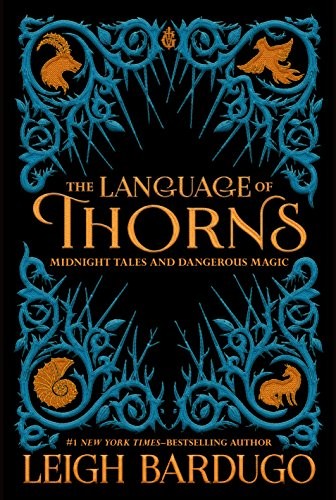

Tropes in this book
- Plot twists
Themes
- fantasy fairy tales
- short story collection
- Grishaverse
- fairy tale retellings
- dark atmosphere
- twist endings
- illustrated edition
Read it if
- you love the old fairy tales but always suspected something was off about that happily-ever-after
- you know Ravka and Ketterdam from Bardugo's novels and want to hear the stories they use to scare kids there
- you'd rather have short, dark tales with a moral that stings than one long saga
Skip it if
- you're looking for a romance or one main character to spend a few hundred pages with
- cruelty toward children and blood are hard for you, even in a fairy-tale costume
- you want fantasy with battles, chases and mapped-out magic systems, and a slow, ornate storyteller's voice puts you to sleep
Why this rating
🧠 For connoisseurs
8/10- Endings turned inside out. Every tale borrows a skeleton you know – Beauty and the Beast, Hansel and Gretel, The Nutcracker, The Little Mermaid – and shifts the weight so that by the last page the monster turns out to be someone other than who I'd assumed. It works best in The Witch of Duva: the ending hit me like a fist to the stomach, and every earlier clue clicked into place a beat too late.
- Ayama as the frame. The heroine of the opening story saves her own life by fixing the endings of other people's fairy tales and making them truer. It's a clever mission statement for the whole collection, and the warmest story in the book.
- The storyteller's voice. Bardugo writes like someone telling tales by the hearth: she talks straight to the listener, scares you, teases you and then slips the pin in. Each story sounds like a legend from a different country of this world.
- Heroines with a will of their own. Ayama, Nadya, Yeva and Ulla don't sit around waiting to be rescued. The princes come off remarkably pathetic, and that's a separate, wicked running joke of the whole collection.
- Uneven quality. The Soldier Prince dissolves into dream sequences and can lose you, and the last and longest story sags in the middle before it explodes into its finale. Six stories rarely keep one level, but the gap between the best and the weakest here is obvious.
💖 For comfort readers
6/10- Bite-size tales. You can read each story in one go, and every one lands on a clear punchline. Made for chilly evenings – in her afterword, Bardugo even hopes you'll read them aloud once the weather turns cold.
- The Grishaverse as folklore. Ravka, Kerch and Fjerda in legend form: witches, talking animals, mermaids and clockwork automatons. Fans of the novels will catch plenty of nods to the books.
- No romance and no recurring characters. There's no couple to root for from cover to cover. The moment you warm up to someone, their story ends, and the next one starts from zero in another country.
- Heavy endings. Happy endings are rare, and a few scenes, especially in The Witch of Duva and the final story, are seriously grim. If you want fairy tales to lift your mood, this book may catch you off guard.
- Storytelling over speed. The style is lush and ornate, with long descriptions of food, forests and palaces. These are tales meant to be read aloud, and adventure-novel pace was never the point.
The book's four layers
Plot and pacing
Six separate stories, and each one has a properly built ending. The Witch of Duva and the fox tale are small marvels of construction: Bardugo hands you one explanation, then in the last few paragraphs yanks the rug out from under you. The Soldier Prince is weaker – the line between dream and waking blurs so much that it's easy to lose the thread.
Characters and relationships
A few dozen pages per story don't leave room for deep portraits, but Ayama, Nadya and Ulla have clear desires and grow right in front of you. Ulla is the most interesting, because her road to becoming a sea witch is both logical and painful. The princes, fathers and suitors are flat on purpose – these are fairy tales, and fairy tales hand out roles with a thick brush.
Writing style and atmosphere
The strongest part of the book. Storytelling full of sensual detail – food, cold, smells – a narrator who winks at the listener, and refrains that set the rhythm, like Ayama stubbornly insisting that a story really ends some other way, or the fox tale's running line about what a weaker animal would have done in his place. The atmosphere thickens like the syrup in Magda's pots.
Entertainment and value
A great read for a few cold evenings, as long as you like fairy tales and darkness. After the last page I felt like I'd read a book of legends that Ravkan and Kerch kids have been hearing for generations. The lack of a continuous plot and recurring characters still takes some of the fun away for readers who prefer one big story.
The book in brief, spoiler-free
Six fairy tales from the Grishaverse where monsters, witches and princes start out like the stories you grew up on and end exactly where the old versions looked away. An illustrated collection for anyone who likes their happily-ever-after with a hook in it.
Want the plot step by step?SummaryThemes it explores
Leigh Bardugo writes about everything that always unsettled her in fairy tales: weak fathers, princes with cruel whims and predators who show up in velvet coats. Every story in The Language of Thorns starts like a tale you already know and then tests what would happen if someone by the fire told the whole truth about its heroes. Along the way the collection doubles as a tour of the Grishaverse, from Novyi Zem through Ravka and Kerch to the icy seas of Fjerda.
The main threads: fairy tales turned inside out (Beauty and the Beast, Hansel and Gretel, The Nutcracker and The Little Mermaid with endings that change the meaning of everything before them); the power of stories (Ayama saves her life and transforms a kingdom because she tells the truth instead of the easy ending); kids failed by adults (parents who send their daughters off to die, sell them to suitors or hurt them worst of all); loneliness (the fox, the nutcracker and the mermaid all walk into traps set for those who just want someone to listen); the freedom to choose (Yeva, Clara and the nutcracker walk away once they stop living out other people's wishes); the price of magic (witches, rivers and songs give a lot, but they always demand payment, often in blood); and friendship and betrayal (the bond between Ulla and Signy, which begins with a shared song and ends with the birth of a sea witch).
Questions and answers
Do I need to read Shadow and Bone or Six of Crows first?
No. The Language of Thorns is a standalone collection of fairy tales set in the same world as the Shadow and Bone trilogy and Six of Crows, so you can read it before the novels, after them or without them at all. None of the stories depends on the plot of the novels, but readers who know this world will pick up the details: Os Alta, Ketterdam, Grisha, Grisha steel and the days before the Second Army existed. In her afterword, Bardugo explains that The Witch of Duva began as a story the characters of Shadow and Bone might have heard as children.
How many pages is The Language of Thorns?
The 2017 US hardcover from Imprint has 288 pages, though it depends on the edition. Inside are six stories – the shortest are Little Knife and The Too-Clever Fox, the longest is the last one, When Water Sang Fire – plus an author's note and Sara Kipin's illustrations.
Is The Language of Thorns appropriate for 12 year olds?
I'd say 15+. There's almost nothing sexual here, but these are fairy tales in the old, cruel style: slaughter, a tower built from human bones, girls who vanish, mutilation, a boy killed in a ritual and a father's abuse of his own child, implied and never described in detail. Bardugo doesn't linger on the gore, but a few scenes can stay with you for a long time. If any of these stories stirs up something painful in your own life, call or text 988 (in the US).
How spicy is The Language of Thorns?
2/10 on my spice scale. There are no sex scenes at all: a wedding, a few kisses and a couple of adult relationships mentioned in a sentence or two. The darkness in this book comes from violence and cruelty, not from heat.
Is The Language of Thorns YA or adult?
YA. It's published by Macmillan's young adult imprint, and most of the heroines are teenage girls, but this is old-school dark fairy tale territory that plenty of adults love too. Don't mistake it for new adult, though: there's no spice, just a lot of blood and a few very dark twists.
Who is The Language of Thorns for?
Connoisseurs who love fairy tales with a false bottom and endings that overturn a story you thought you knew, and Bardugo fans who want to see her world through its legends. Comfort readers looking for a romance and one hero for the whole book may be disappointed, but if you like dark stories read late in the evening, you'll get six beautifully told ones.
What about you? Have you read this book?
Reader ratings
Your rating might be totally different from mine. A lot depends on when you pick it up.
Your rating on a 1-10 scale
No login needed. One vote per browser – you can change it later.
Disagree? Rate the book above or message me on Instagram or TikTok.
What to read next
 Six of Crows
Leigh Bardugo
Also by Leigh Bardugo.
★ 9/10🧠 9💖 8🌶️ 215+
Read the review
 Shadow and Bone
Leigh Bardugo
Also by Leigh Bardugo.
★ 7/10🧠 6💖 8🌶️ 214+
Read the review
 Crooked Kingdom
Leigh Bardugo
Also by Leigh Bardugo.
★ 8/10🧠 8💖 8🌶️ 215+
Read the review