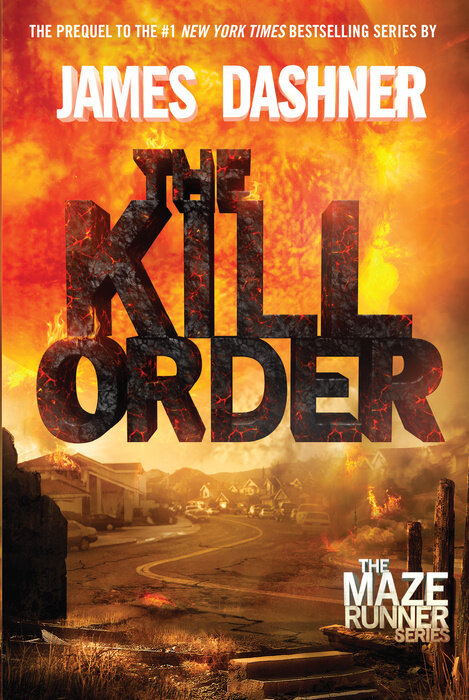

Tropes in this book
- Dystopia
- Found family
Themes
- dystopian YA
- Maze Runner prequel
- post-apocalyptic after the sun flares
- plague and madness
- brutal violence
- no happy ending
Read it if
- you've finished The Death Cure and want to see how the Flare started and what the world looked like before Thomas ever reached the Glade
- you like post-apocalyptic stories where the heroes are always running, fighting and losing people they love
- you want a narrator who can feel a disease taking over his head and is scared of himself
Skip it if
- you're here for Thomas, Teresa and the Gladers, who only show up in the prologue and a single line of the epilogue
- the trilogy already wore you out with heroes getting caught, beaten up and caught all over again
- crushed bodies, implied cannibalism and the deaths of people the hero loves are too heavy for you right now
Why this rating
🧠 For connoisseurs
4/10- Madness from the inside. The most interesting thing here is that Mark can feel the disease taking root. After the scene at the closing cargo hatch he admits to Alec that watching a man get crushed felt, for a second, like opening presents on Christmas morning, and from then on every choice he makes is suspect. This series has never had a narrator like that.
- Dreams of New York. The flashbacks, written in present tense, are the best pages in the book: an express train going dark under Manhattan, scalding water pouring down the station stairs, a human chain hanging off a railing and a yacht motoring down Broadway. In those chapters Dashner slows down and builds dread instead of counting punches.
- The capture loop. The plot runs on the same moves on repeat: someone grabs the heroes, beats them up, they escape, someone grabs them again. Mark ends up dangling out of a Berg window twice, and the second time even he wonders how this keeps happening to him. Same, Mark. Same.
- A conspiracy in a folder. Who's behind the plague gets explained first by Anton, a half-mad bunker worker who nods off mid-rant, and then by a tablet where the whole plan to wipe out half of humanity sits in a folder named after the book. No password, because its owner was too busy with games and chat. The biggest secret of the apocalypse is guarded worse than your vacation photos.
- Paper-thin villains. Bruce gives a speech in an auditorium like he's auditioning for a rebellion movie and ends the book waving a red flag at the head of a mob. Jedidiah's cult talks about demons and not much else, and the people who actually gave the kill order exist only as email headers.
- A thin thread to the trilogy. Apart from the prologue and the epilogue, nothing ties this story to the Maze, and anyone who finished the trilogy already knows from its last pages that the people in charge let the Flare loose on purpose. So the prequel answers a question that stopped being a question a long time ago.
💖 For comfort readers
5/10- Pace. The action kicks off in chapter two and barely brakes: an attack from the sky, a wreck in the woods, a forest on fire, a bunker under a landing pad that flips like a coin, an escape by Berg and a siege of the Asheville suburbs.
- Alec. A grumpy ex-soldier who snores, talks with his mouth full and saves Mark's skin about once a chapter is the most likable character in the book. His bickering with Mark, who eventually starts calling him Grandpa, gives you the only moments to breathe.
- No mercy in the ending. Dashner doesn't rescue his heroes at the last second. The ending is sad but consistent, and it takes more guts than plenty of happy endings.
- Brawl after brawl. After yet another scene where a crowd of maniacs piles onto the heroes and they fight their way out, the fights start to blur. Eventually the tension gives way to a body count.
- Strangers. Darnell, Toad and Misty die before I could tell them apart, and Lana gets only a handful of scenes. Their deaths shock more than they hurt.
- The weight. There's far more blood and cruelty here than in the trilogy. If you were hoping for a Maze-style puzzle, you get a chronicle of a massacre.
The book's four layers
Plot and pacing
The idea is strong: show from the inside how the plague began that the trilogy only uses as a backdrop. The execution is a chain of the same moves – attack, captivity, escape, another attack. The answers come from a raving Anton and an unlocked tablet, and the link to Thomas's story is limited to a frame in the prologue and the epilogue. The ending is the strong part, because it doesn't pretend everyone can be saved.
Characters and relationships
Mark has something Thomas never had: a past of his own and a real fear of who he's turning into. Alec, gruff and loyal to the end, makes the best duo of the whole series with him. Trina is mostly the reason Mark keeps going, Lana runs the quarantine and dies before she gets to be more, and Bruce and Jedidiah's cult are caricatures.
Writing style and atmosphere
Dashner writes plainly and fast, and the present-tense flashbacks prove he can build a mood. In the main storyline the dialogue is flat: one-word grunts, and characters explaining to each other every chapter what just happened. The violence comes with the crunch of breaking ribs, and after a dozen scenes like that it stops landing.
Entertainment and value
For a fan of the series it's a curiosity: you finally get to see the world before the Maze existed. As a standalone adventure it wears you down with repetition and sheer weight, and the payoff comes mostly from the ending and the Mark-and-Alec duo. Afterward I remembered more of the New York dreams than of the main plot.
The book in brief, spoiler-free
Thirteen years before the Maze, a Berg hovers over a mountain camp of survivors and, instead of dropping supplies, fires virus-loaded darts into the crowd – so Mark and a gruff ex-soldier named Alec set out to find whoever gave the order. Dashner promises the origin story of the Flare and mostly serves up a chase from one brawl to the next, the bloodiest stretch of the whole series.
Want the plot step by step?SummaryThemes it explores
James Dashner jumps back thirteen years before the Maze and shows the world right after the sun flares: burned-out cities, drowned coastlines and people scraping a life together in mountain settlements. That's exactly when the government that survived in Alaska decides there are too many survivors and that some of them should be wiped out with a virus. The book follows the fallout through the eyes of a teenager who first just wants to find the people responsible and then watches in horror as the disease changes him.
The main threads: the origin of the Flare (darts carrying a virus that was supposed to kill quickly and painlessly, then mutates and takes people's minds instead); population control (Coalition memos and emails that call mass killing the most ethical decision); madness (a cult that believes in demons, mobs of infected people in the Asheville suburbs and a rage that takes over Mark more and more often); found family (Alec, Lana and the teens from the tunnels under New York, who've been each other's people since the day of the disaster); trauma (dreams that drag Mark back every night to the flooded subway, the Lincoln Building and Baxter's death); and hope for a cure (Deedee, a little girl immune to the virus, and the question of who to trust her with).
Questions and answers
Do I need to read The Maze Runner before The Kill Order?
Yes – I'd finish the whole trilogy first: The Maze Runner, The Scorch Trials and The Death Cure, then the Newt novella Crank Palace if you want it, then The Kill Order, and The Fever Code last. Chronologically The Kill Order comes first, and its main story follows new characters thirteen years earlier, so you could follow it cold. The problem is the prologue: it gives away one of the trilogy's biggest surprises about Thomas and Teresa, and the whole book shows where the Flare came from, which the trilogy saves for its ending. Read after The Death Cure, the prologue and epilogue click; read before, they ruin the fun.
Is Thomas in The Kill Order?
Barely. He appears in the prologue, seen through Teresa's eyes, and the epilogue nods to him, but the main story belongs to Mark, Trina and Alec, long before the Glade. If you want a prequel about the Gladers themselves, that's The Fever Code.
Is The Kill Order appropriate for 12 year olds?
No – I rate it 16+, higher than the trilogy, because it's the most brutal book in the series. There's almost no romance, but there are detailed killings, some at the hands of the main character, implied cannibalism, the deaths of children, a suicide the hero witnesses and a friend torn apart by a mob. If any of this hits close to home, you can call or text 988 (Suicide & Crisis Lifeline, USA) any time.
How spicy is The Kill Order?
2/10 on my spice scale. Mark and Trina kiss and fall asleep curled up together, and that's about it – no sex scenes. All the intensity here comes from violence and disease.
How many pages is The Kill Order?
329 pages in the 2012 US hardcover from Delacorte Press, though it depends on the edition. It's a prologue, almost seventy short chapters and an epilogue, so it moves quickly.
Who is The Kill Order for?
For Maze Runner fans who've finished the trilogy and want to know what the world looked like before the Maze. It's still YA, just the darkest corner of the series. Comfort readers will enjoy the pace and the Mark-and-Alec duo, though the repetitive brawls may wear them out. Connoisseurs will mostly take away the idea of a narrator catching the madness himself and a gutsy ending.
What about you? Have you read this book?
Reader ratings
Your rating might be totally different from mine. A lot depends on when you pick it up.
Your rating on a 1-10 scale
No login needed. One vote per browser – you can change it later.
Disagree? Rate the book above or message me on Instagram or TikTok.
What to read next
 The Death Cure
James Dashner
The trilogy finale – read it before this prequel, because only after it do the prologue and epilogue really land.
★ 5/10🧠 4💖 6🌶️ 114+
Read the review
 The Fever Code
James Dashner
Same series.
★ 5/10🧠 4💖 6🌶️ 114+
Read the review
 The Maze Runner
James Dashner
Similar vibe, but noticeably better written.
★ 6/10🧠 6💖 6🌶️ 114+
Read the review