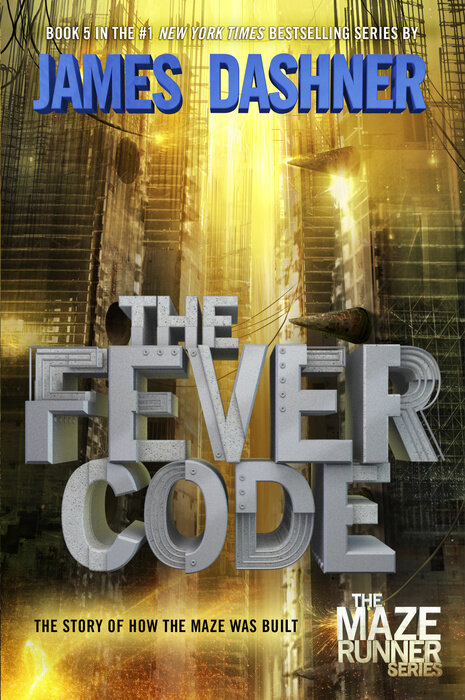

Tropes in this book
- Dystopia
- Found family
Themes
- dystopian YA
- Maze Runner prequel
- Thomas's childhood
- experiments on kids
- the Purge
- an ending that leads straight into the Box
Read it if
- you finished the trilogy and want to know how Thomas knew the Maze, why Newt limps and who Teresa was before the Glade
- you like dystopias about kids raised by a system that swears everything it does is for their own good
- you want to see Newt, Minho, Alby and Chuck before anyone took their memories
Skip it if
- you're after action, because for long stretches the hero sits in an observation room watching his friends on screens
- you want answers that surprise you, not confirmation of things the trilogy told you ages ago
- experiments on children, killing the sick and a close friend's suicide attempt are too heavy for you right now
Why this rating
🧠 For connoisseurs
4/10- Newt and Lizzy. The best scene in the book is two siblings crying in a closet in the Group B barracks. Newt says he hates WICKED, and his sister – the one he's been ordered to call Sonya – tells him the place saved them. In a few lines Dashner shows how a system raises its own true believers, and he does it better than all of the chancellor's speeches combined.
- The Purge. Teenagers walking room to room with backpacks full of syringes is the boldest idea in the whole series. Teresa shuts down every doubt by insisting these aren't people anymore, they're Cranks, Rachel sneers at the ends-justify-the-means motto, and for months afterward Thomas can't look himself in the eye. Here, the question of what a cure is worth finally hurts.
- A hero in the audience. For whole chapters Thomas does exactly one thing: he sits down in front of the monitors. Dashner sums it up in a paragraph made of two words – he watched – and I can't think of a sharper review of this part of the book. Everything that matters happens in the Glade while the narrator flips between cameras.
- Truth from a drawer. The biggest secret in this world, that the Flare was released on purpose, is something Thomas reads off a tablet he swiped from a doctor's drawer, in a folder of deleted messages. After that we get Anderson's unhinged memo, a memo signed with Thomas's name and two more memos in the epilogue. This series has more office paperwork than scenes where the hero figures something out on his own.
- Bogeymen. Randall tortures a kid who isn't even five, sets a Griever on a boy strapped to a chair and finally staggers out of the woods mumbling about a tasty snack. Leavitt is bald, gloomy and rude because somebody has to be. The characters who are supposed to be terrifying mostly strike poses.
- A known address. Anyone who's read the trilogy knows the last page before opening the first: Thomas is going to wake up in the dark of the Box. So the tension would have to come from the road there, and that road is made of jumps of half a year at a time, after which someone usually fills you in on what you missed.
💖 For comfort readers
6/10- Old friends. Minho as a mouthy kid with an escape plan, Alby who always knows what to say, Gally with a smashed nose, Frypan tossing the serum out with the leftover sausage. For a fan, this is a photo album from years back where you keep spotting someone you love.
- Chuck. A chubby, sobbing little kid, whom Thomas renames in their very first conversation, grows into a younger brother with a goofy comeback for every tease. Their goodbye breakfast over cold, limp bacon is the warmest and the saddest scene in the book at once.
- The finale. Tea that smells like berries, a confession I won't spoil and the Swipe shown as soap bubbles popping one memory at a time. The last chapter has the pace and the weight the rest of the book was missing, and it makes you want to grab book one right away.
- The long middle. The middle is year after year of the same routine: tests, lessons, monitors, a telepathic chat before bed. Even the gang's night expeditions quickly slide into summary.
- The weight. A tortured child, a boy with a spear through his neck, a chancellor missing eight fingers and the Purge. For a story about how the Maze came to be, there's surprisingly little adventure here and quite a lot of bodies.
The book's four layers
Plot and pacing
The idea for the prequel is simple and good: show how the kids from the Glade grew up inside the place that put them there. The execution is a chronicle with a date stamped over every chapter, jumping months and years ahead, where events get reported more often than they get played out. Once again the answers come from a tablet and memos, and the first genuinely surprising information only shows up in the final chapter and the epilogue.
Characters and relationships
This is where the book is strongest. Thomas finally has a past: from a little kid silently repeating his real name to a teenager who kills because he's told to and can't forgive himself for it. Teresa hardens slowly, until her remarks about the past start to sound ominous, and Newt with his sister and Chuck get scenes you remember. Dr. Paige is intriguingly two-faced, while Randall and Leavitt are stock villains and Aris and Rachel barely exist.
Writing style and atmosphere
Dashner writes simply and visually, and the Swipe with its soap bubbles proves he can build a scene. Day to day, though, the characters explain everything to each other in dialogue, the adults give speeches about the price of a cure, and the narrator keeps informing us that Thomas's heart is breaking. The time jumps snuff out the tension before it has a chance to grow.
Entertainment and value
As a companion to the trilogy it's an interesting puzzle, because almost every chapter fills something in, from Newt's limp to the three words on Teresa's arm. As a standalone story it's uneven: a long stretch of nothing, then a whole lot of killing. What stays with you is Lizzy, Chuck and Thomas's last morning.
The book in brief, spoiler-free
James Dashner rewinds to the day little Stephen was renamed Thomas and follows him through ten years inside WICKED, right up to the moment he ends up in the Maze he helped build. There's Newt with his sister, there's Chuck and a handful of scenes that really land, but there's also a hero who spends years parked in front of monitors and secrets that, once again, get read off memos.
Want the plot step by step?SummaryThemes it explores
In The Fever Code, James Dashner tells the story of a childhood spent in a lab. Thomas arrives at WICKED as a little kid and gets a new name, an implant in his head and logic lessons, while everyone around him repeats that it's all for the good of humanity. The book asks how much you're allowed to do to children to save the world, and what happens to the children who start helping. Thomas builds the Maze for his own friends, watches them through cameras and eventually takes part in killing – and only then does he stop believing that the ends justify everything.
The main threads: a childhood under observation (blood draws, brain scans, puzzles and doors that aren't always locked, even though everyone assumes they are); building the Maze (a fake sky, optical illusions and Grievers designed with the military's help); friendship (secret night meetings in a basement storage room with Newt, Alby, Minho, Teresa and Chuck); siblings (Newt and the sister who was told to forget who she was); the truth about the Flare (a memo showing the virus was released on purpose); the Purge (teenagers with syringes and the question of whether the sick stop being people); and trust and betrayal (the adults and friends Thomas believed in most).
Questions and answers
Do I need to read The Maze Runner before The Fever Code?
Yes, and I'd read the whole trilogy first. My recommended order: The Maze Runner, The Scorch Trials, The Death Cure, then the Newt novella Crank Palace, then the prequels The Kill Order and The Fever Code. Chronologically this book comes right before book one – it ends the moment Thomas opens his eyes in the dark Box – but it was written for people who already know the trilogy. It spells out that Thomas and Teresa helped build the Maze, that Newt isn't immune and why he limps, that the Flare was released on purpose and where Teresa's loyalties lie. In return it explains a pile of details: Thomas's déjà vu, Gally's smashed nose, how Sonya ended up in Group B, how Chuck arrived and where the Gladers' slang comes from. Readers of The Kill Order get a bonus: Randall Spilker's name turns up again, the top-secret order behind the Flare comes back with John Michael's signature on it, and one thing Teresa confides ties the two prequels together. You can follow the plot without the trilogy, but you'll burn most of the surprises from the first three books.
Is The Fever Code appropriate for 12 year olds?
The US publisher says 12 and up; I'm sticking with 14+, like the trilogy, and it's a 14 with an asterisk. There's practically no romance, but there are experiments on small children, parents shot in front of their son, a boy killed with a spear in the Glade, the Purge, in which the main characters kill the sick with injections and guns, and a suicide attempt by one of Thomas's friends, seen on camera footage. The descriptions are short, but a more sensitive reader may need to talk it through afterward. If you're dealing with thoughts like that yourself, call or text 988, the Suicide & Crisis Lifeline in the US – it's free and open around the clock.
How spicy is The Fever Code?
1/10 on my spice scale. Thomas and Teresa grow up side by side, and the most you get is a kiss on the cheek, a pinky promise and a lot of hugging – no sex scenes, no steam. The intensity here comes from the experiments and the deaths, not from anyone's love life.
How many pages is The Fever Code?
384 pages in the 2016 US hardcover from Delacorte Press, though it depends on the edition. It's split into a prologue, 63 short chapters and an epilogue, and every chapter opens with a date and a time stamp, so it's easy to read in short bursts.
Is The Fever Code YA or adult?
It's YA, from Delacorte Press, the same Penguin Random House imprint for young readers that publishes the rest of the series. Thomas goes from not quite five to about sixteen over the course of the book, and the tone stays young adult, even though the violence makes this one of the darker entries in the series.
Who is The Fever Code for?
Maze Runner fans who know the trilogy and want to see Thomas, Teresa, Newt and Chuck before the Glade. Comfort readers will enjoy the familiar faces and a strong ending, though the middle takes patience. Connoisseurs will hold on to Lizzy, the Purge and the finale, because once again the plot hinges on documents someone left in a drawer.
What about you? Have you read this book?
Reader ratings
Your rating might be totally different from mine. A lot depends on when you pick it up.
Your rating on a 1-10 scale
No login needed. One vote per browser – you can change it later.
Disagree? Rate the book above or message me on Instagram or TikTok.
What to read next
 The Kill Order
James Dashner
The first prequel: without it, Randall Spilker's name and one thing Teresa confides won't mean much to you.
★ 4/10🧠 4💖 5🌶️ 216+
Read the review
 The Maze Runner
James Dashner
The Fever Code ends exactly where book one begins, so it practically begs for a return trip to the Glade.
★ 6/10🧠 6💖 6🌶️ 114+
Read the review
 The Death Cure
James Dashner
Same series.
★ 5/10🧠 4💖 6🌶️ 114+
Read the review