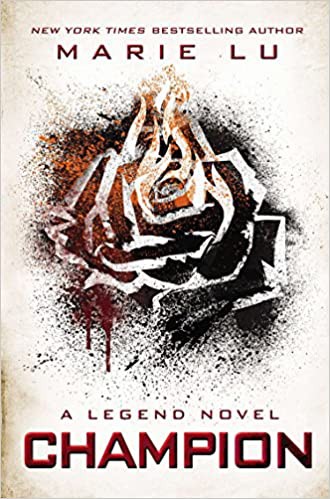

Tropes in this book
- Dystopia
- Plot twists
Themes
- dystopian YA
- trilogy finale
- plague and bioweapons
- Republic vs. Colonies war
- Day and June
- sick hero
- bittersweet ending
Read it if
- you've read Legend and Prodigy and you need to know how Day and June's story ends
- you like dystopias where the war gets decided not just in battles but in labs, in propaganda and in one broadcast on the JumboTrons
- you want a YA finale that skips the confetti and leaves a little bitterness behind
Skip it if
- you haven't read Legend and Prodigy, because this book assumes you remember Metias, Razor and Kaede
- you want a war built on strategy and battles, not one that wraps up in a paragraph about help arriving from Antarctica
- illness, losing people you love and executions feel too heavy for you right now
Why this rating
🧠 For connoisseurs
5/10- Thomas's confession. The prison chapter where Thomas tells June about the night Metias died is the strongest thing in the book. Jameson's order, a kiss in a dark alley and a knife, all in one scene, and June refuses to absolve him: she tells him she pities him, because he's weak. No easy answers, and Thomas stays a soldier who can't stop saluting until the very end.
- Anden. The young Elector gets the most interesting arc here, caught between the polite diplomat and the son of a father who had guards killed and threatened senators with the execution square. Marie Lu makes him neither a saint nor a monster, and his talk with June about not having to become his father actually lands.
- The ending. The final chapters flip everything I expected from a YA trilogy. No details, but June's choice is brave and it hurts, and the author has the nerve not to undo it five minutes later.
- Coincidences. The missing ingredient for the cure? It just happens to be in June's blood, because she just happened to pass through Tribune City. The Chancellor just happens to call with an offer that can be turned against him, and Jameson just happens to cross June's path in the middle of Los Angeles. By the third lucky break, I stopped pretending to be surprised.
- A war in one paragraph. For the whole book the Republic keeps losing to the Colonies and Africa, Denver falls, and then Antarctica flies in with weapons we never get to see and the war ends in two sentences of June's narration. After that much buildup, it's a finale on fast-forward.
- Poster villains. Commander Jameson has an icy smile and exactly one talking point: how much June reminds her of herself. The Chancellor has artificial eyes and a lecture about how the masses don't know what they want. Both are scary for show, and both of their motives fit on a sticky note.
💖 For comfort readers
7/10- Day and June. Their romance finally gets to the words Day has been waiting a long time to hear, and along the way there's jealousy over Anden, a ring made of paper clips and their first night together. If you've been rooting for these two since book one, this is a real reward.
- Action. An air raid on Denver, sabotage at a Colonies airfield, an escape from an airship down a broken railing chain and a fight on a rooftop. Marie Lu knows how to write a scene that makes your pulse outrun your page-turning.
- Eden. An eleven-year-old who is almost completely blind, decides on his own that he wants to help and puts his big brother in his place – he steals the heart of every scene he's in.
- Feelings. Day's illness, a night visit to his empty family home and the final scenes are tissue territory. If you've followed this pair through three books, you won't get through the ending dry-eyed.
- Melodrama. Hearts shatter, shivers run down spines and tears flow so freely that by the finale, where the crying matters most, you've gotten used to it.
The book's four layers
Plot and pacing
The setup is strong: a plague, a demand for a cure and a boy whose blood could stop a war. Then the plot starts solving problems for the characters: the missing piece of the cure turns up in June, help from Antarctica arrives right when it's needed, and the end of the war is delivered as a recap. The quiet scenes work best: Thomas's cell, a cafe in Denver and the empty house on Watson and Figueroa.
Characters and relationships
Day, torn between his brother, his illness and a girl who reminds him of his mother's death, is written with a lot of heart. June grows into the decision to walk away from politics, and Anden makes the biggest leap of anyone. Tess and Pascao get their moments. Jameson and the Chancellor, though, are cardboard cutouts, and the senators exist mostly to yell at the Elector.
Writing style and atmosphere
The narration switches between Day and June, which nicely shows how much they keep from each other. Marie Lu has a feel for action and for silence, but she leans hard on emotional stock phrases: shivers, tears and breaking hearts are everywhere. The world gets a fun addition in Ross City, where life is a game scored in points, but the idea stays a postcard from a field trip.
Entertainment and value
As a trilogy closer, it does the job: there's a war, a big speech, a daring escape and an ending that hurts first and then soothes a little. Bonus points for asking uncomfortable questions about loyalty to a country that hurt its own people, even if the answers come out too smooth.
The book in brief, spoiler-free
The last Legend book drops Day, June and Anden into a war, a plague and one brutal question: can you put a single kid on the scale against an entire country? The plot runs on shortcuts and lucky breaks, but the characters and an ending I genuinely didn't see coming get more out of this book than its plot deserves.
Want the plot step by step?SummaryThemes it explores
Marie Lu closes the trilogy with the question that's been hanging over Day from the start: can you defend a country that killed your family? The Republic under Anden is trying to do better, but it still has bunkers reserved for the rich, labs full of other people's children and a firing squad. The Colonies promise freedom of choice and in practice offer a corporate state where the police help whoever pays. Stuck between them are three teenagers, and each pays a personal price: Day with his health, June with her peace of mind and Anden with the person he wanted to be.
What the book keeps circling back to: war and plague (a virus from the Republic's labs comes back mutated and becomes an excuse for war); a brother for a country (Eden's blood as the only hope for a cure, and whether anyone has the right to give it away); Day's illness (a month, maybe two, hidden from June and from his brother); guilt (Thomas's confession in his cell and June's belief that her very presence will always remind Day of what he lost); power (Anden afraid of turning into his father, a Chancellor convinced people don't know what's good for them, and Ross City, where good deeds earn points); the people as an army (Eden's idea that if the Republic is short on soldiers, everyone can become one); and love and letting go (whether you can be with someone you remind of the worst moments of their life).
Questions and answers
Do I need to read Legend and Prodigy before Champion?
Yes. Champion is the third and final book of the Legend trilogy and picks up eight months after Prodigy, assuming you remember who Metias, Thomas, Commander Jameson and Razor were. The reading order is Legend, Prodigy, Champion. Marie Lu later returned to this world with a fourth book, Rebel, which follows Eden and Day years after the trilogy – read it after Champion, not before.
How spicy is Champion?
4/10 on my spice scale. There are kisses, some jealousy and one night Day and June spend together, which is clearly implied but not described – the scene cuts away. Nothing explicit on the page.
Is Champion appropriate for 12 year olds?
I'd say 14+. The romance stays mild, but the book is full of violence: executions by firing squad, people you care about getting shot, a war, a plague that blinds people and kills them within about a week, and a main character whose doctors give him a month, maybe two. A mature 13-year-old who loved the first two books can handle it, but younger readers may find it heavy. If illness, loss or violence touches you personally and you're struggling, you can call or text 988 in the US.
How many pages is Champion?
369 pages in the 2013 US hardcover from G.P. Putnam's Sons, though it depends on the edition. Chapters alternate between Day and June, so it moves fast.
Is Champion YA or adult?
YA. Day is seventeen, June is sixteen, and the book was published for teen readers. The themes – war, propaganda, illness and grief – are serious, but the content stays within YA limits.
Who is Champion for?
Readers who went through Legend and Prodigy with Day and June and want to close the story. Comfort readers get action, romance and an ending that calls for tissues. Connoisseurs will get the most out of Thomas's prison scene, Anden's arc and the nerve of the finale, as long as they forgive a plot that wraps itself up a little too conveniently.
What about you? Have you read this book?
Reader ratings
Your rating might be totally different from mine. A lot depends on when you pick it up.
Your rating on a 1-10 scale
No login needed. One vote per browser – you can change it later.
Disagree? Rate the book above or message me on Instagram or TikTok.
What to read next
 Prodigy
Marie Lu
The previous book: Day and June's run through the Colonies and the plot to assassinate the new Elector.
★ 7/10🧠 6💖 8🌶️ 214+
Read the review
 Legend
Marie Lu
Same series.
★ 6/10🧠 5💖 8🌶️ 214+
Read the review
 Rebel
Marie Lu
Same series.
★ 5/10🧠 4💖 7🌶️ 414+
Read the review