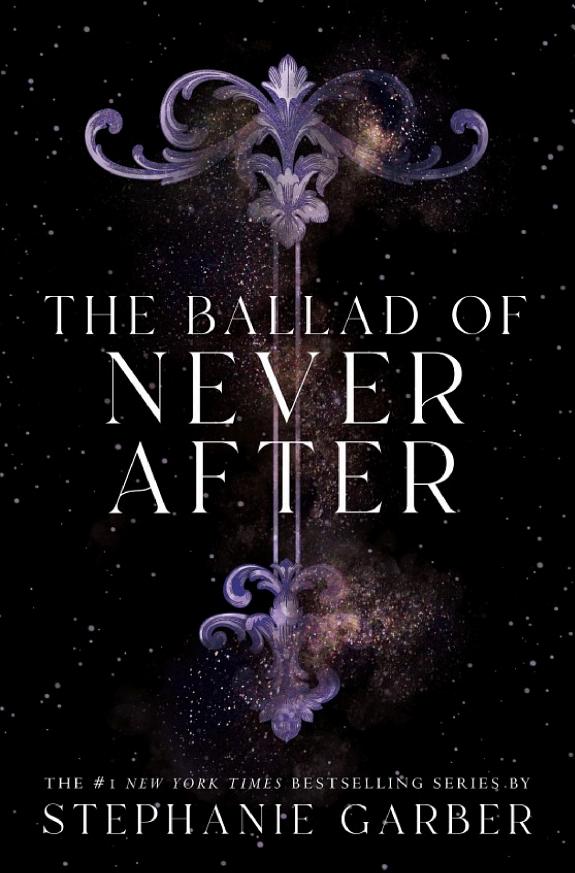

Tropes in this book
- Plot twists
- Romantasy
- Slow burn
Themes
- ya romantasy
- fairy-tale fantasy
- the Prince of Hearts
- curses and vampires
- cliffhanger
Read it if
- book one left you wanting more Jacks and you're dying to find out what his past looks like
- you love romantasy where the tension builds on glances and half-finished gestures and the kiss keeps getting pushed back
- you want a fairy tale with curses, magic stones and an inn where tiny dragons sleep on the roof
Skip it if
- you can't stand heroines who trust, for the tenth time, the person who just lied to them
- a love triangle where the husband is mostly an obstacle to get around gets on your nerves
- you want a finale that ties things up, not a cliffhanger that shoves you straight into book three
Why this rating
🧠 For connoisseurs
6/10- The story curse. Garber's best idea. In the North, stories burn once they're written down, change every time someone retells them, and book titles shift while you're reading. That makes every scrap of information about the Valors suspect, so you piece the truth together from crumbs right alongside Evangeline.
- An ending told twice. The opening of the Valory, the truth about Chaos and a choice Jacks makes that says more about him than any of his speeches. When the story seemed to wrap up with whole chapters still to go, I honestly thought Garber had done something this genre never does. I did not see that structure coming.
- Jacks gets a past. A Fate who keeps insisting he's nobody's friend, yet won't leave Evangeline's side for a second. The ruins of Merrywood, the Hollow and the ballad of the archer give him a weight that handsome cover-boy villains usually don't have.
- A heroine on one note. Every chapter Evangeline decides not to trust Jacks, and every chapter she trusts him anyway. Her hope was supposed to be a character trait; instead it's a chorus Garber repeats so often I stopped hearing it.
- Magic on demand. An inn where hours last as long as days elsewhere heals whatever the plot has managed to break, and late in the book a brand-new power shows up with nothing earlier hinting at it. Solutions arrive exactly when the story needs them.
💖 For comfort readers
8/10- Sparks without a kiss. Jacks and Evangeline don't kiss once in the whole book, and the tension between them is thicker than in plenty of romances that spell everything out. The tunnel behind the portrait and the night at the Hollow are the scenes fans of this pair will pick up book two for.
- Fairy-tale scenery. A ball where everyone dresses up as characters from legends, a castle with a trebuchet in the dining hall, a clock that chimes meals instead of hours and dragons the size of a cat. Garber knows how to build places you want to move into.
- The stone hunt. Four stones split the plot into clear stages, each with its own riddle, its own price and its own trap. The story never stalls, even when the characters are mostly dancing and bickering.
- An ending that stings. The last chapters hurt in the good way: if you've fallen for Jacks, you'll close the book with a lump in your throat and a few complaints for the author.
- Jealousy on repeat. Party guests, Petra, Giselle, Luc – every few pages somebody is jealous of somebody, and Jacks asks whether she's jealous so often I wanted to confiscate the question along with his apples.
The book's four layers
Plot and pacing
The skeleton is simple: four stones, one door, a curse to break. Underneath, though, plenty is going on – the history of the Valors, the massacre at Merrywood and one discovery after another about who cast the curses and why. The middle stretch at the Slaughterwood castle bogs down a bit in balls and flirting, but the finale, which plays with time in a way I didn't expect, is the best part of the book. The ending is cruelly open.
Characters and relationships
Jacks carries this book on his shoulders and does it brilliantly, and LaLa and Chaos turn out to be someone entirely different from what the first chapters suggest. The rest is weaker: Evangeline is naive to the point of pain, Apollo is mostly a threat with a bow until the very end, Luc is there mainly to flash his fangs, and Marisol disappears after one scene.
Writing style and atmosphere
An ornate, storybook style with snippets of ballads, clippings from a gossip paper and a clock that announces breakfast instead of the hour. The atmosphere of the Magnificent North works. What wore me out was the repetition: blushing, apples, “Little Fox” in nearly every conversation and so many descriptions of Jacks's eyes you could bind them into a separate volume.
Entertainment and value
I had a great time, and the ending surprised me. Death and violence are treated seriously, but the book doesn't wallow in gory detail. It's the middle book, so don't expect closure – Garber leaves you in the worst possible place and knows exactly what she's doing.
The book in brief, spoiler-free
Evangeline Fox has a cursed husband, a vampire heir to the throne and Jacks, who wants exactly one thing from her: help opening the Valory. Book two of Once Upon a Broken Heart is a fairy-tale hunt for four magic stones, and the strongest sparks fly between two people who never kiss once.
Want the plot step by step?SummaryThemes it explores
Stephanie Garber is writing about the fact that nobody is promised a happy ending. Evangeline grew up on her mother's fairy tales, which taught her that a happy ending has to be chased because it slips away so easily. In the Magnificent North she learns that every story here comes with a price: curses twist history, friends have their own reasons, and love can kill with a single kiss.
The main threads: the Valory (a door sealed for centuries that hides either the Valors' treasure vault or a prison for their monsters); four stones (luck, truth, joy and youth, each of which gives something and takes something away); the archer's curse (an old ballad that comes back to life in Evangeline's husband); Jacks and his past (Merrywood, the Hollow and the secret the Prince of Hearts has kept from everyone); friendship under pressure (LaLa, who loves Evangeline but will go a long way for the love she lost); and time and memory (one chance to undo what happened, and memories that can be taken from someone).
Questions and answers
Do I need to read Once Upon a Broken Heart first? What about Caraval?
Book one, yes. The Ballad of Never After starts right after the events of Once Upon a Broken Heart and freely leans on its love spell, the statues, the scars and the betrayals without explaining any of it again. Caraval (Caraval, Legendary and Finale) isn't required: it's the same world and the same Jacks, and the one clear link, the story of Princess Donatella, gets summed up in the book itself. Caraval fans will simply catch more of the little callbacks.
What's the Once Upon a Broken Heart reading order?
It's a trilogy: Once Upon a Broken Heart, The Ballad of Never After and A Curse for True Love, so this is the middle book. It's set in the same world as Garber's Caraval trilogy and takes place after it, so if you plan to read Caraval anyway, read it first – book one gives away how it ends. The Ballad of Never After closes on a cliffhanger, so keep A Curse for True Love within reach.
How spicy is The Ballad of Never After?
3/10 on my spice scale. Jacks and Evangeline never kiss in this book, but the sensual tension is everywhere: touches, a shared bed and an unlaced corset. There are no sex scenes on the page and no swearing.
How many pages is The Ballad of Never After?
The 2022 US hardcover from Flatiron Books has 416 pages, though it depends on the edition (the 2024 US paperback runs to 432). That's plenty of room for balls, curses and a four-stone scavenger hunt.
Is The Ballad of Never After appropriate for 12 year olds? Is it YA?
It's YA fantasy, but I'd put it at 15+, the same as the whole trilogy, so I'd wait a few years with a 12-year-old. There are vampire bites, arrows, a killing in self-defense, a choking scene and a death in one version of events, plus a lot of sensual tension. No sex on the page and no swearing.
Who is The Ballad of Never After for?
Fans of romantasy and fairy-tale fantasy ages 15 and up, especially anyone who fell for Jacks in book one. Comfort readers get balls, curses and nonstop sparks; connoisseurs get an inventive world and a finale that messes with your head, though the heroine and some of the convenient fixes take patience.
What about you? Have you read this book?
Reader ratings
Your rating might be totally different from mine. A lot depends on when you pick it up.
Your rating on a 1-10 scale
No login needed. One vote per browser – you can change it later.
Disagree? Rate the book above or message me on Instagram or TikTok.
What to read next
 A Curse for True Love
Stephanie Garber
The final book of the trilogy, and you'll want it the moment you finish this one.
★ 6/10🧠 4💖 7🌶️ 315+
Read the review
 Once Upon a Broken Heart
Stephanie Garber
Same series.
★ 6/10🧠 5💖 7🌶️ 215+
Read the review
 The Cruel Prince
Holly Black
Another fairy-tale world with a cruel, charming immortal and a heroine who never knows whom to trust.
★ 7/10🧠 7💖 7🌶️ 215+
Read the review