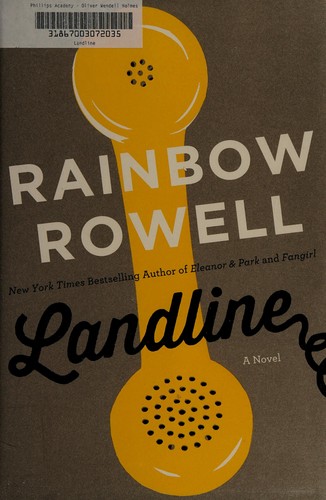

Themes
- adult contemporary
- marriage in crisis
- magic phone
- work vs. family
- time-slip romance
- Christmas in the snow
- closed door
Read it if
- you read Rowell for dialogue that makes you laugh and tear up inside the same scene
- you want a novel about a fourteen-year marriage where nobody gets cast as the bad guy
- you have a soft spot for holiday stories with a pinch of magic, a blizzard and a sprint through the airport
Skip it if
- you're after YA, because everyone who matters here is thirty-seven, with two daughters and a day job
- you need the magic explained, and here the phone simply works, end of story
- heroines who spend whole days crying in the car and wearing somebody else's sweatpants test your patience
Why this rating
🧠 For connoisseurs
6/10- The phone as a mirror. The magic is modest: one old rotary phone and a handful of calls with her husband from fifteen years ago. Rowell never turns it into science fiction. On the line Georgie hears a boy who still believes in her, and she can't stop holding him up against the man who won't pick up his cell today. It's a sharp way to show how much in a relationship has changed and how much hasn't.
- A loop I didn't see coming. In the fitting room of a lingerie store, Georgie remembers the words of Neal's proposal and realizes they sound like an answer to a question she asked him on the phone the night before. From that moment every earlier call reads differently, and a short chapter from Neal's point of view at the end closes the idea without hammering it home.
- A marriage with no villain. Neal isn't a tyrant and Georgie isn't a victim. He quit his lab job to stay home with the kids and has been quietly unhappy in California for years. She picks work because she's good at it and because it's easier than talking. They're both right and both at fault, which is far from a given in novels about a marriage in trouble.
- A middle stuck on one note. Georgie sleeps till noon, wears her mom's velour tracksuit, cries in the car and dials again. The calls with young Neal are sweet, but by the third one they start to blur together, and the script she gave up Christmas for nearly drops out of the plot.
- A husband kept offstage. The 2013 Neal, the one the whole game is about, appears at the start and on the last few pages. We know his side only through Georgie's memories, so the conflict looks lopsided, and the happy ending doesn't settle anything – the narrator admits as much herself.
- Seth, wrapped up in a hurry. The book builds toward Seth's confession from chapter one, then fits it into a short scene on the porch steps and a single sentence he won't let her finish. A man who sat in the next chair for twenty years deserved more room than that.
💖 For comfort readers
7/10- Sitcom timing. Georgie, Seth and Scotty toss around jokes about Cliff Clavin and Radar O'Reilly, Heather needles her big sister, and their mom cradles a pregnant pug and kisses her grown daughter on the lips. I laughed more often than I expected to in a book about a marriage on the rocks.
- A romance by phone. The late-night calls with young Neal about snow Georgie has never seen are the warmest pages in the novel. Around them come the memories: a boy sketching a hedgehog in a monocle, a kiss on the beach and a wedding among the lilacs to “Leather and Lace.”
- A litter in the dryer. A pregnant pug gives birth on a Metallica T-shirt, the pizza delivery girl reads tips off the internet, and Georgie rubs a puppy that isn't breathing under her sweatshirt. It's the funniest scene in the book and one of the most moving, and on the side Heather gets her chance with the girl she likes.
- Christmas and snow. A dash through the airport on Christmas Eve, a night in Denver during a blizzard, strangers lending her a sweater and boots, the in-laws' house on a snowed-in hill. The ending plays like a December movie night and knows exactly what it's doing.
- More sadness than frosting. This isn't a breezy rom-com. Georgie cries a lot, the marriage's problems stay open, and one of the strongest memories is a delivery in which she nearly dies. If you came only for cozy, the holiday setting may feel like a bait and switch.
The book's four layers
Plot and pacing
The premise is simple and great: one enchanted phone and the last week before Christmas, laid out day by day. The switching between 2013 and 1998 works best, along with the fitting-room discovery that makes you rethink every call that came before. The middle drags, though, because each day looks like the last: work Georgie doesn't do, her mom's house, the phone. The finale in Omaha is lovely, but the marriage's problems stay exactly where they were.
Characters and relationships
Georgie feels like a real person: funny, overworked, letting herself go, unable to buy herself a new bra and so in love it scares her. Young Neal, a gruff Nebraska boy who only laughs when he's happy, has real charm. Heather, the mom with her pugs and Seth all come off great. Grown-up Neal is weaker, more an absence than a character, and Scotty never gets past funny background.
Writing style and atmosphere
The prose is breezy, built from short paragraphs with parenthetical asides that sound like Georgie's thoughts overheard as they happen, and the dialogue moves like a good sitcom, which is exactly what the heroine writes for a living. The memories slip into the present without a seam. The refrains wore me out: crying in the car, Neal's name said three times in a row and one more list of possible explanations, none of which ever gets confirmed.
Entertainment and value
I enjoyed it and smiled plenty, and the memory of Noomi's birth plus the trek through snowbound Omaha left me warm and heavy at the same time. It's a good December read and a decent way into a conversation about how many compromises fit inside the word marriage. An older teen will enjoy Rowell's humor, but these characters live with the problems of thirtysomethings with kids and jobs, so not every reader will see themselves here.
The book in brief, spoiler-free
Sitcom writer Georgie stays in Los Angeles over Christmas to write the show she has dreamed about since college, while her husband flies to Omaha with their daughters and stops answering his phone. Then the old yellow rotary phone in her teenage bedroom connects her to Neal from fifteen years ago, a week before he proposed, and Rowell spins that into a funny, warm and fairly sad novel about marriage, written for adults.
Want the plot step by step?SummaryThemes it explores
Rainbow Rowell writes about a marriage that doesn't end with a bang but wears thin in silence, at the kitchen counter and in a bed where each of them falls asleep on their own edge. Georgie and Neal have loved each other for seventeen years and for a long time haven't known how to talk about it: she lives for a job he keeps at arm's length, and he raises their daughters in a city he can't stand and says nothing. The magic phone gives Georgie the thing she's missing in 2013 – a conversation – only it's with a boy from fifteen years ago who doesn't know yet how it all turns out. The book asks a simple question, whether love is enough, and instead of an answer it offers young Neal's thought that maybe there's no such thing as enough. This is fiction for adults, but anyone who has been in a serious relationship knows the question of how much of yourself to give another person and how much to keep for your dreams.
The main threads: the magic phone (a yellow rotary phone that puts Georgie through to Neal in December 1998, a week before he proposed); a fourteen-year marriage (love, habit and grudges nobody says out loud); work and ambition (the show Georgie has waited for since college and the question of how much she's willing to pay for it); her friendship with Seth (twenty years at the same desk and a feeling they both preferred not to look at); fatherhood (Neal as a full-time dad and the old argument over whether kids really need their fathers); Georgie's family (a mom with pugs, a stepfather barely older than Georgie and a sister afraid to admit she likes a girl); and Christmas and snow (the holiday as a deadline for fixing everything, and snow Georgie has never seen before).
Questions and answers
Is Landline part of a series?
No. It's a standalone novel and doesn't set up anything after it. It doesn't continue the story of Eleanor & Park or Fangirl either; what it shares with them is Nebraska and Rowell's sense of humor. If you want more Rowell for grown-ups, try Attachments, her first adult novel, or Slow Dance from 2024.
How many pages is Landline?
310 pages in the 2014 US hardcover from St. Martin's Press, though it depends on the edition. Inside are 36 chapters laid out day by day from December 17 to 25, plus two short chapters at the end.
Is Landline appropriate for 12 year olds?
I'd put it at 15+, although the content is milder than that number suggests. Sex is only hinted at: a few memories of nights together that cut away after a sentence, some flirting over the phone and a heroine sleeping without underwear. There's a fair amount of swearing, Georgie gets drunk once on mint liqueur, and one of the most intense scenes is the memory of a delivery in which she nearly dies. None of it will hurt a younger reader, but a marriage in crisis after thirty makes the most sense to someone who has had at least one serious relationship.
How spicy is Landline?
3/10 on my spice scale. It stays behind closed doors: kissing, a few memories of nights together that fade out after a single sentence and some flirty late-night phone calls. Nothing explicit happens on the page.
Is Landline YA or adult?
Adult. It's published and shelved as adult fiction, and Georgie and Neal are thirty-seven, with two daughters and a marriage at a crossroads. The 1998 college flashbacks and Rowell's humor will feel familiar to her YA readers, but the problems belong to grown-ups: jobs, kids and compromise.
Who is Landline for?
Rowell fans who grew up alongside Eleanor & Park and Fangirl, and comfort readers who like holiday stories with humor and a touch of magic. Connoisseurs will be won over by the phone premise and a portrait of a marriage without a villain, even if the middle of the book stands still. An older teen can read it without any trouble, just expect talk about work, kids and compromise instead of high school drama.
What about you? Have you read this book?
Reader ratings
Your rating might be totally different from mine. A lot depends on when you pick it up.
Your rating on a 1-10 scale
No login needed. One vote per browser – you can change it later.
Disagree? Rate the book above or message me on Instagram or TikTok.
What to read next
 Fangirl
Rainbow Rowell
Rowell in college mode: writing, Nebraska and a boy who wins the girl with patience.
★ 7/10🧠 6💖 7🌶️ 314+
Read the review
 Eleanor & Park
Rainbow Rowell
Same author and the same Omaha, only the lovers are twenty years younger and a Walkman full of mixtapes stands in for the magic phone.
★ 8/10🧠 7💖 7🌶️ 315+
Read the review
 Attachments
Rainbow Rowell
Rowell's first novel for adults: a 1999 newsroom and a love story that also begins without the two people ever talking face to face.
★ 7/10🧠 6💖 7🌶️ 315+
Read the review